
House Sparrows and Carolina Wrens: A Comprehensive Guide to Two Beloved Backyard Birds
Backyard bird watching brings joy to many. Two common visitors, the House Sparrow and Carolina Wren, often spark curiosity.
These birds differ in appearance, habits, and behaviors.
This guide compares these two species, helping bird enthusiasts identify and appreciate them better.

Key Takeaways
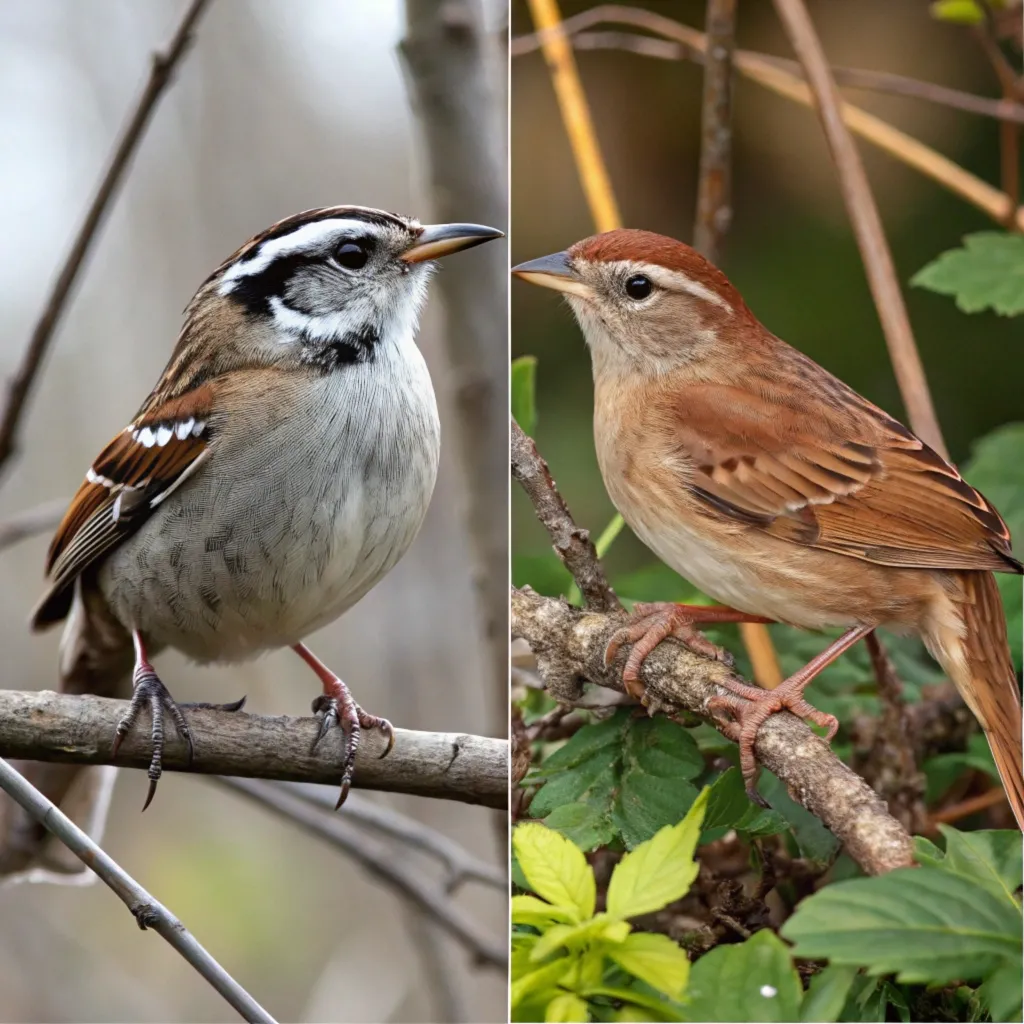
- Appearance: House Sparrows have plain brown plumage. Carolina Wrens show reddish-brown coloration with a distinctive eye stripe.
- Size: Carolina Wrens are slightly larger and chunkier than House Sparrows.
- Habitat: House Sparrows prefer urban areas. Carolina Wrens adapt to various woodland habitats.
- Diet: House Sparrows eat seeds and some insects. Carolina Wrens mainly consume insects.
- Behavior: House Sparrows are social and gather in flocks. Carolina Wrens are often seen in pairs.
- Song: House Sparrows make simple chirps. Carolina Wrens have a loud, musical call.
- Nesting: Both species use diverse nesting sites, including man-made structures.
- Range: House Sparrows have a wider distribution across North America. Carolina Wrens are more common in the eastern and southern United States.
- Feeding habits: House Sparrows often visit bird feeders. Carolina Wrens prefer foraging on the ground and in vegetation.
- Adaptability: Both species show high adaptability to human-modified environments.
Understanding these key differences helps bird watchers quickly identify these species in the field. Each characteristic provides a unique clue to the bird’s identity, from its physical appearance to its behavior and habitat preferences.
Observing these traits in action can enhance the bird watching experience and deepen appreciation for these common backyard visitors.
Physical Characteristics
House Sparrow
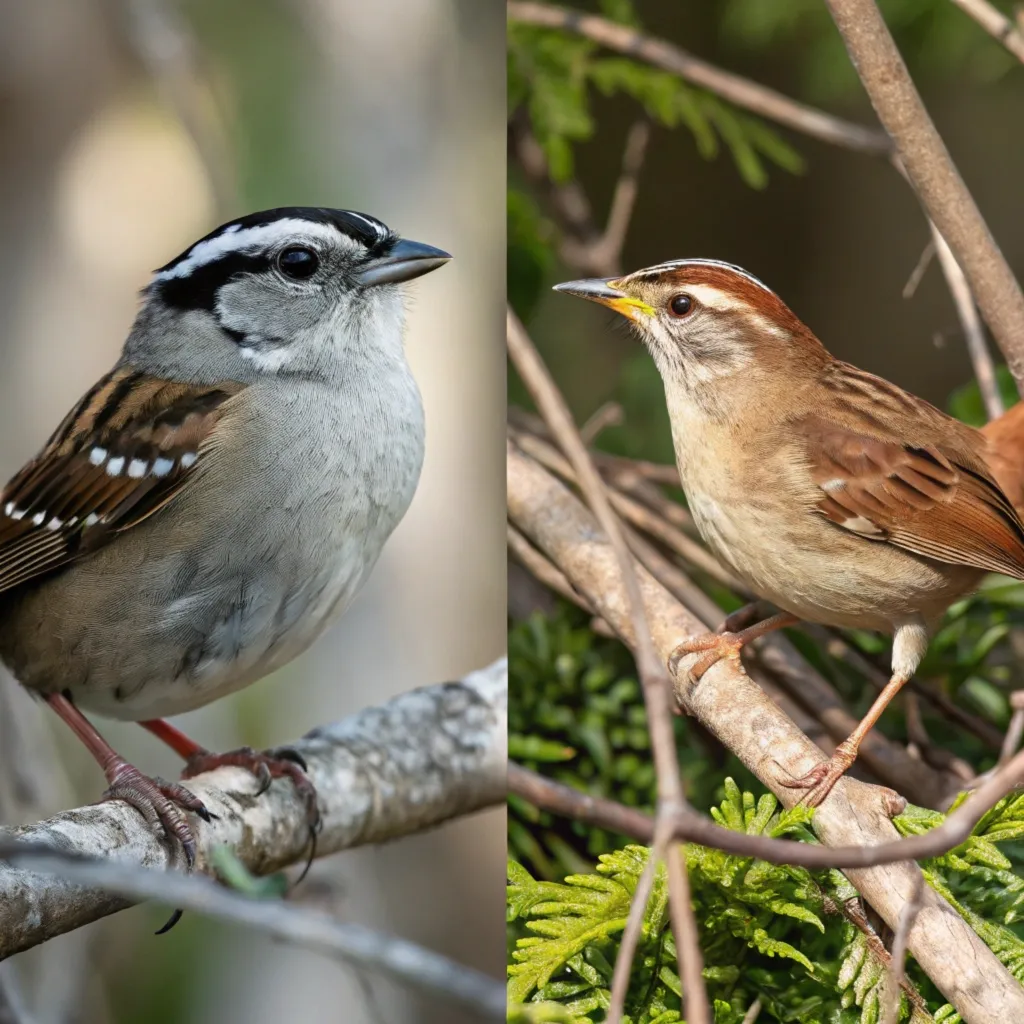
House Sparrows display plain brown plumage. These birds have a compact body structure. Male House Sparrows show a gray crown and black bib. Females have a more uniform brown coloration.
Carolina Wren
Carolina Wrens exhibit a reddish-brown color. They have a distinctive white stripe above their eyes. Their body appears slightly larger and chunkier compared to House Sparrows. Carolina Wrens also have a longer, curved bill.
Physical adaptations play a crucial role in the survival of these birds. The House Sparrow’s compact body and strong beak are well-suited for cracking seeds, while the Carolina Wren’s curved bill is ideal for probing bark and crevices for insects. These features reflect their dietary preferences and foraging strategies, showcasing how evolution has shaped their physical traits.
Plumage variations can occur within both species, influenced by factors such as age, season, and individual genetics.
Habitat Preferences
House Sparrow
House Sparrows thrive in urban environments. They often reside near human settlements. These birds adapt well to cities, towns, and farms. House Sparrows rarely inhabit extensive woodlands or grasslands.
Carolina Wren
Carolina Wrens prefer diverse habitats. They inhabit woodlands, swamps, and suburban areas. These birds favor areas with dense cover and undergrowth. Carolina Wrens adapt to both natural and human-modified environments.
Habitat selection influences many aspects of a bird’s life, including feeding opportunities, nesting sites, and protection from predators. The House Sparrow’s affinity for urban areas has led to its widespread distribution, while the Carolina Wren’s preference for varied habitats contributes to its success in different ecosystems.
Climate change may affect these habitat preferences, potentially altering the distribution of both species in the future.
Dietary Habits
House Sparrow
House Sparrows have a varied diet. They consume:
- Various seeds
- Grains (corn, oats, wheat)
- Small insects and caterpillars
- Berries and nuts
House Sparrows often forage on the ground. They frequently visit bird feeders in urban and suburban areas.
Carolina Wren
Carolina Wrens are primarily insectivores. Their diet consists of:
- A wide variety of insects
- Spiders
- Occasionally small fruits and seeds
These birds search for food in brush, vegetation, and tree bark. Carolina Wrens may visit suet feeders but rarely eat seeds.
Dietary adaptations reflect each species’ evolutionary history and ecological niche. The House Sparrow’s versatile diet has contributed to its success in human-dominated landscapes, while the Carolina Wren’s insectivorous habits make it an important pest controller in gardens and forests.
Seasonal changes can affect food availability, leading to shifts in foraging behavior for both species.
Behavior and Social Habits
House Sparrow
House Sparrows display highly social behavior. They:
- Form large flocks
- Communicate with simple chirps
- Hop rather than walk on the ground
- Often squabble over food sources
- Use dust baths for grooming
House Sparrows show various dominance behaviors within their flocks.
Carolina Wren
Carolina Wrens exhibit more solitary or pair-based behavior. They:
- Defend territories year-round
- Use loud, musical songs to communicate
- Forage alone or in pairs
- Spend most time near or on the ground
- Can climb trees and branches with agility
Carolina Wrens are diurnal and non-migratory birds.
Social structures in bird species can significantly impact their survival strategies and breeding success.
The House Sparrow’s flock behavior provides safety in numbers and efficient foraging, while the Carolina Wren’s territorial nature ensures a stable food supply and nesting area for pairs.
Behavioral adaptations help these birds thrive in their respective niches, showcasing the diversity of avian social systems.
Nesting Habits
House Sparrow
House Sparrows are adaptable nesters. They:
- Choose sites near human structures
- Use holes in buildings, nest boxes, and dense vegetation
- Can rear multiple broods in one season
- Build nests close together in colonies
- Lay 3-7 eggs per clutch
Their breeding season typically runs from April to August.
Carolina Wren
Carolina Wrens show creativity in nest site selection. They:
- Build nests in natural and artificial sites
- Use locations like tree stumps, vine tangles, and even old shoes
- Construct nests with twigs, grasses, and found objects
- Lay 3-6 eggs per clutch
- Have a breeding season from March to October
Both members of a pair participate in nest building.
Nesting strategies are crucial for reproductive success and reflect each species’ adaptation to its environment.
The House Sparrow’s colonial nesting behavior contrasts with the Carolina Wren’s more solitary approach, highlighting different solutions to the challenges of raising offspring.
Human activities can significantly impact nesting habits, providing new opportunities and challenges for both species.
Geographic Distribution
House Sparrow
House Sparrows have a wide distribution. They are found:
- Across most of North America
- In urban and suburban areas
- Year-round in most of their range
- Expanding their range after mild winters
House Sparrows are highly adaptable to various climates.
Carolina Wren
Carolina Wrens have a more limited range. They are:
- Common in the eastern and southern United States
- Permanent residents in their breeding range
- Occasionally found further north after mild winters
- Limited by harsh winter conditions in northern areas
Their range may expand or contract based on winter severity.
Range expansions and contractions are influenced by various factors, including climate change, habitat alteration, and human activities.
The House Sparrow’s widespread distribution is a testament to its adaptability, while the Carolina Wren’s more restricted range reflects its specific habitat requirements.
Monitoring distribution changes can provide valuable insights into environmental shifts and species adaptability.
Conservation Status
House Sparrow
House Sparrows are:
- Abundant in most of their range
- Not of conservation concern
- Sometimes considered invasive in North America
- Declining in some urban areas due to changing human practices
Carolina Wren
Carolina Wrens are:
- Generally stable in population
- Vulnerable to harsh winters in northern parts of their range
- Benefiting from suburban development in some areas
- Not currently of major conservation concern
Conservation efforts for common species like these are often overlooked, but they play crucial roles in ecosystems.
While neither species is currently threatened, monitoring their populations can provide early warnings of environmental changes that may affect other wildlife.
Urban planning and gardening practices can significantly impact these birds’ populations and overall biodiversity.
Interaction with Humans
House Sparrow
House Sparrows have a close association with humans. They:
- Thrive in urban and suburban environments
- Frequently visit bird feeders
- May be considered pests in some agricultural settings
- Adapt well to human-modified landscapes
Carolina Wren
Carolina Wrens have a more moderate interaction with humans. They:
- Adapt to suburban gardens and parks
- May use man-made structures for nesting
- Visit suet feeders but less frequently than House Sparrows
- Benefit from brush piles and native plantings in yards
Human-bird interactions can have both positive and negative consequences for bird populations.
While some species like the House Sparrow have thrived in human-dominated landscapes, others may struggle with habitat loss and fragmentation.
Responsible bird feeding and habitat creation can support local bird populations and increase biodiversity in urban and suburban areas.
FAQs
How can I attract House Sparrows to my yard?
House Sparrows are easily attracted with seed feeders. Provide a mix of seeds, especially millet and cracked corn. Offer nesting sites like birdhouses or dense shrubs.
What does a Carolina Wren’s song sound like?
Carolina Wrens have a loud, musical song often described as “tea-kettle, tea-kettle, tea-kettle” or “cheeseburger, cheeseburger, cheeseburger.”
Are House Sparrows native to North America?
No, House Sparrows are not native to North America. They were introduced from Europe in the mid-19th century and have since spread widely.
How can I differentiate between male and female Carolina Wrens?
Male and female Carolina Wrens look very similar. The best way to differentiate is by behavior, as males are usually the ones singing the loud, distinctive songs.
Do House Sparrows migrate?
House Sparrows are generally non-migratory. They stay in their territories year-round, although some northern populations may move south in harsh winters.
What can I do to attract Carolina Wrens to my yard?
Provide dense shrubs, brush piles, and native plants. Offer suet feeders and maintain a water source. Avoid using pesticides to ensure a healthy insect population for them to feed on.

Joyce is the passionate founder of Chirping Hearts, a website dedicated to sharing her love for birds and providing valuable information about avian life. With a background in ornithology and years of experience in birdwatching, Joyce aims to inspire others to appreciate the beauty and diversity of birds. Through her engaging articles and guides, she hopes to foster a community of bird enthusiasts who share her enthusiasm for these incredible creatures. When she’s not writing, Joyce enjoys exploring nature trails and observing birds in their natural habitats.