
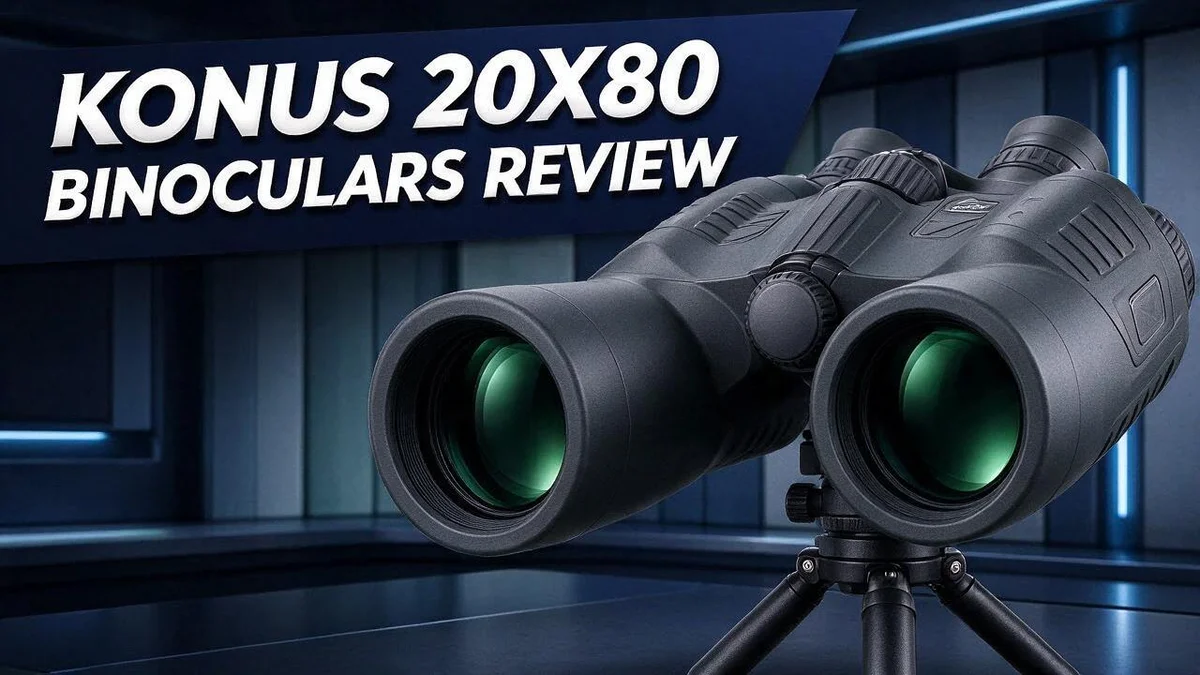
Konus 20×80 Binoculars Review: Is It Worth The Price?
Want binoculars that bring distant things close? The Konus 20×80 might be your match. It packs 20x magnification and an 80mm objective lens into one bold package.
Many people love how bright and clear the view feels. You get sharp detail in daylight and strong views at night. The fully coated optics keep reflections low, so the image stays crisp.
The body has a rubber covering that grips well in your hand. It also includes a tripod adapter, which helps you hold steady during long viewing sessions.
These binoculars are not the first pick for casual skygazing. Still, they shine for people who want high power and a steady view. In this guide, we explore the strengths, the weak spots, and who should buy them.
In a Nutshell
-
Big lens, big reach: These binoculars offer 20x magnification with an 80mm objective lens. The large lens gathers plenty of light for daytime and night viewing.
-
Porro prism design: The optics use a Porro prism with fully coated lenses. A central focus knob makes adjustments quick and simple.
-
Tripod ready: A tripod adapter lets you mount the binoculars on a stand. This keeps the image steady at high magnification.
-
Clean, low glare views: Users report minimal ghosting. Reflections appear dim and slightly purple.
-
Lightweight but not waterproof: The body is listed as lightweight. Sources do not mention waterproofing, so keep them dry in wet weather.
-
Basic accessories: The case and strap feel rather simple. One user also found the binoculars not easy to use, so practice before your first outing.
Optical Performance

- 20x80 Central Focus
- FOV 1000m/1000yds: 48m/157ft
Last update on 2026-11-10 / Affiliate links / Images from Amazon Product Advertising API
Sharp detail matters most when you look at the moon or a distant hill.
The Konus 20×80 offers good resolution, so fine lines and small features stand out. You can spot textures that smaller glasses often blur together.
The view also feels bright and full. Light pours through the large 80mm lens, so colors look rich even as the sun sets. This helps during dawn and dusk watching.
Daylight views impress many owners. Users report strong views in bright sun. Details on trees, birds, and buildings look clear and natural.
Night viewing works well. Sources describe strong nighttime views under dark skies. The large lens gathers enough light to show faint stars.
Clarity stays steady. Many reviewers praise the image clarity, which keeps details easy to follow as you scan.
Central focus makes adjustments simple. You turn one knob to sharpen the image in both eyes. This speed helps when a bird moves or a boat drifts past.
Eye comfort matters too. Long viewing sessions can strain your eyes if the optics fall short. Sources list few downsides for the optics, so the view stays enjoyable.
Compare with top rivals. Steiner 8×30 models and Nikon LX appear as rivals. The Konus stands apart with much higher magnification and a larger lens.
Buyers who want powerful views will appreciate this performance. Pairing the bright image with good resolution gives a clear, rewarding experience. Take time to test the focus and enjoy the detail.
Stable views need support. At 20x, small hand shake shows up quickly in the image. A sturdy tripod helps you hold steady views for longer periods.
A quick tip. Let your eyes adjust to the dark for a few minutes. This step helps you see more detail through the optics. Clear skies make the best use of the large lens.
Build and Ruggedness
Build quality matters a lot with large binoculars. A 20×80 model carries big optics, so the frame must handle the extra load. The Konus body feels sturdy when you hold it.
The outer body wears a protective rubber layer. This layer helps soften knocks when you set the binoculars on a rock or a car seat. It also shields the frame from scrapes during trips.
Many owners value the tripod mount most. High magnification shows every small shake, so a firm mount keeps the image steady. You can lock the binoculars onto a stand and watch for long periods.
Steady support makes a real difference. Your arms can only hold heavy optics still for so long. A stable base lets you study wildlife or distant trees with calm focus.
Handling also plays a role. Grip the body with both hands when you lift it. Avoid swinging it by the strap, since that puts stress on the attachment points.
Care habits protect the optics. Dust and grit can work into the moving parts over time. Wipe the lenses with a soft cloth after each outing and keep the caps on when you carry them.
Store the binoculars somewhere dry after use. Damp air can harm the optics over time, and this model does not offer waterproofing.
Transport needs extra thought. A padded bag of your own gives better protection on trips. Choose one with firm walls and a snug strap. Pack the binoculars so the eyepieces face inward, which keeps grit away from the lenses on bumpy roads.
Owners who treat the gear well often keep it for years. Small habits like cleaning, drying, and storing make a clear difference. Overall, the build suits regular field trips and backyard use.
Handling and Tripod Use
Handling a pair of 20×80 binoculars takes some practice. The size and weight can feel awkward at first. One reviewer found them not user friendly, so give yourself time to learn the controls.
Setting up the tripod matters just as much. Place the tripod on firm ground, not soft grass or a wobbly deck. Extend each leg evenly so the head sits level. A level head helps you scan the sky without tilting your neck.
Before you attach the binoculars, check that the mount clicks into place. Tighten the knob until it feels snug. Loose parts can cause the image to shake, so inspect them before each session.
Next, adjust the height before you start looking. Stand or sit where your eyes line up with the eyepieces. Find a comfortable spot first. Your back and shoulders will thank you during longer sessions.
Balance also plays a big role. Keep the weight centered over the tripod head. If the binoculars tip forward, the setup can wobble or strain the legs. Some users find that a heavier tripod reduces movement.
Wind changes everything. Even a light breeze can make a large image bounce. Observe on calm nights when you can, or shield the setup with a wall or a tree. Wait a few seconds after each move so the image settles.
Moving between targets takes a steady touch. Loosen the mount slightly, swing the binoculars toward your target, then lock it again. Smooth movements protect the mount and keep your view steady. Practice this during the daytime so you feel confident after dark.
Good habits make the setup last longer. Avoid touching the lenses with your fingers. Wipe away dust with a soft cloth. Fold the tripod legs fully before you carry it, and never lift the binoculars by the eyepieces.
Top 3 Alternatives
If you want a different pair of binoculars, these three options are worth a look. Each one offers a clear view and a comfortable grip.
Celestron SkyMaster 20×80

- POWERFUL 20X MAGNIFICATION: Giant astronomy binoculars with massive 80mm objective lenses and 20x power...
- WORKS WITH YOUR TRIPOD: Due to their size & weight, most users mount SkyMaster binoculars on a...

Last update on 2026-11-10 / Affiliate links / Images from Amazon Product Advertising API
The Celestron SkyMaster 20×80 gives you a big, bright image. It works well for stargazing, birding, and wide landscape views. Its large lenses gather plenty of light. Because it is heavy, most people use a tripod.
Orion GiantView 20×80
- POWERFUL 20X MAGNIFICATION: Giant astronomy binoculars with massive 80mm objective lenses and 20x power...
- WORKS WITH YOUR TRIPOD: Due to their size & weight, most users mount SkyMaster binoculars on a...
Last update on 2026-11-10 / Affiliate links / Images from Amazon Product Advertising API
The Orion GiantView 20×80 offers the same high magnification. It suits people who want to scan the night sky for long stretches. Its wide field helps you find objects fast. Mount it on a stable tripod to keep the image steady.
Nikon Action EX 10×50

- 10x magnification power
- Turn-and-slide rubber eyecups with multi-click facilitate easy positioning of the eyes at the correct...
Last update on 2026-11-10 / Affiliate links / Images from Amazon Product Advertising API
The Nikon Action EX 10×50 takes a lighter path. Its 10x power makes handheld viewing easier. It feels simple to carry on hikes or trips. Choose this model if you want steady views without a tripod.
Your best pick depends on how you plan to use them. Think about weight, power, and where you will view.
Night and Daylight Viewing
A pair of 20×80 binoculars can serve you well day and night. The large objective lens gathers plenty of light. Your plans can shift from sunny hikes to quiet evenings outside.
Daytime use brings its own surprises. Birds perched on far treetops look close enough to study. Distant boats, deer in a meadow, and mountain ridges show surprising texture.
Hold the view steady when the sun is high. At 20x, even a small shake shows up as a jump in the picture. Rest your elbows on a fence or a stump to keep the image calm.
Sun safety matters most. Never point the binoculars at the sun, even for a second. Scan the sky only after the sun sets or when it sits low and out of view.
Nighttime views reward patience. Let your eyes adjust for about fifteen minutes before you judge the sky. Start with the moon. Craters and shadowed edges stand out along the terminator line.
Planets make a fun next target. Jupiter shows its bands and moons on a clear night. Star clusters such as the Pleiades fill the view with dozens of points of light.
Weather changes the plan fast. Thin clouds, haze, or a bright town glow can wash out faint stars. Check the forecast and pick a night with steady air for the best results.
Plan your targets before you head outside. A short list of birds, landmarks, or sky objects keeps your session focused and fun.
Your eyes and body feel the difference too. Daytime sessions often last longer because of warmer air. Night sessions can feel shorter, so take breaks often.
Accessories, Case and Strap
The case that comes with your Konus 20×80 binoculars is basic. It guards against simple bumps, yet it feels thin.
Think of it as a starter option, not a permanent home.
The strap works, but it can feel thin after an hour of carrying. Many owners swap it for a wider strap with padding.
A wider strap spreads the weight across your shoulders. Your neck feels less strain on long walks or hikes.
Look for a strap with quick release clips too. Quick clips let you detach the binoculars in seconds.
Check the strap anchors before every outing. Loose anchors can let the binoculars drop onto rocks.
A simple neck pad softens the strap edge. It takes only a minute to add.
Eyecups deserve a closer look as well. Rubber eyecups block stray light and keep your face comfortable.
Soft lens caps are easy to lose in the field. Keep a spare pair in your pocket.
Losing a cap leaves the front lens open to dust and scratches. Tie a short cord to each cap so they stay attached.
A soft cleaning cloth finishes your kit. Use a microfiber cloth, never a paper towel.
Paper can scratch the coated glass over time. Pack the binoculars with the eyepieces facing down.
This keeps the lenses clear while the case rides in a bag. Some cases lack a shoulder strap, so check before you head out.
A small pouch can hold caps, a cloth, and a notepad. Notes help you track favorite targets for the next night.
Pick accessories that match your plans for each outing. Test each accessory before a big trip. That way you find problems at home.
A few simple extras make a big difference. With a better strap, clean caps, and a cloth, your Konus binoculars stay ready for every session.
Pros and Cons
Pros
- Sharp detail shows up across the whole view.
- The image looks bright, even when light is low.
- Ghosting stays minimal, so edges look clean.
- Reflections appear dim, with only a faint purple tint.
Cons
- Skygazing fans may want a different first choice.
- One user found them hard to use.
- They lack waterproofing, so damp conditions need extra care.
- Few reviews list downsides, so read more opinions before you buy.
Who Should Buy It
Good news for people who want a close look at distant things. These binoculars suit viewers who want big magnification and a bright image.
Teens and older adults both fit the listed age range of 14 to 99. A young explorer can use them, and so can a grandparent who loves the outdoors.
Wildlife watchers who sit in one place often gain the most. Set them on a tripod and track birds, deer, or boats across a lake.
Hobbyists who enjoy daytime viewing also gain plenty from them. Landscapes, rooftops, and far-off hills look much closer through the lenses.
Night owls should consider them too. The strong low light view helps when you explore dusky fields or wooded trails.
Mixed use households benefit as well. One pair can serve the whole family for backyard birding and weekend trips.
Sports fans who watch from the stands can also benefit. Distant players and field action come into focus without a fuss.
Families with curious kids often enjoy sharing one pair. Each child can take a turn spotting birds or distant boats.
Photographers who want a quick scouting tool may also like them. Use them to spot good scenes before you set up a camera.
Who should look elsewhere? Hikers who want a light pair for long treks may prefer something smaller. The Steiner 8×30 Whitetail and Nikon LX often suit people who carry binoculars all day.
Beginners should try before they commit. Visit a store, hold a pair, and check how the focus wheel feels in your hands.
Anyone who wants one pair for many uses gets a flexible tool. Think about your main activity before you buy.
Match the pair to the place you will use it most. Good planning leads to a happier purchase.
Bottom line: These binoculars suit anyone who wants magnification and brightness above all.
Final Verdict
Our overall verdict is positive for the right buyer. The Konus 20×80 binoculars suit observers who want serious reach. Their large 80mm lens gathers plenty of light.
This pair works best on a tripod. The built-in adapter keeps the image steady at 20x. Handheld viewing at this power makes the view shake quickly, so a stand changes the whole experience.
Think about your viewing style first. Stationary observing suits these binoculars well. Quick sweeps across a landscape feel slow because of the weight and magnification.
The Porro prism design gives a wide sense of depth. Many buyers say the image feels more lifelike than compact models. Central focus makes it simple to adjust both eyes at once.
Compare them with the Steiner 8×30 models before you decide. Steiner units offer a wider field and easier handheld use. The Konus pair trades portability for raw reach across distant targets.
Premium brands like Zeiss, Leica, and Nikon set high optical standards. Konus offers a different tradeoff, with more magnification in a simpler package.
Final takeaway: choose these if you want powerful, steady views from one spot. They suit observers who sit still and scan slowly across a distant ridge or open sky.
Skip them if you need a light everyday companion. Carrying them all day tires most people, so plan your gear around that fact.
Try them in person when possible. Hold them, adjust the focus, and check how the weight feels in your hands.
Reading several independent reviews helps you judge fit. Compare how owners describe focus speed and setup time.
Overall, these binoculars suit a focused, stationary style of observing. They reward patience with detailed, lasting views of distant subjects. For many buyers, that trade makes them a worthy addition to the kit.
Frequently Asked Questions
Can I use them without a tripod?
Handheld use is possible, but it takes practice. The high power makes every small hand movement show up in the view. Many people rest their elbows on a fence, a car roof, or a table to keep the image steady.
Are they good for viewing the Moon and planets?
Yes, these binoculars suit bright targets well. The Moon shows craters and surface details in sharp contrast. Planets appear as small discs, so a little patience helps you find and hold them in view.
What extras should I buy with them?
The included case and strap are basic, so a padded case is a smart add for trips. A sturdy tripod with a smooth pan head also makes slow scanning easier. Pick gear that fits how often you plan to observe.
How do they compare with Steiner 8×30 models?
The Steiner 8×30 Military and Whitetail models use lower power. They suit people who scan moving targets, like birds in flight. The Konus pair gives more reach for objects that stay in one place.

Joyce is the passionate founder of Chirping Hearts, a website dedicated to sharing her love for birds and providing valuable information about avian life. With a background in ornithology and years of experience in birdwatching, Joyce aims to inspire others to appreciate the beauty and diversity of birds. Through her engaging articles and guides, she hopes to foster a community of bird enthusiasts who share her enthusiasm for these incredible creatures. When she’s not writing, Joyce enjoys exploring nature trails and observing birds in their natural habitats.