
How to Keep Yellow Jackets Away From Bird Feeders Effectively
To keep yellow jackets away from your bird feeders, follow some simple steps. First, it's important to know how yellow jackets behave. They are attracted to food, especially sweet things.
Start by picking a bird feeder that has a closed design. This makes it harder for yellow jackets to get in. Next, clean up any spilled birdseed on the ground. If there's food on the ground, yellow jackets will come looking for it.
You can also use traps made for yellow jackets. These traps will catch them so they can't bother your birds. By using these methods, you can create a safer space for your feathered friends. Keeping yellow jackets away is not just good for the birds; it also makes your yard more enjoyable. With a little effort, you can enjoy watching your birds without any pests!
A Quick Overview
- Choose bird feeders with small openings and sloped roofs. This way, birds can feed easily, but yellow jackets cannot get in.
- Clean up any spilled seeds and debris under the feeders. This will help stop yellow jackets from visiting the area.
- Set up wasp traps with meat, about 10-20 feet away from your feeders. This will draw yellow jackets away from the birds.
- Pick bird seeds that yellow jackets don't like, such as Nyjer seeds or safflower seeds. These seeds will help keep the pests away.
- Change the times you feed the birds. Try to avoid times when yellow jackets are most active. You might also want to stop feeding them during the tough summer months. This can keep your birds safe.
Understanding Yellow Jackets and Their Behavior

Yellow jackets are wasps that can be annoying, especially near bird feeders. Knowing how they act helps you manage their presence.
They usually build nests in hidden spots like underground or inside structures. Yellow jackets look for food that's high in protein and sugar, making your bird feeders very tempting to them.
When they gather food, they can get aggressive, especially if they think you're a threat to their nests. If you watch their movements, you can find out when they're most active. This will help you decide the best times to use your feeders.
By learning about yellow jackets and what they like to eat, you can take steps to reduce your chances of running into them.
This way, you can create a safer and more enjoyable space for both the birds and yourself.
Use Bird Feeders Designed to Deter Wasps
Using bird feeders that keep wasps away can make your birdwatching more fun.
These feeders have smart designs that help birds eat while making it hard for wasps to get to the food.
Look for feeders with small openings. These are perfect because small birds can easily get in, but wasps cannot.
Also, feeders with sloped roofs can stop wasps from hanging around. Some feeders even have guards that keep out bigger pests.
By choosing these special feeders, you can create a happy space for birds while reducing annoying visits from wasps.
This way, you can enjoy a peaceful backyard with your feathered friends!
Choose the Right Bird Seed

Choosing the right bird seed can help keep yellow jackets away. Some bird seeds attract nice birds and don't appeal to pesky wasps. Here are some good options:
- Nyjer seeds: These tiny seeds attract finches. Yellow jackets usually don't like them.
- Sunflower hearts: These tasty treats are great for many birds. They don't spill easily, making less mess.
- Safflower seeds: Cardinals love these seeds, and yellow jackets tend to leave them alone.
When you use these seeds in your feeders, you create a welcoming space for your favorite birds.
At the same time, you keep yellow jackets out. This helps make your backyard a happy place for birds!
Clean Up Spilled Seeds Regularly
To keep your bird feeder area neat and lessen yellow jacket visits, it's important to clean up spilled seeds often.
Yellow jackets love easy food, and spilled seeds give them just that. A regular cleaning routine will help keep them away.
After each time you feed the birds, check the ground under and around the feeder.
Make sure to pick up any leftover seeds or debris right away. You can use a broom or a small vacuum to make this job quick and easy.
By keeping the feeding area tidy, you won't just keep yellow jackets at bay; you'll also create a nice spot for the birds to enjoy.
This simple practice helps you enjoy watching your feathered friends without worrying about pesky pests.
Utilize Wasp Traps in the Area
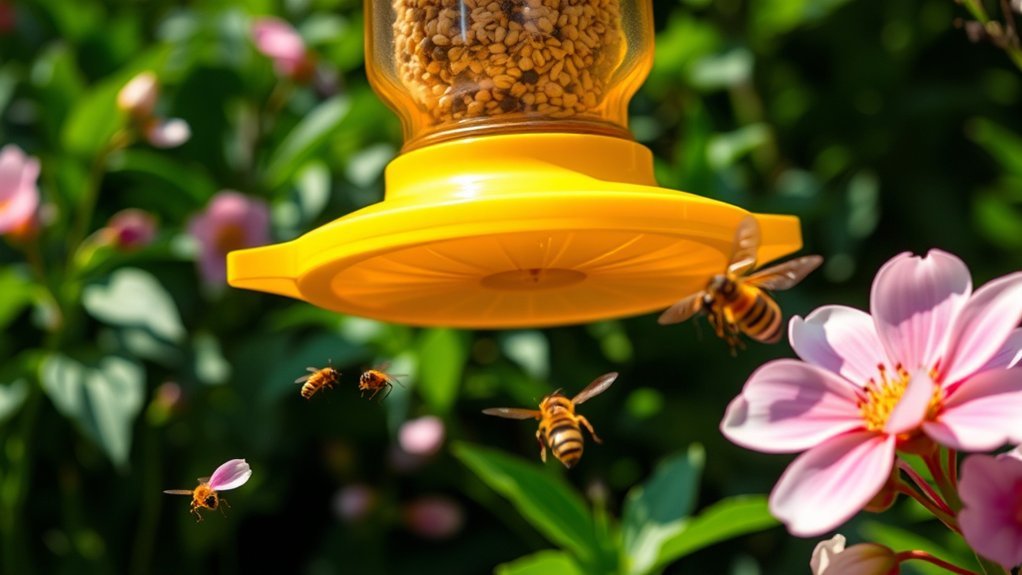
To keep yellow jackets away from your bird feeder, use wasp traps. Here are some simple types you can choose from:
- Bottle traps: These use sweet liquids to attract wasps.
- Jar traps: They've holes that let wasps enter but not escape.
- Commercial traps: These come with special attractants that work well.
Where you place the traps is important, too. Put them at least 10-15 feet from the feeder. This way, the wasps will go to the traps instead of bothering the birds.
Hang them in shady spots or near plants for better results.
Check your traps often and replace them when needed. This keeps them working well.
Plant Wasp-Repelling Flowers Around Feeders
When you set up your bird feeders, think about planting flowers that keep wasps away.
Flowers like marigolds and mint are great choices. They smell nice and help keep yellow jackets from bothering you and your birds.
Plant these flowers around your feeders to create a safe space. The flowers will also attract helpful bugs that help your garden grow.
This way, you can enjoy watching the birds without worrying about wasps.
Using wasp-repelling flowers is a smart and natural way to make your backyard more fun for everyone.
Enjoy the lovely birds and the beautiful flowers!
Employ Natural Repellents
If you want to keep yellow jackets away from your bird feeders, there are some easy natural repellents you can use. These solutions help create a safe space for your birds.
- Peppermint oil: The strong smell of peppermint keeps yellow jackets away. Just a little can work wonders.
- Eucalyptus oil: This oil smells fresh and helps keep wasps far from your feeders.
- Vinegar spray: Mix vinegar with water in a spray bottle. You can spray it on and around the feeders to keep yellow jackets off.
These natural methods not only protect your bird feeders but also keep your garden safe. Using items from nature helps you enjoy your garden while looking out for the birds.
Keep Feeders in Shady Areas
If you want to keep yellow jackets away from your bird feeders, try putting them in shady spots.
The shade helps by keeping things cooler. Yellow jackets like warm places, so placing your feeders under trees or awnings can help. This means fewer yellow jackets bothering the birds while they eat.
Cooler areas also keep birdseed fresh and stop it from going bad too quickly.
Offer Alternative Food Sources
To keep yellow jackets away from your bird feeders, try placing the feeders in shady spots.
Another great way to help is by giving yellow jackets some other food choices. This will help steer them away from your birds and into their own tasty snacks.
Here are some easy foods you can offer:
- Fruit scraps: Leftover pieces of overripe apples or peaches are perfect. Yellow jackets really like sweet fruits.
- Meat scraps: Bits of leftover lunch meat or cooked chicken can attract yellow jackets because they need protein too.
- Honey or sugar-water: Put some honey or sugar-water in a small dish. Yellow jackets love these sweet treats.
By adding these food options to your yard, you help keep your birds safe and happy.
Plus, it gives the yellow jackets their own place to eat. Everyone can enjoy their meals without getting in each other's way!
Monitor and Limit the Amount of Food Provided
To keep yellow jackets away, watch how much food you put in your bird feeders. This helps control the food and stops these pests from coming around.
Try filling your feeders only when needed, like in the early morning or late evening. This way, there will be fewer leftover seeds that attract yellow jackets.
You might also think about using smaller feeders. These can hold less food at a time, which makes it harder for the pests to find a feast.
Install Feeder Baffles to Block Access
Installing feeder baffles helps stop yellow jackets from bothering your bird feeders. These simple tools create a barrier, making it hard for wasps to get to the bird food.
When picking baffles, think about the type of feeder you have and the material you want. Here are some options:
- Durable plastic: It's lightweight and can handle bad weather.
- Metal options: They look nice and last a long time.
- Clear, weather-resistant: They fit well in your garden.
Place the baffle between your feeder and where you hang it. This way, your birds can eat without yellow jackets getting in the way.
With the right setup, your birds will have a peaceful meal!
Create a Yellow Jacket Nuisance Zone
Yellow jackets can be a big problem around bird feeders. They can scare birds away and make it hard for you to enjoy watching them. But you can create a special area to keep yellow jackets away.
First, set up yellow jacket traps near the feeder. You can buy these traps at stores. Use bait that yellow jackets like, such as meat or tuna. Don't use sweet bait, because that will attract honeybees instead.
The traps should be placed about 10 to 20 feet from the feeder. This keeps the traps away from your birds while still catching yellow jackets.
Check the traps often. Make sure there's enough bait in them. If the bait runs out, refill it right away. This will help keep your feeder safe and make it more enjoyable for the birds to feed.
Educate Yourself on Yellow Jacket Lifecycles and Patterns
To manage yellow jackets near bird feeders, it's helpful to know about their lifecycles and behavior.
This knowledge lets you predict when they'll show up and how to change your feeding habits.
- Early spring: New queens come out. They're hungry and look for food.
- Mid-summer: Many yellow jackets are in one colony. They can get aggressive near food during this time.
- Fall: The queens die, and fewer yellow jackets are around, but they still search for food.
Frequently Asked Questions
Do Yellow Jackets Prefer Specific Types of Bird Seed?
Yellow jackets like some types of bird food. They especially enjoy foods that are sweet, like fruits or sugary mixes. If you want to keep yellow jackets away, you can pick bird seeds that do not have these sweet ingredients. This way, you can attract birds without inviting yellow jackets to join the feast!
Can Yellow Jackets Damage Bird Feeders?
Yes, yellow jackets can harm bird feeders. They are very aggressive when searching for food. Their constant buzzing around can scare birds away from the feeders. This can make it hard for the birds to eat safely.
If you have bird feeders in your yard, you might want to think of ways to protect them from yellow jackets. Simple things like keeping the area clean and using special feeders can help keep these pests away. Keeping your feeders safe means the birds can enjoy their meals without worries!
Are Yellow Jackets Aggressive Toward Humans?
Yellow jackets can be mean, especially if you get too close to their homes. They feel threatened and might sting if they think you are a danger. Knowing this can help you stay safe around them. Just be careful and give them space, and you'll have a better chance of avoiding any trouble.
What Time of Year Are Yellow Jackets Most Active?
Yellow jackets are most active in late summer and early fall. This is when they are buzzing around the most. Knowing this can help you prepare for when you might see them outside. If you understand their habits, you can enjoy your time outdoors without worrying too much about these insects.
How Can Weather Affect Yellow Jacket Activity Around Feeders?
Weather has a big effect on yellow jackets and how they behave. When the weather is warm, yellow jackets are more active. They come out more and are often found around feeders looking for food. But when it rains a lot or gets really cold, yellow jackets tend to stay away. This means you might not see them as much around feeders during bad weather.
In short, if it is nice outside, expect to see more yellow jackets. If the weather turns bad, they will likely be less active and stay away from feeders.

Joyce is the passionate founder of Chirping Hearts, a website dedicated to sharing her love for birds and providing valuable information about avian life. With a background in ornithology and years of experience in birdwatching, Joyce aims to inspire others to appreciate the beauty and diversity of birds. Through her engaging articles and guides, she hopes to foster a community of bird enthusiasts who share her enthusiasm for these incredible creatures. When she’s not writing, Joyce enjoys exploring nature trails and observing birds in their natural habitats.