Do Birds Eat at Night? Understanding Nocturnal Feeding Habits
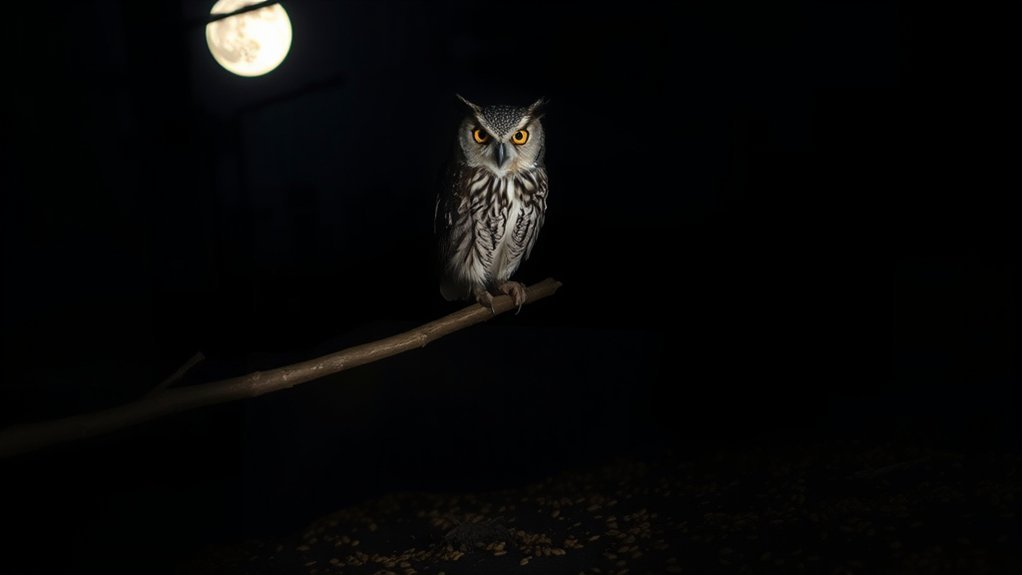
Many birds eat at night. They have special skills to help them find food in the dark. Owls are a good example of nocturnal birds. They have excellent eyesight and sharp hearing. This helps them catch their prey easily.
Owls can fly quietly, so their food doesn't hear them coming. They also blend in well with their surroundings, making it harder for their prey to spot them.
These nighttime habits are important. Nocturnal birds help keep nature in balance. They control the population of small animals in their habitats. Understanding how these birds live and feed helps us appreciate their role in the ecosystem.
A Quick Overview
Many birds, especially those that are active at night, like owls and night hawks, hunt and eat during dark hours. These birds have good night vision and sharp hearing. This helps them find food when it's hard to see.
Nocturnal birds use quiet flying and their colors to blend in with their surroundings. This makes it easier for them to sneak up and catch their prey without being noticed.
The weather can change how these birds hunt. For example, rain and wind can make it harder to see or move around.
Nocturnal birds also make sounds at night. They use calls for finding mates or claiming their space. These sounds are important for their night activities.
The Nocturnal Bird Species
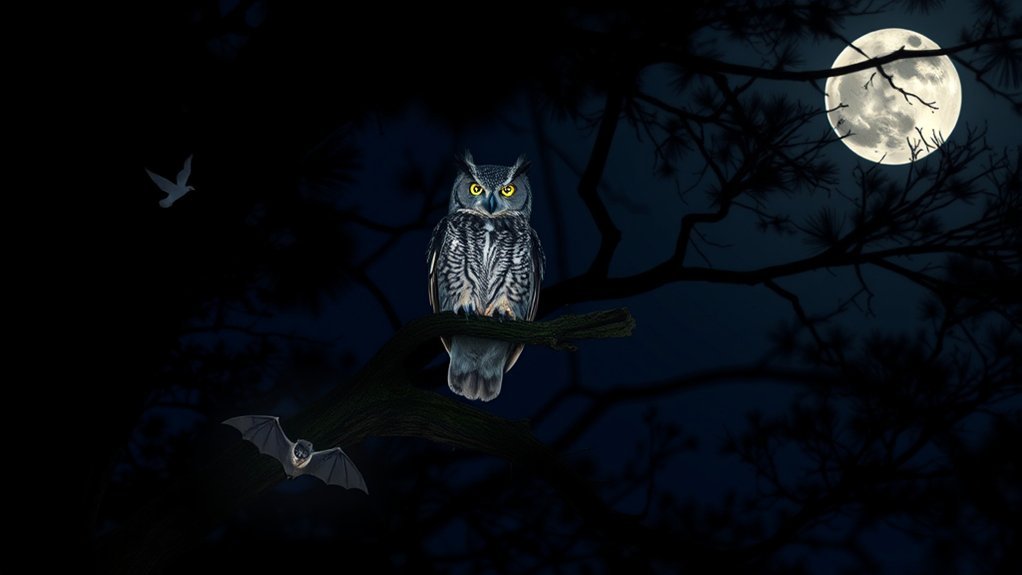
Many birds are active during the day, but some have learned to thrive at night. Among these birds, owls are the most well-known. They're famous for their unique sounds and their ability to fly silently, which helps them hunt at night.
You can find different types of owls, each with their own ways of catching food based on where they live.
Another interesting group of nocturnal birds is the night hawks. They also come out after dark and often fly around to catch insects in the air. Their good eyesight and sharp hearing help them find food in the dark.
Adaptations for Nighttime Feeding
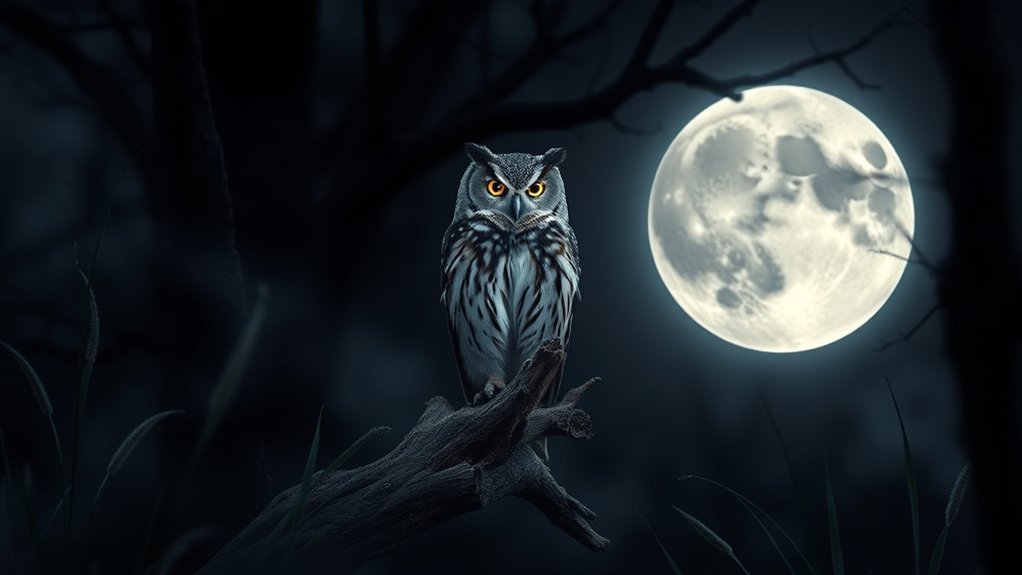
Nocturnal birds have some cool features that help them find food when it's dark outside. These special traits help them see and hear better at night.
Here are three interesting features:
- Better Night Vision: Their eyes have a lot of cells called rods. These rods help them see in low light, which makes it easier to spot movement when it's dark.
- Sharp Hearing: Many of these birds can hear really well. They can track down their food by listening for sounds, even when there's no light at all.
- Unique Face Shape: Some nocturnal birds have a special face shape that helps direct sound to their ears. This helps them find hidden prey more easily.
These features make nighttime feeding exciting for both the birds and anyone who watches them.
The Role of Vision in Nocturnal Birds
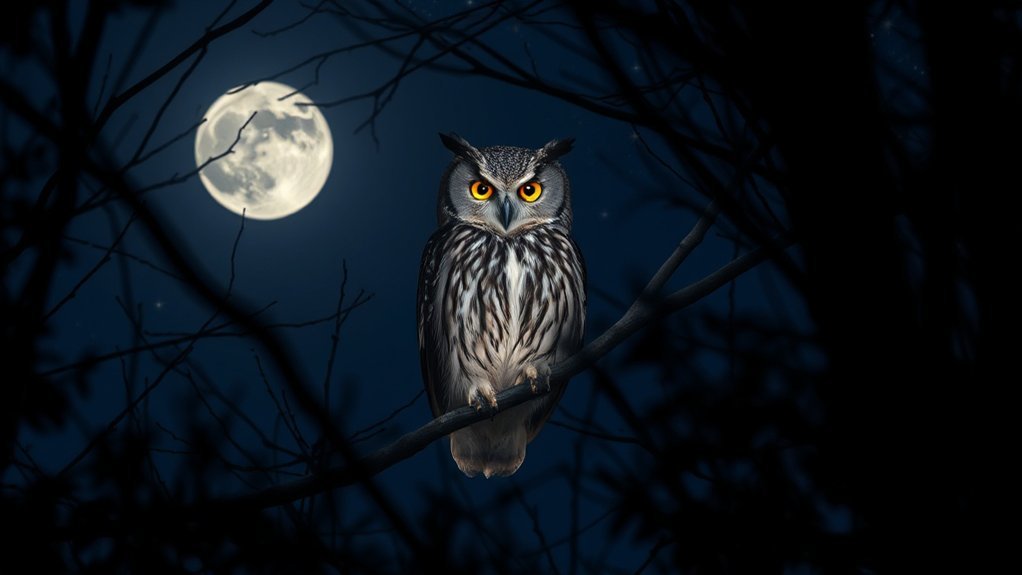
When night falls, nocturnal birds rely on their amazing vision to survive. These birds have special eyes that help them see well in the dark. Their large eyes face forward, giving them a wide view of their surroundings. They've lots of rod cells in their eyes, which help them see low light better.
Many nocturnal birds also have a shiny layer behind their retina called the tapetum lucidum. This layer reflects light, making it easier for them to see in the dark.
Because of these helpful features, they can find food and move around in the night. Their strong night vision also helps them fit into their environment, allowing them to interact with the world around them and survive the darkness.
Hunting Strategies of Night Predators
At night, many animals hunt in the dark. These night predators use special tricks to catch their food.
Here are three ways they do it:
- Sharp Ears: Nocturnal birds have excellent hearing. They can hear their prey move, even when it's pitch black outside.
- Quiet Flying: These birds have special wings that help them fly silently. This allows them to sneak up on their food without being noticed.
- Blending In: Night predators have feathers that match their surroundings. This camouflage helps them get close to their prey without being seen.
These strategies help night hunters succeed in catching their food while staying hidden in the darkness.
Foraging Techniques in Darkness
Birds use different ways to find food in the dark. One way is called silent foraging. Owls and nightjars are good at this. They move quietly and listen closely to find their prey without being noticed.
During twilight, many birds go hunting. They take advantage of the time when it's getting dark. Their senses help them catch smaller animals that are waking up.
These birds pay attention to what's happening around them. They change their hunting methods based on how their prey behaves. This ability to adapt helps them survive and keeps nature in balance.
Watching these birds search for food at night is fascinating. They show us how amazing nature can be!
The Impact of Weather on Nighttime Feeding
Weather can change how birds hunt for food at night. It can affect how well they find food and how much they move around. Here are some important weather factors to think about:
- Temperature: When it's cold, some birds mightn't want to search for food. This means they might stay still and not be very active.
- Precipitation: Rain can make it hard for birds to hear their prey. It can also block their view, making hunting harder.
- Wind: Strong winds can push birds around and make it tough to find food. They might stick to sheltered spots where the wind is weaker.
The Importance of Moonlight for Nocturnal Birds
Moonlight is very important for nocturnal birds, which are birds that hunt at night. When the moon shines bright, these birds can see better. This light helps them find food and stay safe from other animals. They can move around their favorite places more easily and spot their meals without much trouble.
On nights without moonlight, hunting becomes tougher for these birds. They've to rely more on their other senses, like listening and smelling. It's interesting to see how different bird species adjust to the changing phases of the moon. Some may use different tricks to find food depending on how bright the night is.
In short, moonlight does more than just light up the sky at night. It helps these amazing birds hunt and survive in their environment.
The Sounds of the Night: Communication Among Nocturnal Birds
Nocturnal birds use sounds to communicate in the dark. They've special calls that help them interact with each other and stay safe.
Here are three important types of calls that they use:
- Mating Calls: Male birds sing to attract females. This helps them find partners to mate and raise young together.
- Territorial Calls: Birds make unique sounds to mark their territory. This tells other birds to stay away, which helps avoid fights.
- Warning Calls: When danger is near, nocturnal birds alert their friends with specific calls. This keeps everyone aware of possible threats.
With these calls, nocturnal birds connect with each other and play their part in nature, even in the darkness.
Their songs help them build relationships and stay safe at night.
Diet Diversity in Nocturnal Birds
Some birds search for food during the day, but others, like owls and nightjars, are active at night. These nocturnal birds eat many different types of food, depending on where they're hunting.
Owls mostly catch small mammals and bugs. Nightjars eat flying insects that are drawn to lights, especially during warm months.
These birds can adapt their eating habits to different places, which helps them survive. For example, common nighthawks can hunt in open fields or urban areas, changing their feeding methods as needed.
Comparing Nocturnal and Diurnal Feeding Behavior
When we look at how birds eat at night versus during the day, we see some cool differences. Nocturnal birds, like owls, and diurnal birds, which are active in the day, both have smart ways to catch their food.
Let's break it down into three simple points:
- Vision: Birds that hunt at night have special eyes that help them see in the dark. This means they can find their meals even when there's little light.
- Activity Pattern: Nocturnal birds are awake and hunting when it's dark outside. On the other hand, diurnal birds sleep at night and look for food when the sun is up.
- Prey Selection: Birds that feed at night often eat small animals or insects that are also active then. Diurnal birds, however, usually go after flying insects or look for seeds during the day.
These differences show how well birds adjust to their surroundings to find food.
Conservation of Nocturnal Bird Habitats
Nocturnal birds need special places to live so they can find food and raise their young. By protecting these places, we help ensure they survive and keep nature balanced.
Woodlands, wetlands, and grasslands are important for these birds because they provide food and safe spots for nesting.
When we work together to protect these habitats, we not only help the birds but also bring our community closer. You can join or start projects that focus on preserving these areas. Every little bit helps, and your involvement can truly make a difference for these birds.
Understanding how important nighttime bird homes are helps you feel more connected to nature and to your community.
Let's support these special places for the birds and enjoy the beauty they bring to our world!
Frequently Asked Questions
Do Nocturnal Birds Sleep During the Day?
Yes, nocturnal birds usually sleep during the day. They are active at night when they hunt or look for food. Sleeping during the day helps them save energy and stay alert at night. This pattern is important for their survival. Birds like owls and nightjars are great examples of nocturnal birds that follow this routine.
How Do Nocturnal Birds Avoid Predators?
Nocturnal birds stay safe from their enemies in a few clever ways. First, they use camouflage. This means their feathers help them blend in with trees, leaves, and other parts of nature. This makes it hard for predators to see them.
Second, these birds have special skills for hunting at night. They can fly quietly without making much noise. This helps them sneak up on their food and avoid being noticed by others.
Third, they have great eyesight for low light. They can see well even when it's dark. This ability helps them spot dangers and find food easily.
Are There Any Larger Birds That Feed at Night?
Yes, there are larger birds that hunt at night, especially owls. Many owl species are known for their nighttime feeding habits. They hunt small animals like mice and birds. Their sharp senses help them find food in the dark. Watching these owls can teach you more about how birds live and behave. It's interesting to see how they interact with their surroundings while searching for food.
What Is the Lifespan of Nocturnal Birds?
Nocturnal birds have different lifespans based on their kinds. For example, owls usually live between 10 to 15 years. Some nightjars can live up to 20 years! Their habitats and diets can affect how long they live. This makes birdwatching interesting because you can learn about their lives and the world they live in.
How Does Urbanization Affect Nocturnal Bird Feeding?
Urbanization affects nocturnal birds in important ways. One major issue is light pollution. City lights can confuse birds, making it hard for them to find food. This confusion can change how they hunt and eat. When birds struggle to find food, their populations can drop in urban areas.
Habitat destruction is another problem. As cities grow, birds lose places to live and nest. Their safe spaces disappear, making it harder for them to thrive.

Joyce is the passionate founder of Chirping Hearts, a website dedicated to sharing her love for birds and providing valuable information about avian life. With a background in ornithology and years of experience in birdwatching, Joyce aims to inspire others to appreciate the beauty and diversity of birds. Through her engaging articles and guides, she hopes to foster a community of bird enthusiasts who share her enthusiasm for these incredible creatures. When she’s not writing, Joyce enjoys exploring nature trails and observing birds in their natural habitats.