Spotting Black and Blue Birds in Your Area: Identification Tips
When you go outside, you might see black and blue birds flying around. Their colors can help you figure out what kind of birds they are. For example, the American Crow is all black and easy to spot. The Eastern Bluebird has bright blue and orange feathers, making it stand out.
Watching how these birds act and where they like to hang out can make birdwatching more fun. Ready to learn some easy tips to spot and identify these birds? Let's dive in!
A Quick Overview
- Look for American Crows. They have shiny black feathers and make loud cawing sounds. You can find them in cities and the countryside.
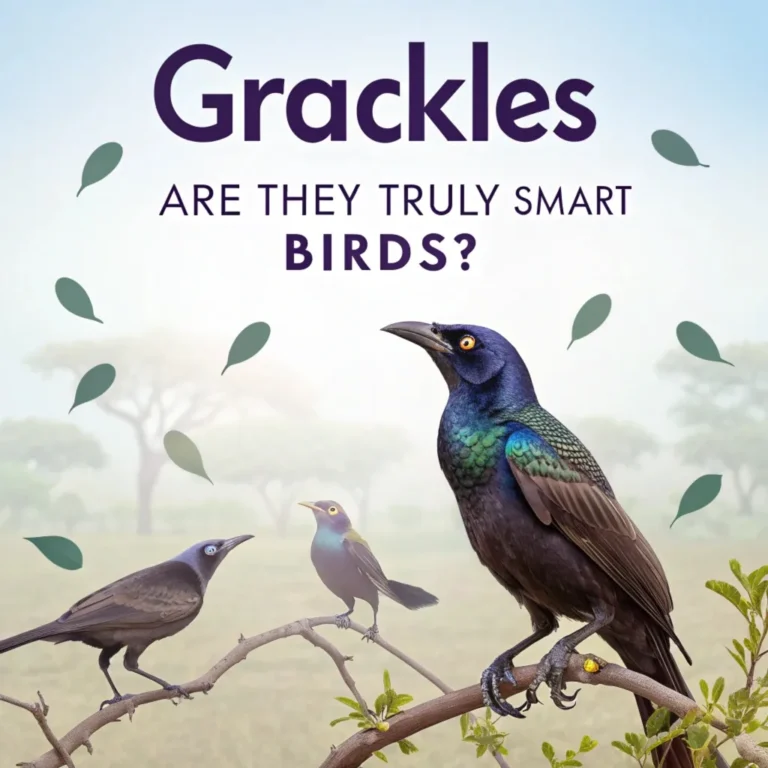
- Common Grackles are easy to spot. They have shiny black heads and their bodies glisten in the sunlight. You'll usually see them in open spaces like fields or near water.
- Red-winged Blackbirds have special red and yellow patches on their shoulders. You can find them in marshes and parks during warmer months.
- Check out Eastern Bluebirds. They are bright blue on top and have rusty orange on their throats. They like open fields with trees around.
- Use binoculars to see birds better, especially when they are eating or playing at feeders or in open areas.
Understanding Bird Coloration

When you see birds in the wild, their colors can help you identify them.
Colors play a big part in how birds behave and interact with each other. Bright colors usually mean a bird is healthy and full of energy. These colors can attract mates and scare off competitors.
Many black birds have darker colors that help them blend in with their surroundings. This camouflage helps them hide from predators.
Pay attention to these color differences. They can tell you about a bird's type and how it lives.
As you learn more about bird colors, you'll feel a stronger connection to nature. This makes birdwatching even more fun and helps you bond with other bird lovers.
Common Black Birds and Their Features

Black birds are easy to spot and come in many kinds. You might see the American Crow. It makes loud sounds and has shiny feathers. The Common Grackle is another blackbird that shines brightly in the sunlight.
Look for the Red-winged Blackbird, too. It has bright red and yellow patches on its shoulders. These birds sing unique songs and show bold behavior.
You can find them in many places, like marshes and city parks. They're fun to watch and appreciate for their beauty and lively nature.
Keep your eyes open, and enjoy the sights and sounds of these amazing birds!
Identifying Blue Birds: Key Traits

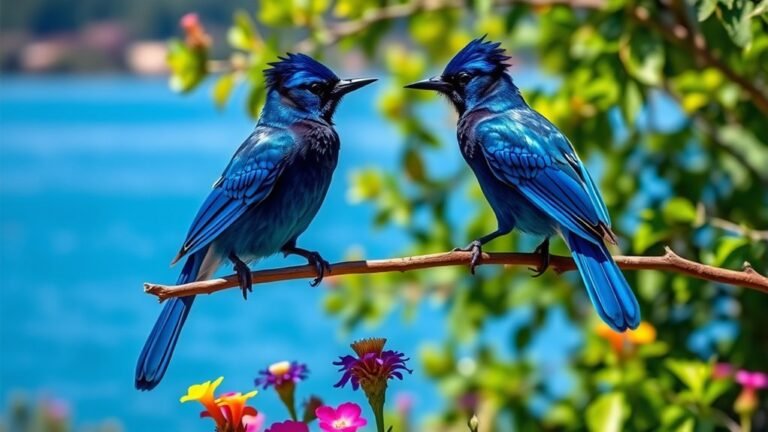
Finding blue birds can be just as exciting as spotting black birds. To identify blue jays, look for their bright blue feathers. These colors stand out against their white and black markings.
Blue jays have a special crest on their heads that goes up when they feel happy or upset. You will also hear their loud calls, which can sound like other birds.
Blue jays are medium-sized birds with strong bodies and wide tails. They're smart and brave, often taking food from other birds. Pay attention to these traits, and you'll enjoy your birdwatching even more!
Seasonal Variations in Bird Plumage
As the seasons change, birds change their colors too! This can help you identify them. Many birds, especially those with black or blue feathers, switch up their looks to fit the weather.
For example, in fall and winter, some birds may have duller feathers to blend in with their surroundings and hide from predators. When spring arrives, they often show off bright colors for mating.
Take the Eastern Bluebird, for example. In spring and summer, its feathers are a lovely blue and orange.
But as it gets colder, their colors become more muted. Observing these changes can make birdwatching more exciting. You'll feel more connected to the birds around you.
Habitat Preferences of Black and Blue Birds
Many black and blue birds like to live in certain areas that fit their needs. You can often see them at the edges of woodlands. Here, there are bushes that give them shelter and plenty of food. They enjoy spots like riverbanks and city parks. These areas have fruits, seeds, and insects that keep them happy, even with people nearby.
When black and blue birds build their nests, they pick hidden spots. They like to nest in thick leaves or in tree holes. This keeps their young safe from danger.
Watching these birds in their favorite places can help you understand them better. When you know where they like to live, you can find them more easily and help protect their homes.
Size and Shape Differences
When you look at black and blue birds, size and shape help you tell them apart. Some birds are small, like the Black-capped Chickadee. Others are bigger, like the American Crow. Notice their wings and tails, too. For example, the Blue Jay has a long tail and wide wings, while the Tree Swallow has a slimmer shape.
You can also see differences in their beaks. Birds that eat seeds, like grackles, have bigger, chunkier beaks. Insect eaters have thinner beaks.
Vocalizations: Listening for Identification
Listening to bird sounds can help you tell different types of black and blue birds apart.
Even if you can't see them, their calls can give you clues about which bird you're hearing. For example, the Blue Jay has loud and quick calls, while the Eastern Bluebird sings soft and sweet songs.
If you pay attention to these sounds, you can learn to recognize them. Spend some time outside where these birds live, and you'll start to notice their unique sounds.
You can share what you find with friends or other bird lovers. This way, you build friendships and learn to appreciate these amazing birds even more.
Let their voices help you enjoy your birdwatching adventures!
Behavior and Feeding Habits
Bird behavior and feeding habits help us identify black and blue birds. Watching how they act gives us useful hints. For example, blue jays are social birds. They often look for food together. They might take food from other birds or hide snacks for later.
On the other hand, black birds like the common grackle usually prefer to be alone. They're patient and often search for food on the ground. Pay attention to how they approach their food. Do they peck at seeds, look in the grass, or chase after insects?
Knowing these small differences can help you enjoy watching these colorful birds even more. When you observe them closely, you'll notice their unique behaviors and how they fit into nature.
Using Field Guides and Apps
Field guides and mobile apps help you spot black and blue birds in your area. Printed guides like the "National Geographic Field Guide to the Birds" show clear pictures and easy-to-read descriptions.
If you want a fun experience, check out apps like Merlin Bird ID or iBird Pro. These apps can help you quickly identify birds and see what others have spotted nearby.
When you look at different field guides, you can see how they're laid out and which one is easier to use. Pick one that feels good for you.
As you go birdwatching, use both guides and apps to make the experience more exciting. This way, you can connect with others who love birds, too!
Tips for Effective Birdwatching
When you start birdwatching, getting ready can make your trip much better. First, get a good pair of binoculars to help you see the birds clearly. Bring a comfy chair or a blanket so you can sit and watch for a while. A notebook is helpful for writing down what you see, and having a field guide or a bird ID app can help you recognize birds quickly.
It's important to be polite while birdwatching. Keep your voice down, don't disturb any nests, and give other birdwatchers their space. Wear clothes in neutral colors to blend in with nature. This way, birds will feel safer around you. Be patient and try to stay still; if you do, birds may come closer.
Pick good places to watch birds. Local parks and nature reserves are often full of interesting birds in shades of black and blue. Enjoy your time watching!
Keeping a Bird Journal for Better Identification
Keeping a bird journal can really help you identify different birds. Writing down what you see will make you better at spotting birds and help you connect more with them. Each entry in your journal is like a personal note, so you can remember what you saw, where, and when.
Here are some things you might want to include in your bird journal:
- Date and time: Write down when you saw the birds.
- Location: Note where you were when you spotted them.
- Description: Describe their colors, shapes, and sizes.
- Behavior: Write about what they were doing, like eating or building a nest.
These simple notes can help you find those tricky black and blue birds faster.
Plus, keeping a journal will make you feel like part of the birdwatching community while you learn and improve your skills.
Happy birdwatching!
Frequently Asked Questions
Are Black and Blue Birds Common in Urban Areas?
Certain black and blue birds live in cities. They can adjust to urban areas if there are trees and food. When you walk in city parks or gardens, take a look around! You might spot these colorful birds enjoying their surroundings.
What Time of Day Is Best for Birdwatching?
The best times for birdwatching are early mornings and evenings. In the morning, birds are active and the light is nice for seeing them. In the evening, many birds come back to their nests. Try to plan your birdwatching trips for these times to have a better chance of spotting different birds. Enjoy your time outside and happy birdwatching!
Do Black and Blue Birds Migrate Together?
Black and blue birds usually do not migrate together. Each type of bird has its own migration pattern. Some birds fly alone or in small groups, while others may join mixed flocks with different species. This variety in migration makes birdwatching more interesting and fun.
How Can I Attract Black and Blue Birds to My Yard?
To attract black and blue birds to your yard, follow these simple steps. First, put up bird feeders. Fill them with seeds that these birds enjoy. Next, plant native plants that provide food and shelter. Birds feel safe when they have places to hide and find bugs to eat.
Don't forget to add water sources like bird baths. Fresh water is important for birds to drink and bathe.
What Binoculars Are Best for Birdwatching?
When you pick binoculars for birdwatching, go for light ones that won't tire you out. Waterproof features help protect them in rain or wet areas. A good magnification range is from 8x to 10x. This helps you see details clearly while keeping everything stable, so you can enjoy watching birds and nature.

Joyce is the passionate founder of Chirping Hearts, a website dedicated to sharing her love for birds and providing valuable information about avian life. With a background in ornithology and years of experience in birdwatching, Joyce aims to inspire others to appreciate the beauty and diversity of birds. Through her engaging articles and guides, she hopes to foster a community of bird enthusiasts who share her enthusiasm for these incredible creatures. When she’s not writing, Joyce enjoys exploring nature trails and observing birds in their natural habitats.