
Grackle Vs Crow: Distinguishing Features of These Common Birds
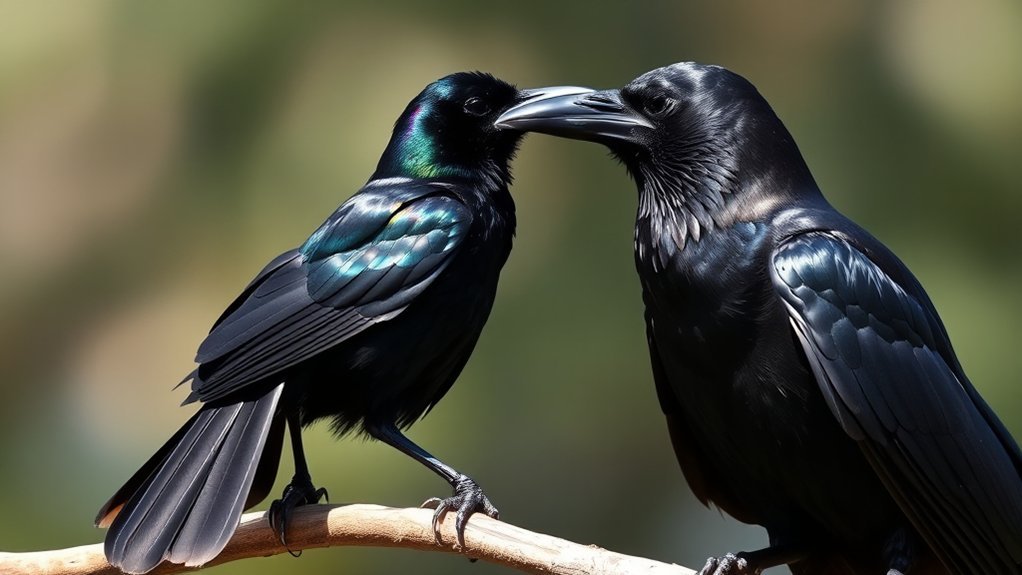
When you look at grackles and crows, you can see some clear differences between them. Grackles have shiny feathers and slim beaks. They are often playful and active. Crows are bigger and take things more seriously. They have strong, thick beaks and a dark, serious look about them.
These differences can help you tell them apart. Watching how they act and where they live can make birdwatching even more fun. You might wonder what other features make these birds unique. So, keep an eye out and enjoy learning about them!
A Quick Overview
Grackles and crows are two common birds that you might see outside. Let's look at how to tell them apart.
Grackles are colorful birds with shiny feathers that sparkle in the light. Crows, on the other hand, have dark and glossy feathers, which make them look serious.
When it comes to their beaks, grackles have thin and slightly curved ones, while crows have strong and straight beaks. Grackles also have bright yellow eyes, but crows have dark and expressive eyes.
You can hear different sounds from these birds too. Grackles chirp quick, cheerful whistles, while crows make deep "caw" sounds. The cawing of crows can feel mysterious and serious.
When grackles eat, they can be playful or a bit aggressive. Crows are more social and often work together to find food.
As for where they like to hang out, grackles prefer open spaces like parks in towns. Crows are more flexible and can live in many places, like forests, fields, and near the coast.
So next time you see a grackle or a crow, you'll know how to spot the differences!
Overview of Grackles and Crows
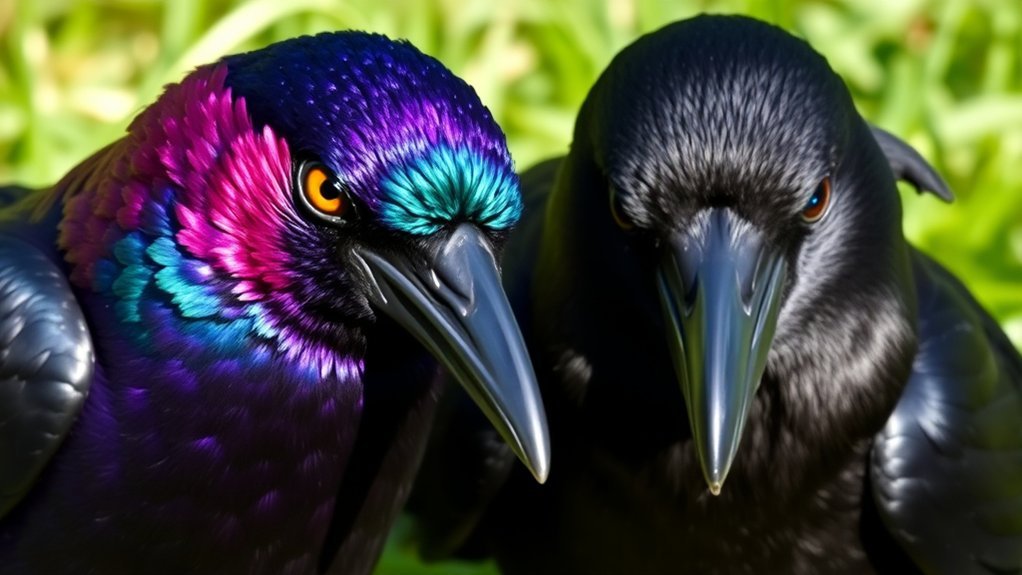
Grackles and crows look similar. They're about the same size and have dark feathers, but they're different birds. Grackles have shiny, colorful feathers and enjoy playing and flying around while they look for food.
In contrast, crows are serious and known for being very smart. They can solve problems well, which is why many people admire them.
Crows often symbolize mystery and adaptability. On the other hand, grackles show interesting social behavior and are great at finding food in different places.
Learning about these differences can help you appreciate both birds more. It can also make you feel more connected to nature and give you fun things to talk about with friends who like birds, too.
Habitat and Distribution
Grackles and crows live in different places across North America, and they like different types of habitats.
Grackles prefer open spaces. You can find them in:
- Urban parks and farms, looking for food scraps.
- Wetlands and marshes, which give them good spots to build nests and find food.
- Suburban neighborhoods, where they enjoy visiting bird feeders.
Crows, on the other hand, are more versatile and can live in many environments.
They thrive in:
- Forests, where they can build nests and find food.
- Fields, searching for insects and seeds.
- Coastal areas, which provide a variety of food sources.
Each bird has its own likes and dislikes for where to live.
Physical Appearance
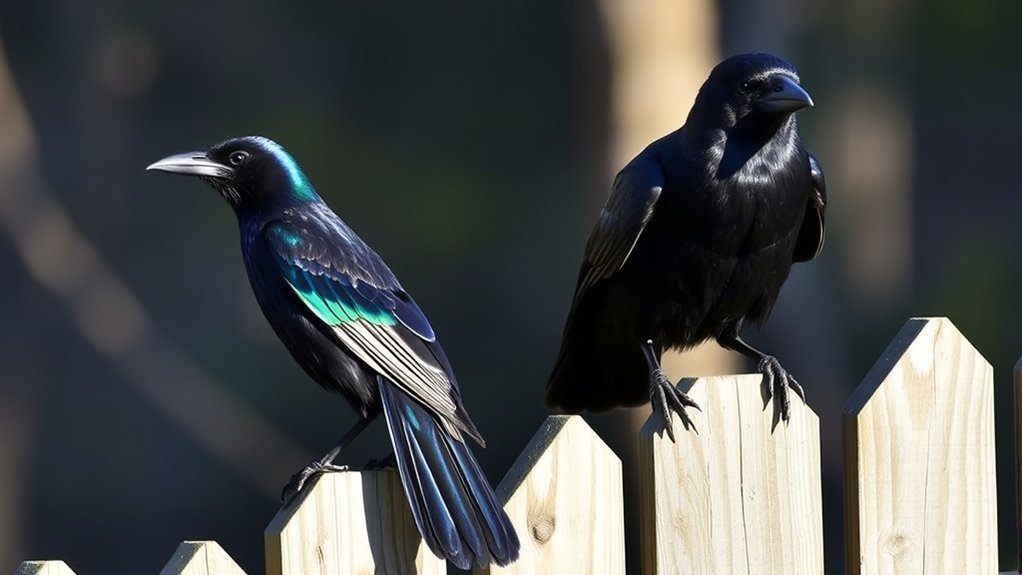
When you look at these two birds, you can see some clear differences. The grackle has a thin, slightly curved beak. This helps it find seeds and insects to eat.
The crow, on the other hand, has a strong, straight beak. This type of beak is good for cracking open hard seeds and finding food on the ground.
Don't forget to notice their eyes! Grackles usually have bright yellow eyes that shine against their dark feathers.
Crows have dark, expressive eyes that match their all-black bodies.
These details—beak shape and eye color—are great clues to help you tell these birds apart.
Knowing these traits will make birdwatching more fun and help you appreciate these amazing creatures around you!
Plumage and Coloration
When you look closely at grackles and crows, you can see some big differences in their feathers and colors.
Grackles have bright, shiny feathers that change color. They can look purple or blue when the sunlight hits them just right.
On the other hand, crows are mostly black. Their feathers shine too, but they don't have the same colorful spark.
- Grackles have long, pointy tails that help show off their bright colors.
- Crows have a strong, rounded body with solid black feathers that soak up the light.
- Grackles have bright yellow eyes that pop against their colorful feathers.
In contrast, crows have dark eyes that match their black look.
Size Comparison
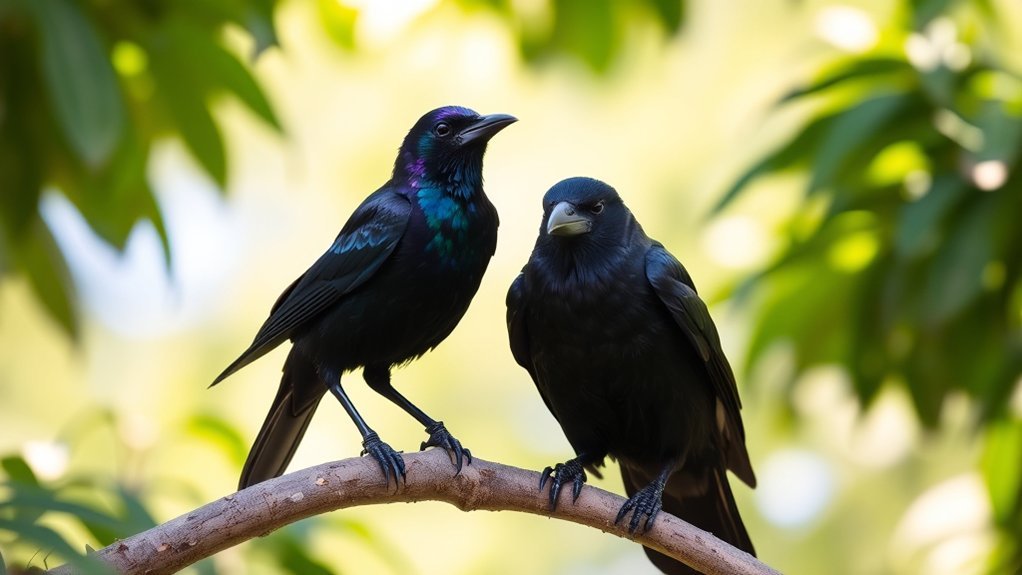
Grackles are usually between 12 to 15 inches long. Crows are a bit bigger, measuring from 16 to 21 inches. This size difference helps you tell these birds apart.
When it comes to their wings, grackles have a wingspan of about 15 to 18 inches. Crows, however, have a larger wingspan, reaching 28 to 33 inches. The size of a crow makes it look more impressive in the sky.
Next time you see a grackle or a crow, pay attention to how big they're and how they fly. Noticing these differences can make birdwatching more fun!
Vocalizations and Sounds
The sounds that grackles and crows make help you tell them apart. Their voices are really different, and learning them can make bird-watching more fun.
- Grackles make quick, musical whistles. They can sound like little clicks.
- Crows have a deep "caw" sound. This sound changes a lot and can mean different things.
- Sometimes, grackles copy the calls of other birds, which adds variety to their sounds.
When you know these sounds, you can easily recognize each bird. Grackles' cheerful chirps bring energy, while crows' low calls give a mysterious feeling.
This shows how smart and adaptable they are. Enjoy listening!
Behavior and Social Structure
Grackles are often more aggressive than crows, especially when they're looking for food or building their nests. When you watch grackles, you'll see that they've a clear order in their groups, which can lead to competition among them. They move quickly and make loud noises to show their rank and assert their place in the flock.
Crows, on the other hand, behave differently. They work together to share food and resources. Crows form strong bonds with each other, which helps them stay connected as a family or a group.
As you observe these birds, you'll notice how their social behaviors differ and what roles each bird plays in its group. It's interesting to see how they interact!
Feeding Habits
Grackles and crows both eat whatever they can find, but they do it in different ways.
Grackles usually search for food in open areas like fields. Here are some ways grackles find their meals:
- Ground foraging – Grackles dig in the dirt to find bugs and seeds.
- Aerial captures – They can catch flying bugs while flying, showing their quick moves.
- Scavenging – Grackles often look for leftover food from people, especially trash.
Crows, however, are very smart about how they get their food. They like to save some food for later, which is called caching.
Both grackles and crows like different types of food, but they're good at staying alive and finding friends in their places.
Breeding and Nesting
Grackles and crows have different ways of breeding and nesting, even though they've some things in common. Grackles like to show off when they mate. They use loud calls and perform cool flying tricks to impress their partners. They often build their nests in groups, using grasses, twigs, and other stuff they find. Their nests are usually high up in trees or bushes.
Crows, on the other hand, prefer to hang out alone or with a partner. They build stronger nests than grackles. Crows pick sturdy materials like mud, leaves, and sometimes even pieces of trash to make their nests. This shows how well they can adapt to different places.
When we observe how these birds build their nests and raise their young, we can appreciate the unique ways they live and thrive.
Role in the Ecosystem
Grackles and crows are important birds in nature. They help keep the ecosystem healthy in several ways. Here are three main things they do:
- Cleaning Up: Grackles and crows eat dead animals. This helps break down waste and recycle nutrients back into the soil.
- Finding Food: They look for insects and seeds. This keeps the insect population in check and helps plants grow strong. Their presence shows us how healthy the environment is.
- Spreading Seeds: When they move around, they carry seeds with them. This helps new plants grow and makes the ecosystem more diverse.
These actions show how vital grackles and crows are for a balanced habitat.
Watching them can help you appreciate these fascinating birds and their role in nature!
Tips for Birdwatching and Identification
Watching grackles and crows can help you learn about their important roles in nature. To enjoy birdwatching more, it's crucial to identify them correctly. Start by getting good binoculars with at least 8x zoom for clear views.
Stand still and focus closely on the birds to see them better.
Look for special features to tell them apart. Grackles have shiny, colorful feathers, while crows are completely black. Pay attention to their size, how they act, and the sounds they make.
You can also use bird identification apps on your phone to check what you see right away. Connecting with other birdwatchers can make the experience even better.
Share what you see and learn from each other. This way, you can enjoy birdwatching and get better at spotting these interesting birds.
Frequently Asked Questions
Do Grackles and Crows Have Different Migratory Patterns?
Yes, grackles and crows have different ways of migrating. Grackles fly south in big groups during certain seasons. They like to follow patterns. On the other hand, crows usually stay in the same area. They live in their homes through winter. They only move if they really need to because of bad weather or food shortages.
How Long Do Grackles and Crows Typically Live?
Grackles usually live for about 2 to 4 years. In contrast, crows can live a lot longer—around 15 to 20 years!
Some things can affect how long these birds live. For grackles and crows, dangers like predators, weather, and food availability play a big role in their lifespan. When they have enough food and a safe place to live, they tend to live longer.
Are Grackles and Crows Known for Any Specific Behaviors?
Grackles and crows have some interesting behaviors that make them unique. Grackles often act aggressively to defend their territory. You might see them puffing up and making loud calls to warn off other birds. On the other hand, crows are very social. They like to gather in groups and work together.
When it comes to finding food, grackles usually look for food in large flocks. They often share space with other birds. Crows are a bit different; they are really smart. They can solve problems to get food. For example, they might figure out how to open a container or use a tool.
Both birds show how clever and social they can be, each in their own way. It's fun to watch them and see what they do!
Can Grackles and Crows Interbreed?
Grackles and crows usually don't mix when it comes to mating. They have different ways of showing interest in each other and their genes don't really work together well. This keeps them unique and helps them stay true to their own behaviors and traits. So, when you see them in your neighborhood, remember they each have their own special way of living.
What Predators Threaten Grackles and Crows?
Grackles and crows face dangers from a few different predators. These predators like to raid their nests and steal their food.
Raptors, which are birds of prey like hawks and eagles, hunt grackles and crows. Snakes may climb trees to get into the nests. Raccoons are known for sneaking into nests to eat eggs or baby birds.
Other bigger birds, like owls and larger crows, may take food from grackles or compete for the same resources. This competition can make it harder for grackles and crows to find food or raise their young.
Understanding these risks can help us appreciate how these birds fight to survive in the wild.

Joyce is the passionate founder of Chirping Hearts, a website dedicated to sharing her love for birds and providing valuable information about avian life. With a background in ornithology and years of experience in birdwatching, Joyce aims to inspire others to appreciate the beauty and diversity of birds. Through her engaging articles and guides, she hopes to foster a community of bird enthusiasts who share her enthusiasm for these incredible creatures. When she’s not writing, Joyce enjoys exploring nature trails and observing birds in their natural habitats.


