Do Owls Eat Squirrels? Understanding Their Dietary Habits
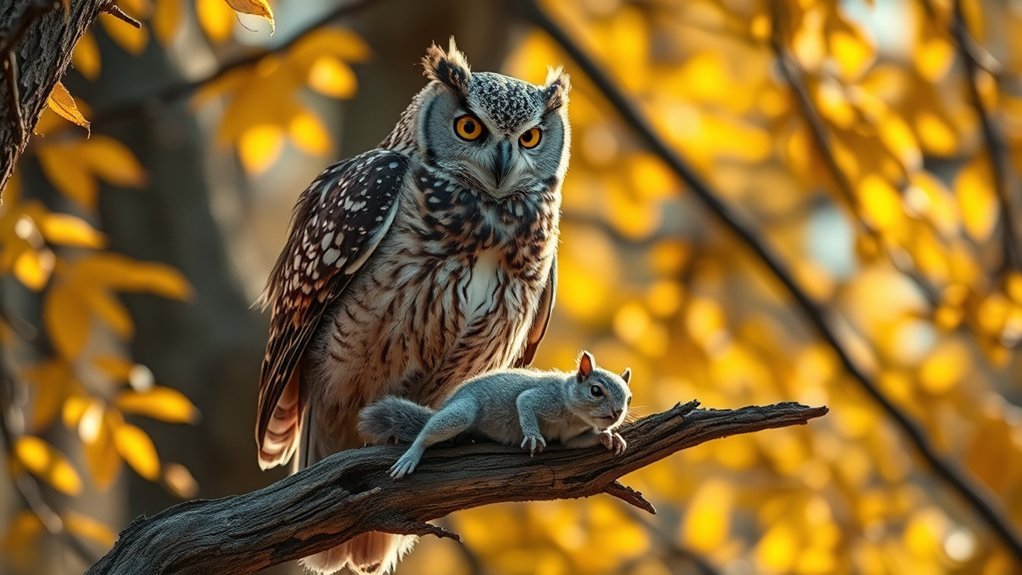
Owls are fascinating birds that fly silently at night. Sometimes, they hunt and eat squirrels. Squirrels are small animals, and they are just one part of what owls eat.
Owls have many different meals in their diet. They may eat mice, insects, and even small birds. Learning about how owls catch squirrels helps us see how the natural world works. It shows us how different animals, like owls and squirrels, are connected in the ecosystem.
When owls hunt, they use their sharp eyesight and hearing to find food in the dark. They swoop down quickly and can catch their prey with their strong talons. This ability keeps the balance in nature because it helps control the squirrel population.
In summary, owls do eat squirrels. This interesting relationship helps maintain the ecosystem, showing us how all animals play a role in nature.
A Quick Overview
Yes, owls eat squirrels. They love to hunt them, especially during the early morning and evening when squirrels are most active.
Squirrels make up a big part of what some owls eat. Owls are good hunters. They can see well at night and move quietly, which helps them catch squirrels, whether the squirrels are up in trees or down on the ground.
Eating squirrels helps keep wildlife populations balanced in nature. This means that as owls hunt, they help control the number of squirrels in their area.
Also, the time of year can change what owls eat. In certain seasons, owls may hunt more squirrels than at other times.
Overview of Owl Species and Their Habitats
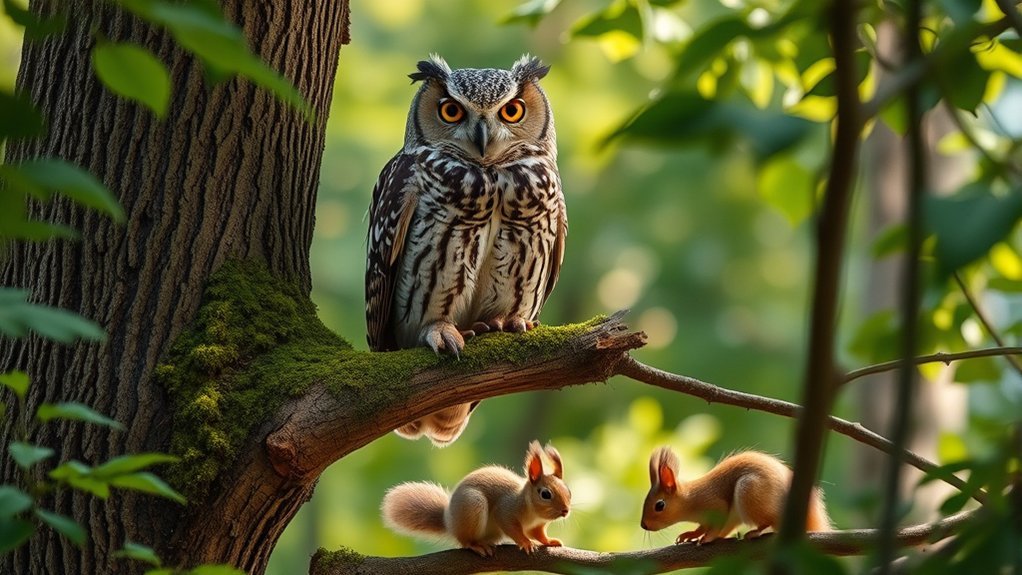
Owls are fascinating birds that many people see as symbols of wisdom. There are many kinds of owls that live in different places all over the world. You can find them in forests, grasslands, deserts, and even in cities. Each type of owl has special traits that help it live in its home. For example, the Great Horned Owl likes to stay in thick woods, while the Burrowing Owl prefers open fields.
The places owls live shape their bodies and their behaviors. For instance, some owls build nests high in trees, while others dig holes in the ground.
By learning about the different types of owls and where they live, you can see how important they're to nature. Owls help control pests and keep the ecosystem balanced.
Understanding owls can make you appreciate them more. They aren't just beautiful creatures; they play a big role in their habitats.
The Diet of Owls: What Do They Typically Eat?
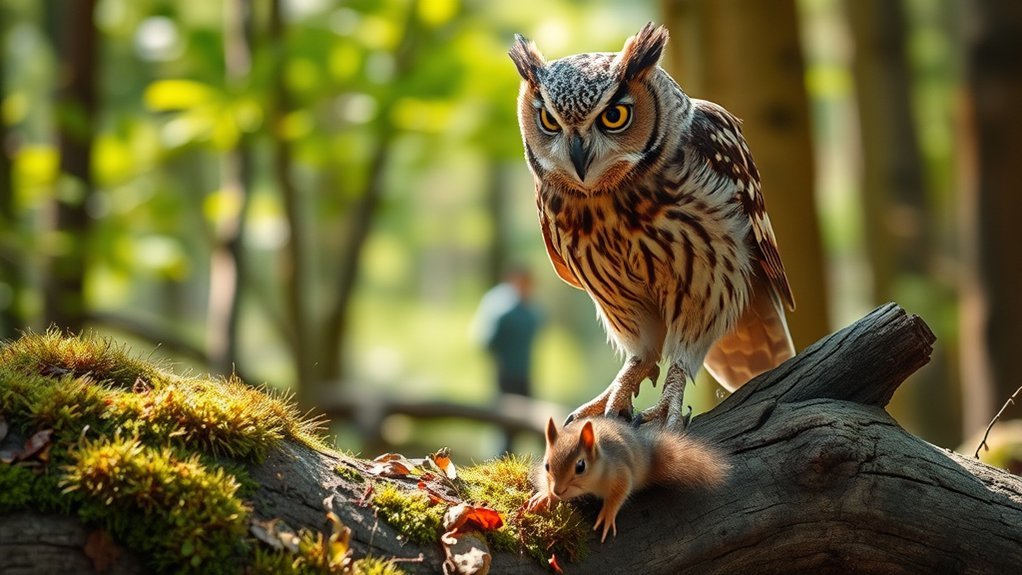
Owls are fascinating birds, and they eat a variety of food depending on where they live and what kind they are.
Let's take a look at what owls usually have for dinner:
- Small animals, like mice and voles.
- Different kinds of birds, which they catch quietly.
- Insects and other tiny creatures.
Owls are very good at finding food. They've sharp ears and fly quietly, which helps them catch their prey.
This ability lets them live in many different places. Their varied diet shows how important they're in nature.
Learning about what owls eat is fun and makes us appreciate wildlife even more!
Types of Squirrels Found in Owl Habitats
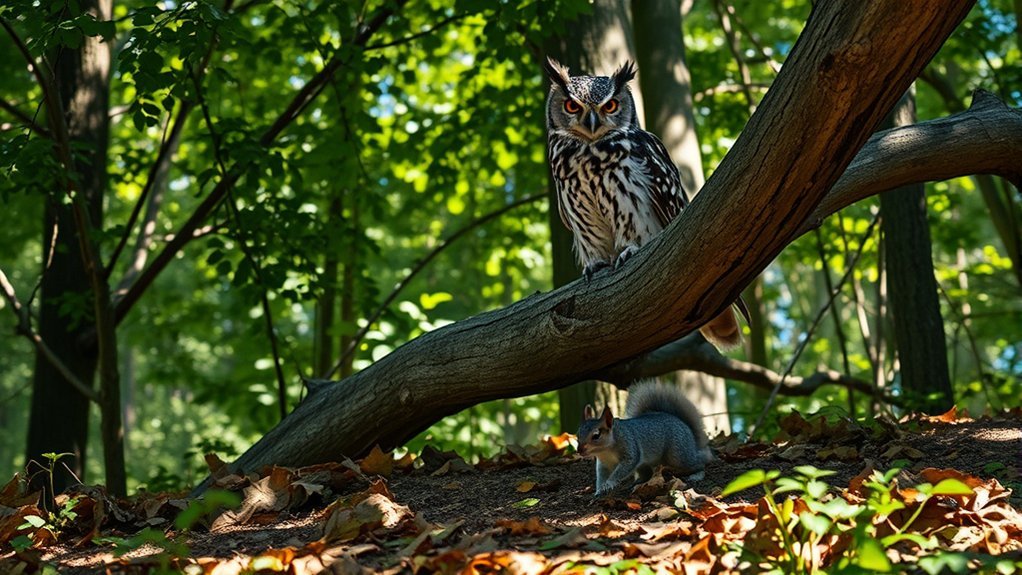
When you look around owl habitats, you might see different types of squirrels. Tree squirrels are often found in forests. They're great climbers and love to jump from branch to branch.
Flying squirrels like to glide through the trees in thick forests. You mightn't see them often because they mostly come out at night.
Ground squirrels live in open fields and grassy areas. They dig burrows to stay safe and find food. Each type of squirrel has its own favorite place to live.
Tree squirrels can even be seen in cities, while ground squirrels like to group together in big families.
Watching how these squirrels move and interact can be really interesting. You can learn a lot about their habits and how they live alongside owls.
It's a fun way to see how nature works together!
Hunting Techniques of Owls
Owls are amazing nighttime hunters. They use special skills to catch their food, making them great at finding prey in the dark.
First, owls have excellent night vision. This helps them see even the smallest movement when it's really dark outside. They also use a quiet way of flying. Their feathers make almost no sound, so they can sneak up on their prey without being heard.
Sometimes, owls sit very still on a branch, waiting patiently for the right moment to pounce on their meal. Other times, they move back and forth across open fields in a search pattern. This method is called "quartering," and it helps them find mice or other small animals hiding in the grass.
Owls also have a cool trick called "stooping." This means they dive quickly from above to surprise their prey. It's a fast and effective way to catch something to eat.
The Role of Squirrels in an Owl's Diet
Squirrels are a key part of an owl's diet. Owls eat them because they're easy to find and catch. Squirrels are often out and about during early morning and evening, which is when owls like to hunt.
Owls have special skills that help them catch squirrels. They can see well in the dark and fly quietly. This makes them great hunters. Squirrels usually move around in trees and on the ground, making them a perfect meal for larger owls.
The relationship between owls and squirrels shows how animals depend on each other in nature. Each one plays an important role in their environment.
Learning about this connection helps us appreciate wildlife and how different animals work together in nature.
Seasonal Variations in Owl Diets
As the seasons change, owls change what they eat. They adjust their diets based on what prey is available throughout the year.
In winter, food is harder to find. Owls mainly hunt small mammals and birds that they can spot under the snow. This affects how they hunt and when they're active at night.
In fall, owls like to build up fat. They hunt a lot of squirrels and other rodents during this time.
In spring, many birds return from their trips to warmer places. Owls take advantage of this and eat more songbirds.
In summer, insects are everywhere. Owls will also eat insects and frogs to get enough food.
Knowing how owls change their diets helps us appreciate these amazing birds even more.
Predation and Its Impact on Squirrel Populations
Owls are important for keeping squirrel numbers in check. They hunt squirrels, especially when squirrels are most active. By doing this, they help stop squirrels from multiplying too quickly. If there are too many squirrels, they can damage their habitat and take resources away from other animals.
When owls are around, squirrel populations stay healthier. Fewer squirrels mean there's less fighting among animals for food and space. This helps all animals in the area live better lives.
Owls also influence how squirrels act. Squirrels become more alert and change their behaviors to stay safe from owls. This makes them smarter at avoiding danger.
By understanding how owls hunt, we see that they help protect not just squirrels but also the whole ecosystem. They support a rich and lively environment where many animals can thrive.
It's a great example of how nature keeps itself balanced!
Other Prey: What Else Do Owls Hunt?
Owls are amazing hunters, and they do more than just catch squirrels. They eat a variety of other animals, showing how flexible they can be.
Here are some of the main types of prey that owls hunt:
- Rabbits: Larger owls often eat rabbits. These animals give them a good amount of energy and nourishment.
- Birds: Owls will hunt many kinds of birds, from small sparrows to larger waterfowl, depending on what's available.
- Insects: In warmer months, smaller owls may eat insects to help fill their stomachs.
Each type of prey shows how owls adapt to different situations.
This diversity helps keep nature balanced, as owls play a big role in their habitats. Their hunting skills are impressive and show how they can thrive in various environments.
Adaptations of Owls for Hunting and Feeding
Owls are amazing hunters, and they've some cool features that help them catch their food.
First, their wings are special and make no noise when they fly. This helps them sneak up on their prey without being heard.
Owls can see really well in the dark, which makes it easy for them to spot food when the sun goes down.
Their round faces work like ears, helping them hear better. This means they can find tiny animals, even when it's pitch black outside.
Their strong claws and sharp beaks are perfect for grabbing and eating small creatures like squirrels.
All these traits make owls great at hunting. They're the masters of the night!
The Ecological Significance of Owls as Predators
Owls are amazing nighttime hunters, and they play an important role in nature. They help keep the balance in our ecosystems by affecting how many animals are around. When owls are present, they help prevent any single species from taking over.
Here are some ways owls help the environment:
- They control the number of rodents, like mice and voles, so these animals don't eat all the plants and crops.
- Their hunting ensures there are healthy populations of animals, which helps keep their genes strong.
- Owls can show us how healthy an environment is. If they're doing well, it usually means other wildlife is too.
Learning about owls and their role in nature helps us appreciate these cool birds. It also reminds us how everything in nature is connected.
Owls are essential for creating a balanced and healthy environment for all living things.
Frequently Asked Questions
Do All Owl Species Hunt Squirrels?
Not all owls hunt squirrels. Each kind of owl has its own way of finding food based on where it lives. Some owls like to catch small animals, while others prefer to hunt birds or bugs. This shows that owls have different tastes when it comes to food.
How Do Owls Find Squirrels in Dense Foliage?
Owls are amazing hunters, especially when looking for squirrels hiding in thick trees and bushes. They use special skills to find their food.
First, owls have sharp eyes that can see really well, even in the dark. This means they can spot a squirrel moving around, even if it is hard to see.
Second, owls also have great ears. They can hear tiny sounds from far away. If a squirrel rustles leaves or makes a small noise, an owl can catch that sound.
With these skills combined, owls sneak close to their prey. They stay quiet and still, watching and listening carefully. When they know where the squirrel is, they swoop down quickly to catch it.
Owls make hunting look easy, thanks to their sharp senses and sneaky moves. They are really good at finding squirrels in all kinds of places.
Are There Specific Times When Owls Hunt Squirrels?
Owls usually hunt squirrels during twilight and at night. They like these times because it is dark, which helps them see better. Owls have great night vision. They fly silently, so they can sneak up on their prey. This makes it easier for them to find and catch squirrels.
Do Owls Prefer Certain Squirrel Species Over Others?
Owls usually like to catch prey that is easy to find. This means they tend to choose certain types of squirrels based on where they live and how many squirrels are around. If a specific squirrel species is common in the area, owls may hunt them more often. Habitat and availability are key factors in which squirrels owls prefer. So, the next time you see an owl, remember they are likely targeting the squirrels that are easiest for them to catch!
How Do Climate Changes Affect Owls' Ability to Hunt Squirrels?
Climate change can affect owls and how they hunt for squirrels. When temperatures change, it can change where squirrels live and how many there are. This impacts the food that owls rely on.
As squirrels move to new places or become less common, owls need to change how they hunt. They might have to look for food in different areas or find new types of prey.
Owls are smart and can adapt. By changing their hunting styles, they can keep finding food to survive. But these changes can be tough for them.

Joyce is the passionate founder of Chirping Hearts, a website dedicated to sharing her love for birds and providing valuable information about avian life. With a background in ornithology and years of experience in birdwatching, Joyce aims to inspire others to appreciate the beauty and diversity of birds. Through her engaging articles and guides, she hopes to foster a community of bird enthusiasts who share her enthusiasm for these incredible creatures. When she’s not writing, Joyce enjoys exploring nature trails and observing birds in their natural habitats.