
Do Owls Eat Bats? Insights Into Their Prey Choices
Owls have interesting diets. Many people think owls mostly eat rodents like mice or rats. But did you know that some owls also enjoy eating bats? This is a surprising fact that shows how owls choose their food.
Owls are smart hunters. They look for what is available in their environment. If bats are around, some owls might decide to catch them. Their hunting skills help them find different types of prey.
Understanding what owls eat can teach us about their daily lives. It shows how they adapt to their surroundings. So, next time you think of owls, remember that bats can be part of their diet too!
A Quick Overview
Do owls eat bats? Yes, some owls, like Barn Owls and Great Horned Owls, do include bats in their meals.
Owls have special ways of hunting. They can fly very quietly and have sharp hearing. This helps them catch bats easily.
Where owls live matters too. In cities, owls usually catch more rodents and birds instead of bats.
Bats play an important role in nature. They help control insect populations, and they also provide food for owls.
What owls like to eat can change. It depends on where they live, how many prey animals are around, and how old the owl is.
So, yes, owls can eat bats, but they also enjoy a variety of other food based on their environment!
The Owl's Hunting Habits

Owls are special birds that hunt at night. Unlike many birds that use their eyes during the day, owls have amazing skills for seeing and hearing in the dark. Their big eyes help them see movement very well, even when it's dark. Their ears are also very good; they can hear the smallest sounds made by animals hiding nearby. This helps them catch their food more easily.
One cool thing about owls is that they can fly without making much noise. Their feathers are shaped in a way that keeps them quiet when they swoop down for a meal. This silent flight is a big part of why they're such good hunters at night.
Learning about how owls hunt is fun. It shows us how important they're in nature as nighttime hunters. By understanding these interesting facts, we can appreciate these amazing birds even more!
Common Owl Species That Eat Bats

Many owls hunt small animals and insects, but some also eat bats.
Two well-known types of owls that like to eat bats are the Barn Owl and the Great Horned Owl. These owls have special ways of catching their food. They can fly quietly and use sharp claws to grab their prey in the dark.
Barn Owls usually go for smaller bats. Great Horned Owls, on the other hand, prefer bigger ones.
By studying what these owls eat, we can learn more about their role in nature and how they fit into the environment.
Watching these owls hunt can be exciting. It helps us appreciate their skills and the important balance they keep in nature.
Bats: An Important Part of the Food Chain
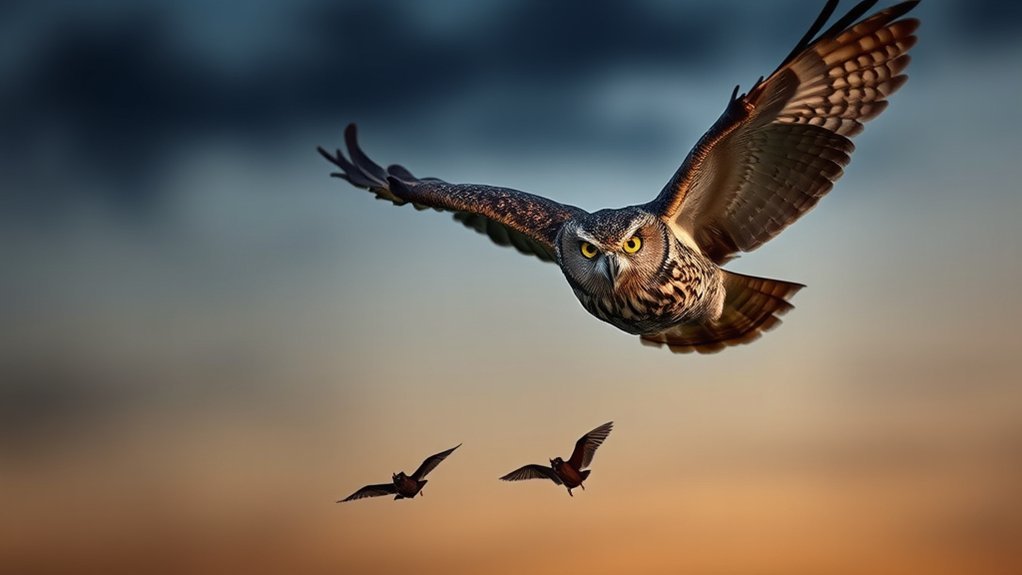
Bats are very important in nature. They help keep the balance in our ecosystems in different ways.
Let's look at how they do this:
- Insect Control: Bats eat a lot of insects. This helps farmers by reducing pests and making it easier to grow crops.
- Pollination: Some bats help flowers grow by spreading pollen. This is important for many plants to make seeds and fruit.
- Seed Dispersal: Bats also help plants spread their seeds. This helps forests grow back and keeps different types of plants healthy.
- Food Source: Many animals, like owls, eat bats. Bats are a vital food source that helps keep nature balanced.
Bats play a big role in the environment. By understanding what they do, we can see why it's so important to protect them.
Keeping bat populations healthy helps our planet stay vibrant.
Factors Influencing Owl Diet Choices
Owls are interesting animals, and their food choices depend on a few important things.
First, where they live affects what they eat. In cities, owls often go after rodents and small birds. But in the countryside, they might catch insects and frogs instead.
Another factor is how many prey animals are around. If there are fewer animals to eat, owls change their hunting plan. They might look for different food to survive.
Also, the age of the owl matters. Young owls usually try out different foods as they learn to hunt.
Hunting Techniques Employed by Owls
Owls are amazing hunters, and they use some cool techniques to catch their food. Here are a few things that help them succeed:
- Silent flight: Owls have special feathers that let them fly quietly. This way, they can sneak up on their prey without making a sound.
- Nocturnal vision: Their big eyes help them see in the dark. This lets them spot animals even when there isn't much light.
- Acute hearing: Owls can hear really well. Their ears are placed in a way that helps them figure out where sounds are coming from. This is super helpful when they're hunting at night.
- Stealthy movement: Owls can sit still for a long time. They watch closely for any movement around them, ready to swoop down when they see their next meal.
These skills make owls expert hunters.
They're fascinating to watch, and their hunting abilities remind us of how unique and special they're in nature.
The Impact of Habitat on Prey Availability
The habitat where owls live affects how many prey animals are around. In places like forests, grasslands, and wetlands, there are many different kinds of prey. This variety helps animals thrive and adjust to their homes. For example, small mammals and insects do well in these rich environments. They provide owls with a lot of food.
As prey animals adapt to their surroundings, they find ways to escape from predators. This affects how easy or hard it's for owls to catch them.
The connection between different habitats and how prey acts is important for owls' hunting success. Knowing how this works helps us appreciate the balance in nature that supports both owls and their food sources.
The Role of Nocturnal Predators in Ecosystems
Nocturnal predators are important for keeping nature in balance. They've a big impact on nighttime ecosystems and help create many different interactions.
Here are some key ways they help:
- They keep prey populations under control. This means they eat certain animals, which helps prevent overpopulation.
- They support biodiversity by stopping one species from taking over. This helps many different plants and animals thrive together.
- They help with nutrient cycling. When they hunt, they contribute to the flow of nutrients in the environment, which is crucial for healthy ecosystems.
- They can show us how healthy the environment is. When we see these predators, it often means that the ecosystem is in good shape.
Case Studies: Owl-Bat Interactions in the Wild
Let's talk about owls and bats!
These animals often interact in night-time forests. Many studies show how different kinds of owls hunt bats.
Great Horned Owls, for example, can catch bats flying through the air. They're quick and can hear really well. On the other hand, Eastern Screech Owls like to play sneak attack. They hide near places where bats rest and then pounce.
Interestingly, bats change how they find food when there are a lot of owls around. This shows us how the relationship between predator and prey works.
Frequently Asked Questions
Do All Owl Species Hunt Bats Regularly?
Not all owls catch bats regularly. Some owls may eat bats if they can find them, while others prefer different types of food. Owls change their hunting habits based on where they live and what is available around them.
For example, a barn owl might hunt bats at night, especially if there are many around. But other types of owls might look for mice, small birds, or insects instead. This helps them survive in different areas and environments. So, while some owls do hunt bats, it's not true for every owl out there.
What Time of Year Do Owls Primarily Hunt Bats?
In the fall, owls change their hunting habits. They start to look for bats more often. This happens because there are more bats around during the autumn months. Owls take advantage of the extra food available to them. So, if you see owls hunting in the autumn, they might be after bats!
Are Bats a Nutritional Choice for Owls?
Bats can be a good food choice for owls. When you watch how owls hunt, you can see that they sometimes catch bats to eat. Owls pick bats based on what is available and how much energy they need to stay healthy. Bats provide important nutrition that helps keep owls strong and active. If you enjoy learning about wildlife, you might find it interesting to see how owls choose their meals!
How Do Environmental Changes Affect Owl-Bat Interactions?
Environmental changes, like losing habitats and climate shifts, change how owls and bats interact. When habitats shrink, owls may struggle to find food. This can make them change how they hunt. These changes can affect how well owls survive and the balance in their ecosystem. When owls adapt their hunting skills, it can also impact the bat population, leading to more or fewer bats in an area. Overall, environmental changes create challenges for both owls and bats, making their relationship more complicated.
What Threats Do Owls Face When Hunting Bats?
When owls hunt bats, they face dangers from bigger birds and mammals that might want to eat them. Owls need to be careful. They often hunt quietly, but they must also watch out for these threats. Balancing being sneaky and staying alert is important for their safety.

Joyce is the passionate founder of Chirping Hearts, a website dedicated to sharing her love for birds and providing valuable information about avian life. With a background in ornithology and years of experience in birdwatching, Joyce aims to inspire others to appreciate the beauty and diversity of birds. Through her engaging articles and guides, she hopes to foster a community of bird enthusiasts who share her enthusiasm for these incredible creatures. When she’s not writing, Joyce enjoys exploring nature trails and observing birds in their natural habitats.