
Bird Introduction: Black-Chinned Hummingbird Overview
The Black-Chinned Hummingbird is a small and colorful bird. It measures about 3 to 4 inches long. Male birds have shiny black throats, which makes them stand out. These hummingbirds live in dry areas of the southwestern United States and Mexico. They eat nectar from specific flowers.
Their special flying style helps them reach flowers easily. Learning how they find food and fly can tell us about their role in nature.
There's still a lot to discover about their breeding habits and how we can help keep their populations safe. What else do you want to know about these amazing birds?
A Quick Overview
The Black-Chinned Hummingbird is a tiny bird. It measures about 3 to 4 inches long. Male Black-Chinned Hummingbirds have shiny black throats, while females have softer, lighter colors.
These little birds are mostly found in the southwestern United States and Mexico. They like to live in dry areas with lots of flowers, especially close to water.
The Black-Chinned Hummingbird loves to drink nectar from long, tube-shaped flowers. It has a great memory, which helps it remember the best spots to find food.
This hummingbird can hover in the air and turn its wings in different ways. It can flap its wings up to 80 times every second, which is really impressive!
Black-Chinned Hummingbirds also act like little gardeners. As they fly from flower to flower, they help plants grow by moving pollen around. This helps keep nature healthy and full of life.
Watching them can be a joy, and they play an important part in keeping our plants and flowers blooming!
Physical Characteristics of the Black-Chinned Hummingbird
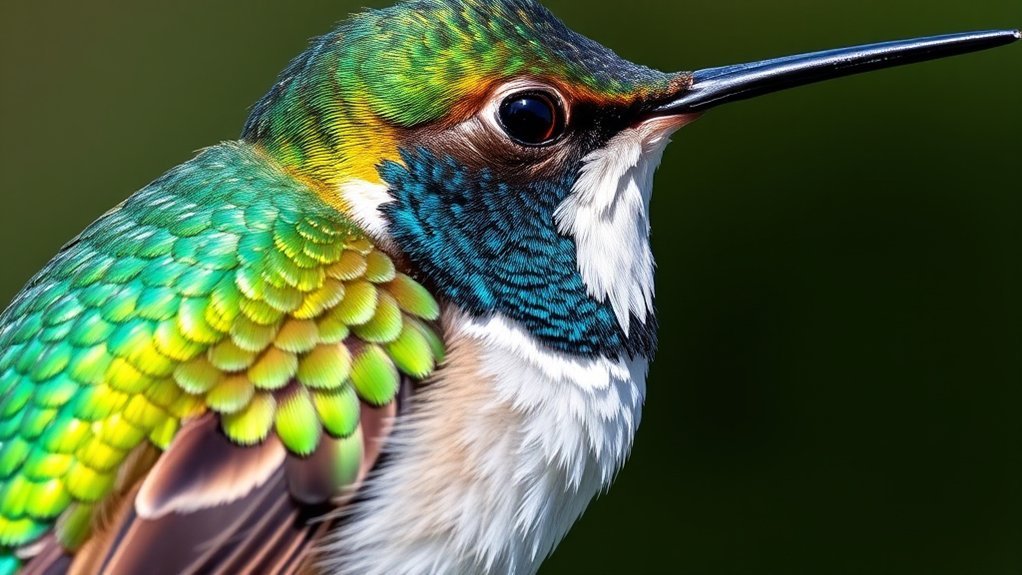
The Black-Chinned Hummingbird is a small bird that's easy to spot. It measures about 3 to 4 inches long, making it quite tiny. This bird stands out because of its bright colors.
Male Black-Chinned Hummingbirds have a shiny black throat and greenish sides, which look really cool. This makes it simple to compare them to other local hummingbirds, like the Allen's or Rufous.
Female Black-Chinned Hummingbirds look different. They don't have the bright throat color. Instead, they show softer shades of brown and green. This helps people tell the males and females apart.
Knowing these features of the Black-Chinned Hummingbird helps you appreciate how special it is. It also shows how important these birds are in nature. Watching them can bring a lot of joy!
Habitat and Range
Black-Chinned Hummingbirds are special birds that love dry places. They stay in areas with desert plants, rivers, and colorful flowers. You can find them mostly in the southwestern United States and Mexico.
These hummingbirds like to nest in bushes or small trees close to water. They need places with lots of flowers because flowers give them the sweet nectar they eat.
In seasons when flowers bloom, you can see these birds flying around, feeding and resting on different spots.
Knowing where these birds live is important. It helps us protect them and their homes.
Feeding Behavior and Diet
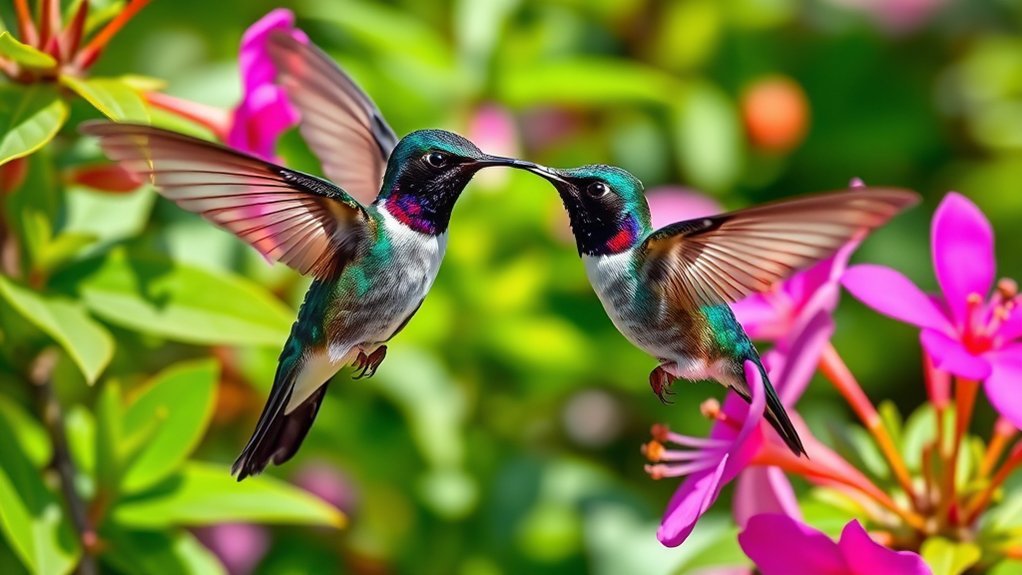
Black-Chinned Hummingbirds have an amazing way of finding food. They mainly drink nectar from many types of flowers. These tiny birds are smart about where they search for food. They like flowers that are long and tube-shaped because those usually have a lot of sugary nectar.
These hummingbirds have super memories. They remember where they find the best nectar. They use a special trick called "traplining." This means they visit a series of flowers in a specific order. This way, they take in as much nectar as possible while using less energy.
This behavior shows how well they adapt to their environment. It also shows how connected they're to the flowers they depend on.
You can see how nature works together in a beautiful way when you watch these birds.
Unique Adaptations and Flight Mechanics
Black-Chinned Hummingbirds are amazing to watch! They've special features that help them fly really well.
One cool thing about them is their wings. They can move their wings in a unique way, allowing them to turn their wings 180 degrees. This helps them fly both forward and backward.
Their wings are also shaped in a way that helps them move quickly through the air without much resistance. They flap their wings super fast—up to 80 times per second!
This speed, along with their light bodies, lets them hover in one spot easily.
These special traits make Black-Chinned Hummingbirds unique and showcase how nature creates wonderful creatures. They truly are a joy to see in action!
Role in Pollination
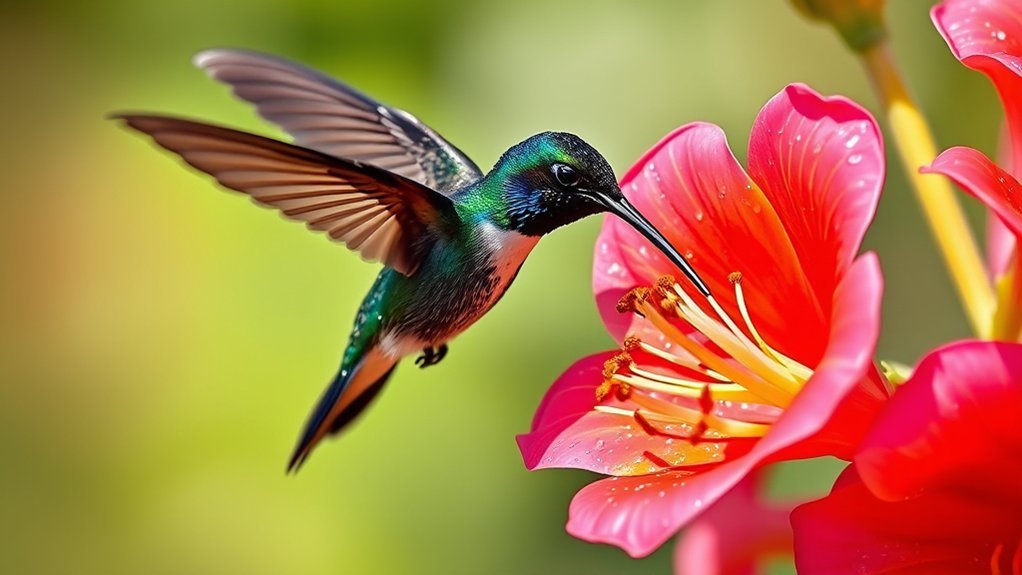
Hummingbirds, like the Black-Chinned variety, are very important for helping flowers grow. They find food by sipping nectar from flowers. While doing this, they move pollen from one flower to another. This helps flowers make seeds and grow new plants.
Black-Chinned Hummingbirds help different plants mix their genes. This mixture helps plants stay strong and healthy.
When plants thrive, they also support many animals that live in those areas.
Breeding and Nesting Habits
The Black-Chinned Hummingbird has interesting breeding and nesting habits. Male hummingbirds put on exciting shows to attract female birds. They fly around and show off their shiny feathers. This helps them make a good impression and defend their territory.
When a female chooses a mate, she looks for a safe place to build her nest. She usually picks spots in bushes or trees to keep her eggs safe from predators. The female makes a small cup-shaped nest using bits of plants and spider silk. This nest is cozy and protects her eggs.
Typically, she lays two eggs and takes care of them all by herself. After the chicks hatch, she feeds and cares for them, making sure they grow strong. This shows how important the female is for their survival.
Learning about these birds helps us appreciate their lives even more.
Conservation Status and Efforts
The Black-Chinned Hummingbird needs our help. Their nesting and breeding habits show that we must take care of their homes. Habitat destruction is a big problem for them. Many groups are working hard to protect and restore the places where these birds live.
These organizations team up with local communities to create safe environments for the hummingbirds. You can join in and help too! Support projects that focus on using native plants in gardens. These plants give hummingbirds the food they need.
Also, talk to your friends and family about why it's important to protect these habitats. When we spread the word, we help ensure that future generations get to see these beautiful birds in nature.
Frequently Asked Questions
What Is the Average Lifespan of the Black-Chinned Hummingbird?
The black-chinned hummingbird usually lives for about 3 to 5 years. Their lifespan can change based on where they live and how the environment affects them. Some places might have more food or less danger, which helps them stay healthy and alive longer. So, when you see these little birds, remember that their home matters a lot for how long they can live!
How Can I Attract Black-Chinned Hummingbirds to My Garden?
To attract black-chinned hummingbirds to your garden, start by planting bright flowers. Good choices include salvia and trumpet vine. These flowers make sweet nectar that hummingbirds love.
You can also set up feeders filled with a sugar-water mix. This gives the birds a quick and easy snack. Just remember to clean your feeders often to keep the birds healthy.
Creating a cozy home for these hummingbirds is important. Add some small trees or bushes for them to rest in. This helps make your garden a perfect spot for them to visit.
Enjoy watching these beautiful birds as they come to your garden!
Are Black-Chinned Hummingbirds Solitary or Social Birds?
Black-chinned hummingbirds are mostly solitary birds. They prefer to be alone, especially when it comes to feeding. You might see them near other hummingbirds at feeders, but they usually compete for food. This means they often don't share very well and focus on getting enough for themselves. So, while they can be around other birds, they act more like individuals trying to gather resources.
What Are Common Predators of the Black-Chinned Hummingbird?
Black-chinned hummingbirds have several common predators. These include larger birds, snakes, and spiders. These animals hunt the hummingbirds, posing a threat to their survival.
Larger birds may see the small hummingbirds as easy targets. Snakes can surprise them while they are resting or feeding. Spiders can catch young hummingbirds in their webs.
Knowing about these dangers helps us understand what hummingbirds face every day. It shows us how important it is to protect their environment. Hummingbirds play a special role in nature, and we should care for them.
Do Black-Chinned Hummingbirds Migrate? if So, When and Where?
Yes, black-chinned hummingbirds do migrate every year. They travel from the southwestern United States to Mexico.
These birds usually start their journey in the spring and return in the fall. Their migration depends on the weather and where they can find food. This journey helps them succeed in breeding and staying healthy.

Joyce is the passionate founder of Chirping Hearts, a website dedicated to sharing her love for birds and providing valuable information about avian life. With a background in ornithology and years of experience in birdwatching, Joyce aims to inspire others to appreciate the beauty and diversity of birds. Through her engaging articles and guides, she hopes to foster a community of bird enthusiasts who share her enthusiasm for these incredible creatures. When she’s not writing, Joyce enjoys exploring nature trails and observing birds in their natural habitats.