

Types of Bird Wings: Everything You Need to Know
Birds fascinate us with their ability to soar through the skies. Their wings are marvels of natural engineering, each type adapted for specific flight needs.
This post explores different types of bird wings, offering insights into their unique features and functions.

Key Takeaways: Understanding Bird Wing Types
- Bird wings come in various shapes and sizes, each optimized for different flight styles
- Wing types include active soaring, passive soaring, high-speed, and elliptical designs
- Wing shape affects a bird’s flight capabilities, including speed, maneuverability, and endurance
- Some birds have specialized wings for swimming or hovering
- Wing structure is closely tied to a bird’s habitat and lifestyle
- Understanding wing types helps in bird identification and appreciation of avian adaptations
- Wing loading and aspect ratio are key factors in determining a bird’s flight characteristics
- Flight feathers play a crucial role in wing function and aerodynamics
- Some flightless birds have modified wings for other purposes
- Wing types often correlate with specific flight behaviors and ecological niches
The diversity of bird wings is a testament to the power of evolution. Each wing type represents millions of years of adaptation to specific environmental pressures and lifestyle requirements.
From the soaring albatross to the hovering hummingbird, these adaptations showcase nature’s ingenuity in solving the challenges of flight.
Birds’ wings are not just for flying. They also play roles in communication, thermoregulation, and even swimming. This multifunctionality highlights the remarkable versatility of avian anatomy.
Active Soaring Wings

Active soaring wings are long and narrow. Birds with these wings excel at using horizontal air currents. Albatrosses and gannets have active soaring wings.
These wings allow for extended flight with minimal energy expenditure. Birds use these wings to cover vast distances over oceans.
The efficiency of active soaring wings is truly remarkable. Birds like the wandering albatross can fly for days or even weeks without landing, covering thousands of miles over open ocean.
This incredible endurance is made possible by their ability to lock their wings in an outstretched position, using subtle adjustments to ride the wind currents.
These wings are also adapted for dynamic soaring, a technique that allows birds to extract energy from wind shear between air layers.
Passive Soaring Wings

Passive soaring wings are broad and often slotted. Eagles and vultures typically have this wing type. These wings are ideal for catching rising air currents called thermals.
Birds with passive soaring wings can stay aloft for long periods while searching for food below.
The design of passive soaring wings allows birds to exploit vertical air movements effectively. The broad surface area provides maximum lift, while the slotted wingtips reduce drag and improve stability.
This adaptation enables birds like the California condor to soar for hours with minimal energy expenditure.
Passive soaring birds often have a distinctive silhouette when in flight, with their wings held in a slight V-shape called a dihedral angle.
High-Speed Wings

High-speed wings are short and pointed. Falcons and swifts possess these wings. They enable rapid flight and quick maneuvers.
Birds with high-speed wings often chase prey or catch insects in mid-air. These wings require more energy to use but offer superior speed and agility.
The aerodynamics of high-speed wings are optimized for reducing drag and maximizing thrust.
The pointed shape minimizes air resistance, allowing birds like the peregrine falcon to achieve incredible speeds during hunting dives. These wings also provide excellent control at high velocities, essential for pursuing agile prey.
High-speed wings often come with trade-offs, such as reduced efficiency in slow flight or soaring.
Elliptical Wings

Elliptical wings are rounded and compact. Many songbirds have this wing type. These wings provide excellent maneuverability in dense environments like forests.
Birds with elliptical wings can make quick turns and navigate through tight spaces with ease.
The shape of elliptical wings allows for rapid changes in direction and speed. This adaptation is crucial for birds that need to navigate complex environments or evade predators quickly.
Species like the European robin use their elliptical wings to flit between branches and catch insects with precision.
Elliptical wings also provide good lift at slow speeds, beneficial for birds that frequently take off and land.
Swimming Wings

Some birds have wings adapted for swimming. Penguins are the prime example. Their wings resemble flippers and are used to “fly” underwater. These wings lack true flight feathers and are not suitable for aerial flight.
The transformation of wings into flippers is a remarkable example of evolutionary adaptation. Penguin wings are densely packed with short, stiff feathers that provide a smooth, hydrodynamic surface.
This design allows penguins to “fly” through water with great efficiency, reaching speeds of up to 25 miles per hour.
These adapted wings also help penguins steer and brake underwater, crucial for catching prey and avoiding predators.
Hovering Wings

Hummingbirds have specialized wings for hovering. Their wings move in a figure-eight pattern, allowing them to stay stationary in the air. This unique adaptation enables hummingbirds to feed on nectar from flowers while in flight.
The biomechanics of hummingbird flight are incredibly complex. Their wings can rotate up to 180 degrees at the shoulder, allowing them to generate lift on both the forward and backward strokes.
This ability, combined with rapid wing beats of up to 80 times per second, enables hummingbirds to hover with remarkable stability.
Hovering flight is extremely energy-intensive, requiring hummingbirds to consume large amounts of nectar relative to their body size.
Long Wings
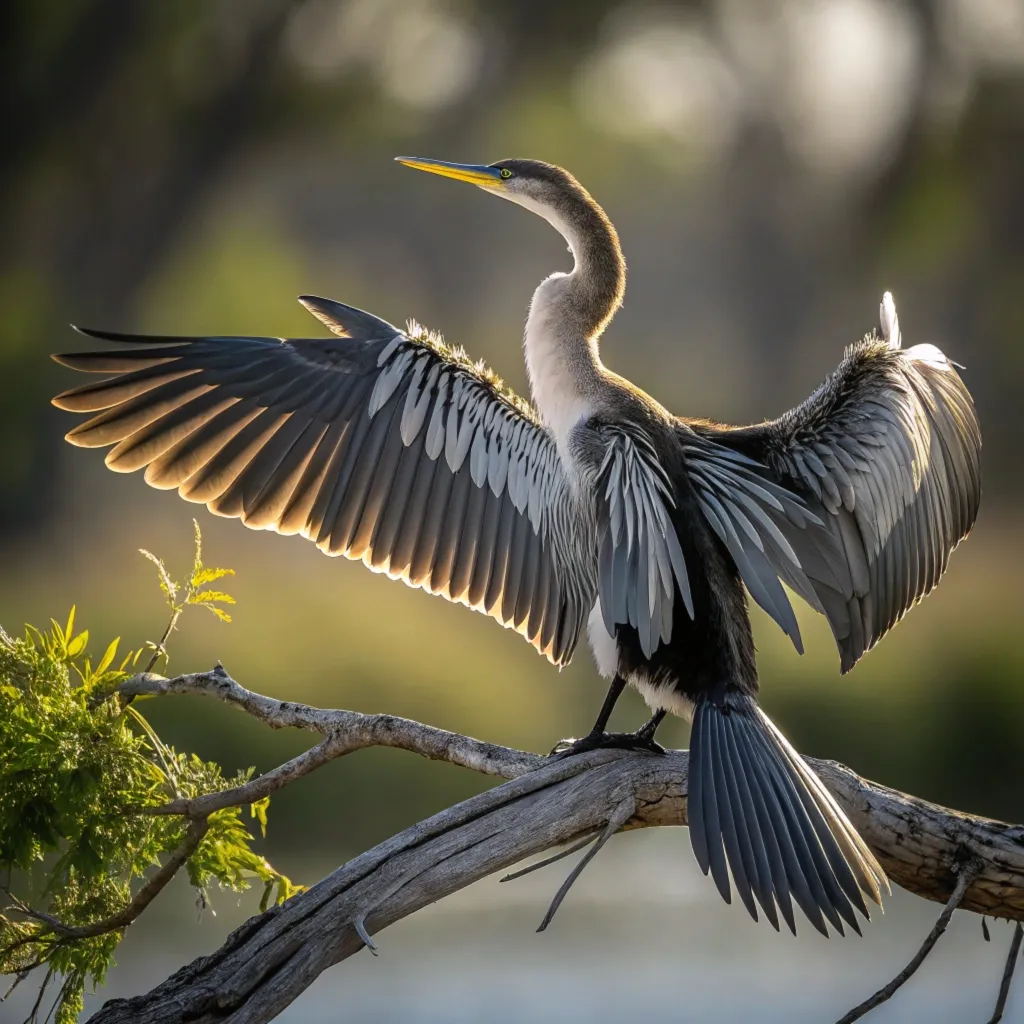
Long wings are found in birds that spend much time gliding. Albatrosses have extremely long wings relative to their body size.
These wings allow for efficient flight over vast ocean distances with minimal energy expenditure.
The aspect ratio of long wings, which is the relationship between wingspan and wing area, is key to their efficiency.
High aspect ratio wings reduce induced drag, allowing birds to cover great distances with little effort. This adaptation is crucial for seabirds that may spend years at sea without touching land.
Long-winged birds often have specialized shoulder joints that allow them to lock their wings in an extended position.
Broad Wings

Broad wings are common in large soaring birds. Eagles and hawks often have this wing type. The broad surface area helps these birds catch rising air currents and maintain altitude without constant flapping.
The design of broad wings maximizes lift generation, allowing birds to ride thermals effectively. This adaptation is particularly useful for raptors that need to conserve energy while searching for prey over large areas.
The broad wing shape also provides excellent maneuverability at slower speeds, crucial for hunting.
Broad-winged birds often have slotted wingtips, which further enhance their soaring capabilities by reducing drag.
Pointed Wings

Pointed wings are seen in birds that require speed and endurance. Swallows have pointed wings that allow for swift flight and quick direction changes. These wings are efficient for catching insects in mid-air.
The aerodynamic properties of pointed wings make them ideal for high-speed flight. The narrow, tapered shape reduces drag and allows for rapid acceleration.
Birds with pointed wings, like the common swift, can maintain high speeds for extended periods, essential for their aerial hunting lifestyle.
Pointed wings often come with a trade-off of reduced maneuverability at slower speeds compared to other wing types.
Short Wings

Short wings are found in birds that need quick takeoffs. Pheasants and quails have short wings that allow for rapid ascent to escape predators.
These wings are not ideal for long-distance flight but excel in short bursts.
The compact nature of short wings provides several advantages for ground-dwelling birds. They allow for explosive takeoffs, crucial for evading sudden threats.
Short wings are also well-suited for navigating through dense underbrush, where longer wings might be a hindrance.
Birds with short wings often compensate for limited flight ability with strong legs adapted for running or scratching.
Slotted High-Lift Wings

Slotted high-lift wings are seen in some large birds. Storks and pelicans have this wing type. The slots between the primary feathers reduce drag and improve lift, allowing these large birds to soar efficiently.
The engineering behind slotted wings is fascinating. The gaps between feathers create small vortices that energize the airflow over the wing, delaying stall and increasing lift.
This adaptation allows large birds to maintain lift at slower speeds, crucial for takeoff and landing.
Slotted wings also provide improved stability and control during flight, particularly important for large-bodied birds.
Maneuvering Wings

Maneuvering wings are optimized for agile flight. Woodpeckers and jays often have these wings. They allow for quick turns and precise movements in forested environments.
The structure of maneuvering wings combines elements of both elliptical and pointed wings. This hybrid design provides a balance between speed and agility, allowing birds to navigate complex three-dimensional spaces with ease.
The ability to make rapid course corrections is crucial for birds that fly through dense vegetation.
Birds with maneuvering wings often have strong flight muscles to power their agile movements.
Albatross Wings

Albatross wings are a specialized type of active soaring wing. They are extremely long and narrow, allowing albatrosses to cover vast ocean distances with minimal energy expenditure.
These wings are adapted for dynamic soaring, using wind gradients over waves.
The efficiency of albatross wings is unparalleled in the avian world. Their high aspect ratio design minimizes induced drag, allowing these birds to fly for thousands of miles without flapping.
Albatrosses use a technique called dynamic soaring, where they exploit the difference in wind speeds at different altitudes to gain energy.
Albatross wings can lock into position, reducing muscle fatigue during long flights.
Diving Wings
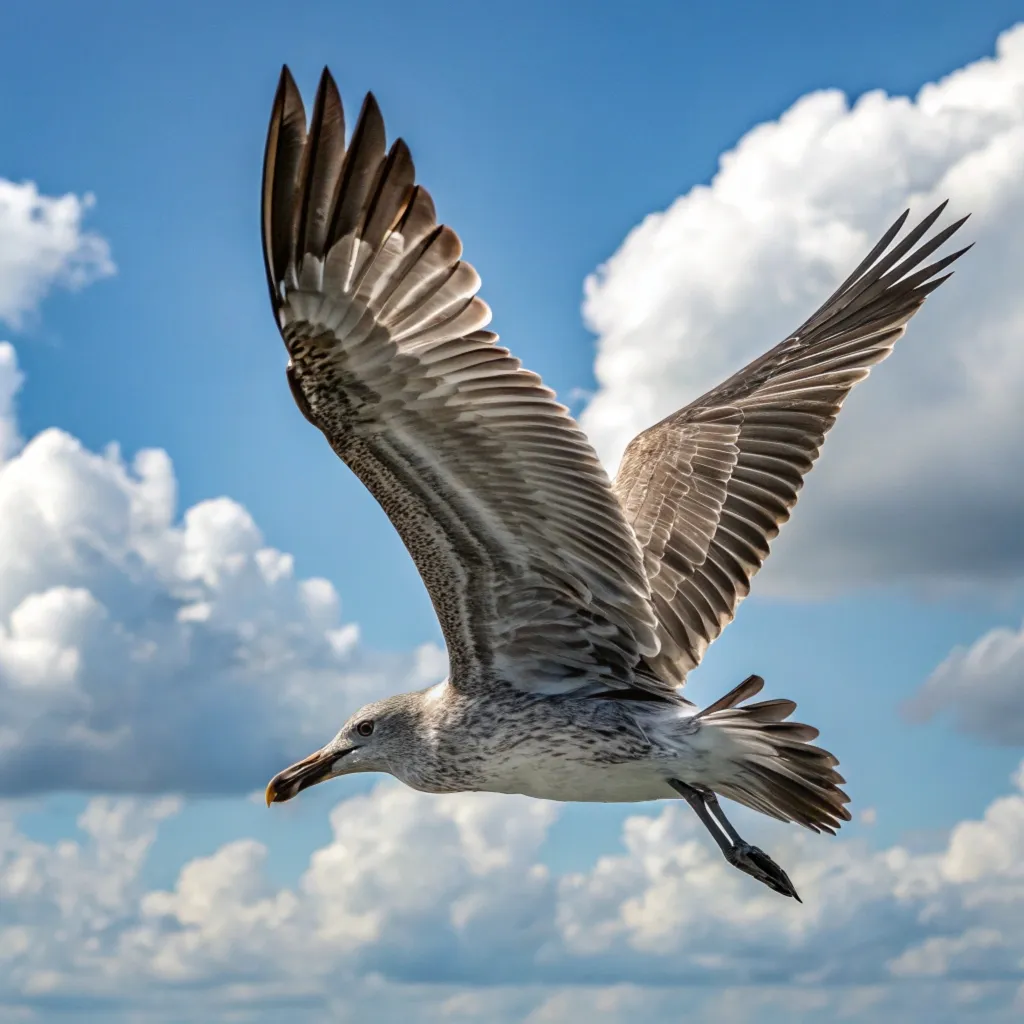
Some seabirds have wings adapted for diving. Puffins and auks have wings that serve dual purposes – flying in air and “flying” underwater. These wings are a compromise between aerial and aquatic locomotion.
The versatility of diving wings is remarkable. These wings are stiff and compact, allowing birds to propel themselves underwater with powerful strokes.
At the same time, they retain enough surface area and shape to enable flight in air, albeit with higher energy costs compared to specialized flying birds.
Diving birds often have dense bones and reduced air sacs to aid in underwater maneuvering.
Flightless Wings

Flightless birds like ostriches have vestigial wings. While no longer used for flight, these wings serve other purposes such as balance, courtship displays, and temperature regulation.
The evolution of flightless wings demonstrates nature’s ability to repurpose structures for new functions.
In ostriches, the wings play a crucial role in courtship displays and balance during high-speed running. Other flightless birds, like penguins, have adapted their wings for swimming.
Some flightless birds use their wings for aggressive displays or to protect their young.
The Role of Flight Feathers
Flight feathers are crucial components of bird wings. They include:
- Primaries: Located at the wing tips, these feathers provide thrust and steering
- Secondaries: Found closer to the body, these feathers aid in lift and gliding
- Tertials: The innermost flight feathers, helping with lift and maneuverability
The structure of flight feathers is a marvel of natural engineering. Each feather is composed of a central shaft with barbs branching off on either side.
These barbs interlock with tiny hooks called barbules, creating a smooth, flexible surface that can withstand the forces of flight while remaining lightweight.
Flight feathers are regularly replaced through molting to maintain optimal performance.
Wing Shape and Flight Behavior
Wing shape directly influences a bird’s flight behavior:
- High aspect ratio wings (long and narrow) are efficient for soaring and gliding
- Low aspect ratio wings (short and broad) allow for quick takeoffs and agile maneuvering
- Wing loading (weight to wing area ratio) affects a bird’s flight speed and agility
The relationship between wing shape and flight behavior is a key area of study in avian biology.
Birds with high aspect ratio wings, like albatrosses, excel at efficient long-distance flight but may struggle with quick maneuvers.
Conversely, birds with low aspect ratio wings, such as grouse, can take off quickly but are less suited for prolonged flight.
Understanding wing shape helps ornithologists predict and interpret bird behavior in different environments.
Adaptations for Different Environments
Bird wings show remarkable adaptations to various environments:
- Forest birds often have elliptical wings for navigating through trees
- Seabirds have long, narrow wings for efficient flight over open water
- Ground-dwelling birds may have short, rounded wings for quick escape flights
The diversity of wing adaptations reflects the wide range of habitats birds occupy. Tropical forest birds often have short, rounded wings that allow them to maneuver through dense vegetation.
In contrast, birds of open grasslands may have longer, more pointed wings suited for sustained flight over large areas.
These adaptations demonstrate the power of natural selection in shaping avian anatomy to fit specific ecological niches.
The Physics of Bird Flight
Bird flight involves complex physical principles:
- Lift is generated by the wing’s curved upper surface
- Drag is reduced by streamlined body shapes and feather structure
- Thrust is produced by downward and backward wing strokes
The aerodynamics of bird flight have inspired human aviation technology. The curved upper surface of a bird’s wing creates an area of low pressure, generating lift.
This principle is the same one used in aircraft wing design. Birds also employ various techniques to reduce drag, such as streamlined body shapes and specialized feather structures.
Understanding the physics of bird flight has applications in fields ranging from aerospace engineering to biomimetics.
Evolution of Bird Wings
Bird wings have evolved over millions of years:
- Wings likely developed from the forelimbs of dinosaur ancestors
- Flight feathers evolved to improve aerodynamic properties
- Different wing types emerged as birds adapted to various ecological niches
The evolutionary journey of bird wings is a fascinating story of adaptation and specialization.
The transition from dinosaur forelimbs to functional wings involved numerous changes, including the development of flight feathers and the lightening of bone structure.
This process allowed early birds to exploit new ecological niches and spread across the globe.
Ongoing research in paleontology and genetics continues to reveal new insights into the evolution of avian flight.
FAQs About Bird Wings
What is the fastest bird in flight?
The peregrine falcon is the fastest bird in flight, reaching speeds up to 242 mph (389 km/h) during dives.
Can all birds fly?
No, not all birds can fly. Some birds like ostriches, emus, and penguins have evolved to be flightless.
How do birds sleep while flying?
Some birds, like frigatebirds, can sleep while flying by shutting down half their brain at a time, a process called unihemispheric slow-wave sleep.
What is the largest flying bird?
The wandering albatross has the largest wingspan of any living bird, reaching up to 11 feet 6 inches (3.5 meters).
How do hummingbirds hover?
Hummingbirds hover by moving their wings in a figure-eight pattern, generating lift on both the forward and backward strokes.
Why do some birds have different shaped wing tips?
Different wing tip shapes serve various purposes, such as reducing drag, improving maneuverability, or enhancing lift, depending on the bird’s flight needs and habitat.
Understanding the diverse types of bird wings provides fascinating insights into avian adaptations and flight mechanics. Each wing type represents a unique solution to the challenges of flight, showcasing the incredible diversity and ingenuity of nature’s designs.
The study of bird wings continues to inspire both scientific research and technological innovation. From improving aircraft design to developing more efficient drones, the principles observed in avian flight offer valuable lessons for human engineering and biomimetics.
As we continue to explore and understand the complexities of bird wings, we gain not only a deeper appreciation for these remarkable creatures but also new insights that can benefit various fields of study and technology.

Joyce is the passionate founder of Chirping Hearts, a website dedicated to sharing her love for birds and providing valuable information about avian life. With a background in ornithology and years of experience in birdwatching, Joyce aims to inspire others to appreciate the beauty and diversity of birds. Through her engaging articles and guides, she hopes to foster a community of bird enthusiasts who share her enthusiasm for these incredible creatures. When she’s not writing, Joyce enjoys exploring nature trails and observing birds in their natural habitats.