

Exploring the Blue Birds of Ohio: A Comprehensive Guide
Exploring the Blue Birds of Ohio is exciting! Ohio is home to beautiful blue birds like the Eastern Bluebird and the Blue Jay. These birds are important to our environment. They help control pests and spread seeds. Learning about where they live and how they behave can help us understand their role in nature.
Unfortunately, many blue bird species face threats. Habitat loss, pollution, and climate change can harm their populations. To help protect these birds, we can take simple steps. Plant native plants in our yards, build birdhouses, and avoid using harmful chemicals.
By caring for blue birds, we can enjoy their beauty and support our ecosystem. Let's work together to keep Ohio's blue birds safe!
A Quick Overview
Ohio has many beautiful blue birds to discover. The Eastern Bluebird, Blue Jay, and Indigo Bunting are all unique and interesting.
Eastern Bluebirds like to live in open fields. They help control insects and spread seeds. This makes them important for nature.
Blue Jays are easy to spot. They have bright blue and black feathers. They are also very vocal and know how to find food in clever ways.
Indigo Buntings are stunning with their bright blue feathers. They sing lovely songs that make their homes even prettier.
To help protect these blue birds from losing their homes, people can put up nest boxes. This gives the birds a safe place to live. Taking care of blue birds is important for keeping nature balanced.
Overview of Blue Birds in Ohio
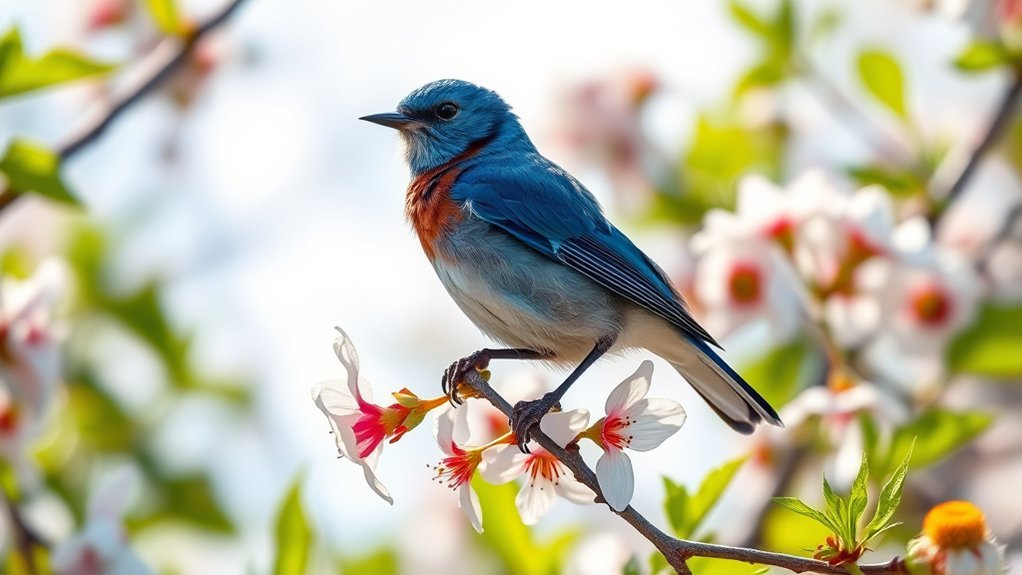
When you think of Ohio, you mightn't picture bright blue birds right away. But they're really important for nature here. Ohio is home to birds like the Eastern Bluebird and the Blue Jay. Each of these birds has a special role in their environment.
These blue birds do more than just look pretty. They help control pests and spread seeds. This helps keep nature balanced.
But blue birds need protection because their homes are in danger from things like building and pollution.
You can help save these birds by joining local groups. When you connect with Ohio's blue birds, you help ensure they stay around for future generations.
Plus, you get to enjoy the beauty they bring to your community.
Eastern Bluebird: Characteristics and Habitat
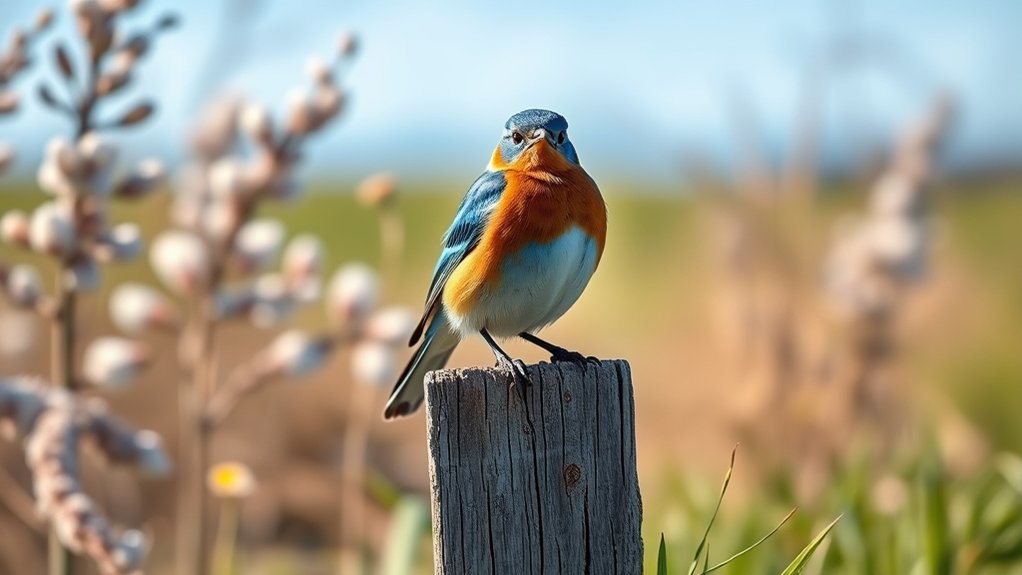
The Eastern Bluebird is easy to spot because of its bright blue feathers and warm orange-brown chest. These birds are important in Ohio's environment. They like open fields, orchards, and meadows where they can hunt for insects. You might see them perched on low branches or fences, looking for snacks on the ground.
When it comes to building nests, Eastern Bluebirds like to use tree cavities or birdhouses. They gather grasses and pine needles to make their homes cozy. They also care for their young, showing how important they're in nature.
Finding an Eastern Bluebird in Ohio connects you to the outdoors and helps people appreciate wildlife conservation. These birds are a joy to watch and play a big role in keeping nature balanced.
Blue Jay: Identification and Behavior
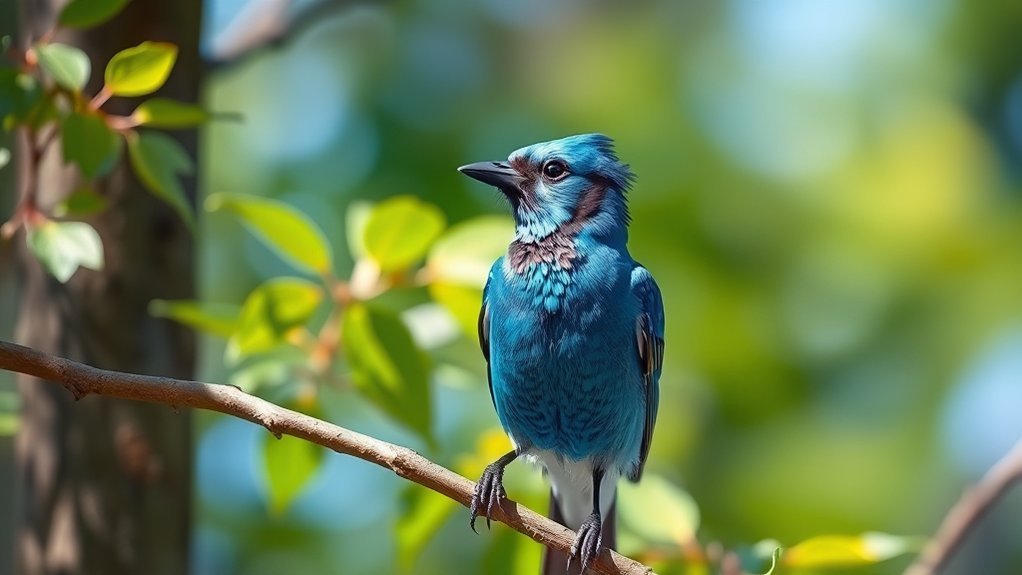
The Blue Jay is a beautiful bird with bright blue feathers, a white chest, and black markings around its head. This makes it easy to recognize in Ohio. You might notice its sharp, pointed head and long tail that spreads out when it flies.
Blue Jays are very talkative. They make loud screeches and soft whistles. Sometimes, they even copy the sounds from other birds! Learning their calls can make watching them even more fun.
These birds eat many different foods. Their diet includes insects, nuts, and fruit, showing how good they're at finding food.
Watching Blue Jays can be a joyful part of birdwatching in Ohio. It helps you feel connected to nature and enjoy the outdoors more.
Indigo Bunting: A Colorful Visitor
Indigo Buntings are small birds with bright blue feathers. They're a fun sight in Ohio's fields and woodlands. Watching them can be a treat.
These birds sing in unique ways, and you might see them hopping around the bushes.
Here are some tips to enjoy watching Indigo Buntings:
- Diet: They eat seeds and bugs. This diet helps keep their feathers colorful.
- Behavior: Male Indigo Buntings sing to mark their territory and attract females. Their songs add a happy feel to the area.
- Habitat: You can find them in areas with bushes near water. They like places where they feel safe.
Keep an eye out for these beautiful birds on your next outdoor adventure!
Tree Swallow: The Aerial Acrobats
When you see a Tree Swallow in Ohio, you'll be amazed by how they fly. These birds are really good at catching insects while flying. They zip and zoom through the air, looking for their next meal. This skill helps them find food to stay alive.
During the nesting season, Tree Swallows often use birdhouses made by people, like bluebird boxes. This makes it easier for them to find a place to raise their young. Because they can adapt to different homes, they do well in many areas.
Look for their shiny feathers and quick movements. You'll see why birdwatchers and nature fans enjoy spotting Tree Swallows. They bring a lively touch to Ohio's bird scene.
Barn Swallow: Nesting Habits and Range
Barn Swallow: Nesting Habits and Range
Barn Swallows are interesting birds that are fun to watch. In Ohio, these swallows nest in places like barns, bridges, and rooftops. They like to build their homes in areas near farms. Learning about where they like to nest can make your birdwatching experience more enjoyable.
- They create nests using mud. You can often find these nests close to rivers or ponds.
- Barn Swallows catch insects while flying. They do this mostly during the day.
- Each year, they usually return to the same spot to nest again. This helps them feel at home.
Conservation Status of Blue Birds in Ohio
The conservation status of blue birds in Ohio is important for everyone who loves nature.
Bluebirds are beautiful, but their numbers are going down. This decline is mostly due to losing their homes and facing competition from invasive species.
To help boost their population, we need to work on conservation efforts. Some successful programs include putting up nest boxes and restoring their habitats.
You can help too! Join local bird conservation groups, take part in projects to improve their homes, or speak up for protecting natural areas.
By supporting a healthy environment, we can help bluebirds thrive in Ohio. Together, we can make a difference and enjoy seeing these incredible birds in our skies.
Your support is important!
Best Locations for Birdwatching in Ohio
Are you excited to see bluebirds and other birds? Ohio has some great places for birdwatching!
These spots have different types of homes for birds and lots of wildlife to see. Early in the morning and late in the afternoon are the best times to watch.
Here are three top places to visit:
- Hocking Hills State Park: Here, you can walk through forests and meadows. These different areas are great for spotting bluebirds.
- Kelleys Island State Park: This island has a mix of environments. It's a perfect place to see birds that are traveling to other areas.
- Mogadore Reservoir: This peaceful spot has open fields. You can see bluebirds here, especially in the warmer months.
Don't forget your binoculars!
Join other birdwatchers and enjoy Ohio's wonderful bird life. Happy birdwatching!
Seasonal Migration Patterns
Bluebirds migrate during specific times of the year. They move south in late summer and early fall. They look for warmer places where they can find enough food.
Watching them leave can be a special moment as they fly together in a neat group.
When spring comes, the weather warms up. This brings back many bugs, a food source for bluebirds. It's time for them to go back north.
This journey shows how bluebirds adapt to nature's changes. Their migration helps highlight how everything in nature connects.
Watching them can deepen your appreciation for these lovely birds and their life cycle.
Tips for Attracting Blue Birds to Your Yard
Attracting bluebirds to your yard can be a fun and satisfying activity. Here are some simple tips to get started.
1. Put Up Bluebird Houses: Find a nice spot in your yard with open space and low plants.
Hang the bluebird houses facing east. This helps the birds feel safe and helps them get morning sunshine.
2. Use Mealworm Feeders: Bluebirds love to eat mealworms.
Setting up a feeder with mealworms will bring these colorful birds right to your yard.
3. Keep Your Yard Clean: Avoid using pesticides.
This keeps your yard safe for birds. Also, make sure to have a shallow birdbath for the bluebirds to drink and bathe.
Frequently Asked Questions
What Food Attracts Blue Birds in Ohio?
To attract bluebirds in Ohio, you can feed them mealworms and plant fruit trees. Bluebirds enjoy mealworms because they provide protein. They also like the fruits from these trees for extra food.
Set up feeders close to the fruit trees. This will create a nice spot for bluebirds to visit. You'll see them thrive and enjoy their time in your yard!
Are Blue Birds Migratory or Resident Species in Ohio?
Bluebirds in Ohio mostly stay in one place all year. Some of them do fly to warmer areas during the cold months, but many will stick around. You can watch how they behave differently with the seasons. Learning about their habits can make birdwatching even more fun and help you feel closer to these beautiful birds.
How Can I Identify Blue Bird Nests?
To spot bluebird nests, look for soft items like grass and feathers inside. Bluebirds usually make their homes in open spaces. They often choose places like tree holes, fence posts, or birdhouses. Paying attention to these signs helps you learn about where bluebirds like to live.
When you hike or walk outside, keep your eyes peeled for these nests. It's fun to notice all the little details that show bluebirds are nearby. Take a moment to enjoy nature and the homes of these beautiful birds!
What Predators Threaten Blue Birds in Ohio?
In Ohio, blue birds face dangers from animals like raccoons and cats that can hurt their nests. These birds also struggle because of habitat loss, which means there are fewer places for them to live and raise their young.
Do Blue Birds Mate for Life or Seasonally?
Bluebirds usually mate for a season, not for life. They find a partner during the breeding season. This helps them adjust to their environment and have successful babies. Bluebirds focus on raising their young each year with different partners instead of staying with one mate forever.

Joyce is the passionate founder of Chirping Hearts, a website dedicated to sharing her love for birds and providing valuable information about avian life. With a background in ornithology and years of experience in birdwatching, Joyce aims to inspire others to appreciate the beauty and diversity of birds. Through her engaging articles and guides, she hopes to foster a community of bird enthusiasts who share her enthusiasm for these incredible creatures. When she’s not writing, Joyce enjoys exploring nature trails and observing birds in their natural habitats.


