
Mourning Dove Nests: an Insight Into Their Unique Homes
Have you seen mourning doves in your backyard or at a park? They are often found sitting quietly in trees. But have you ever thought about their nests? These nests are interesting and important.
Mourning doves build their nests with help from both parents. They use twigs, grasses, and leaves to make a safe place for their babies. The way they build their nests keeps their young safe from bad weather and predators.
Learning about how mourning doves create their homes helps us understand their lives better. It's a simple but cool part of nature!
A Quick Overview
Mourning doves build their nests using twigs, grass, and leaves. They like to hide their nests in thick bushes or on tree branches.
Both mom and dad doves help with the nest. The dad collects materials, and the mom arranges them to keep the nest safe.
The time of year affects what they use to build. In spring, they pick fresh grass, but in late summer, they use dry twigs to make the nest strong.
A good nest location is high up and keeps the babies safe from predators. It also makes sure the parents can easily find food for their chicks.
After the eggs hatch, both parents take care of the chicks. They feed them and help them grow strong. This teamwork helps the family stick together and keeps the young doves safe.
The Nesting Process: Building a Safe Haven

Mourning doves have an interesting way of making nests to keep their babies safe. They use twigs, grass, and leaves to build a cozy home when it's time to lay eggs. These doves like to choose hidden spots, like thick bushes or tree branches, because these places protect them from danger.
Both mom and dad doves work together to make the nest. The dad collects the materials, and the mom arranges them just right.
The better the nest is made and its location, the higher the chance the baby doves will survive. Watching this process helps us feel closer to nature and reminds us how important it's to care for our own families.
Materials Used: Nature's Bounty
Doves make their nests using a variety of natural things found in nature. They gather twigs, grass, leaves, and sometimes even feathers. The materials they choose depend on what they find around them. This shows how doves can use what's available in their environment.
The seasons also affect what they use for building. In spring, doves often pick fresh green grass. In late summer, they lean towards dry twigs and leaves. These choices help keep their nests strong and hidden from predators.
Nest Placement: Choosing the Perfect Spot

Choosing the right spot for a nest is very important for doves. A good location helps keep them safe and increases their chances of raising healthy babies. Mourning doves like to pick places where they can hide from predators and easily find food.
You might find these doves nesting in shrubs, trees, or even on buildings. They look for areas that feel stable and safe from bad weather, like wind and rain. They also prefer to build their nests higher up to stay away from animals that walk on the ground.
Watching doves pick their nesting spots shows us how smart they are. They know their surroundings well, which helps them survive. Learning about where doves nest can help us appreciate nature more.
It reminds us of our connection with the outdoors and how we share this world with amazing creatures. So next time you see a dove, think about how much care goes into finding the perfect spot for its nest!
Incubation and Chick Development
Once a mourning dove lays its eggs, the next important step happens: incubation. For about 14 to 16 days, the parents keep the eggs warm in turns. This careful process helps the eggs stay at the right temperature and humidity, which is necessary for the chicks to hatch successfully.
If you watch closely, you'll see how the tiny embryos grow. They start as small, fragile shapes and gradually change into fully developed chicks that are ready to come out. The moment is exciting when you see little beaks breaking through the shells. It's a wonderful display of nature's timing.
Every day brings new growth. Soon, you'll notice feathers starting to grow and the chicks opening their eyes wide.
All these stages of development are crucial. They set the stage for the young doves as they prepare to face the world outside.
The Role of Parents: Shared Responsibilities
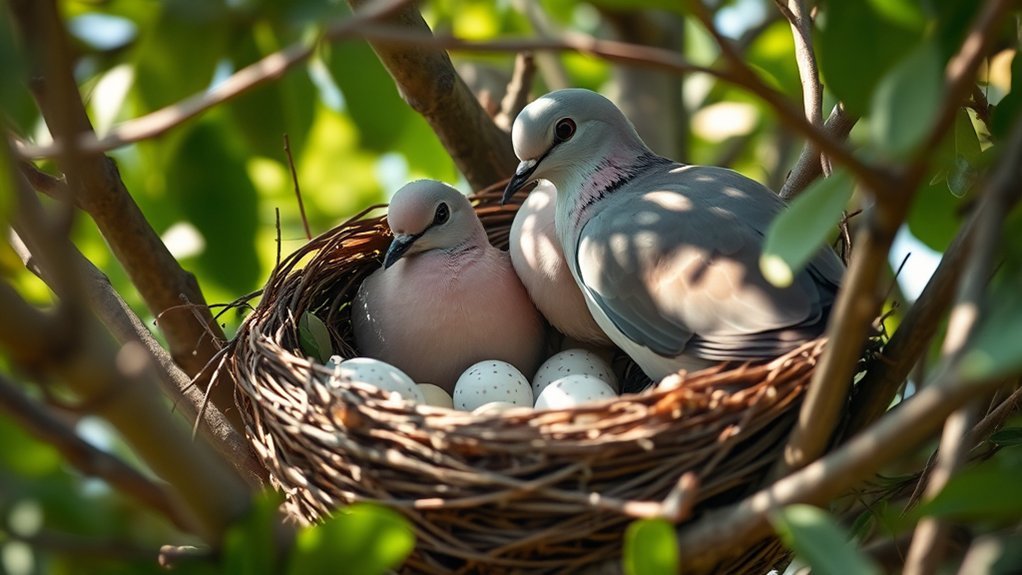
As the eggs are kept warm, both parents work together to care for their future chicks. This teamwork is very important. It helps keep the eggs warm and safe. The parents take turns sitting on the eggs. This way, each can find food and have a little rest.
When the chicks hatch, the parents' job gets even busier. They both help feed their little ones. They bring seeds and soft food back to the nest and share it with the chicks by swallowing it first and then feeding it to them.
This joint work not only helps the chicks grow but also makes the parents closer. Watching mourning doves in their nest shows a lovely teamwork that creates a caring home for their new family.
Frequently Asked Questions
How Long Does It Take for Mourning Doves to Build a Nest?
Mourning doves build their nests quickly. It usually takes them just a couple of days to finish. They work efficiently, gathering twigs and grass to make cozy homes for their babies. It's neat to watch them as they create a safe place for their young ones!
Can Mourning Doves Reuse Old Nests for New Broods?
Mourning doves often reuse old nests for new babies. This helps them raise their young more easily. By using a safe spot that is already built, they save energy and keep their chicks protected. It's a smart way for them to care for their families. So next time you see a mourning dove, remember they may be using a nest from before!
What Predators Threaten Mourning Dove Nests?
Mourning doves face many threats when they build their nests. Some common predators that threaten their nests are raccoons and snakes. These animals can make it hard for the doves to keep their eggs safe. Knowing about these dangers can help us understand how important it is for the doves to find safe places to nest. Taking care of their environment is key to helping them survive and thrive.
Do Mourning Doves Prefer Certain Tree Species for Nesting?
Mourning doves like to build their nests in different types of trees. They often choose cedars and pines. These trees give them good shelter and safety, which helps them live better in different places. When they find the right tree, it makes it easier for them to raise their young. So, if you spot a mourning dove, look for these trees nearby!
How Can I Deter Predators From My Garden's Mourning Dove Nests?
To keep predators away from the mourning dove nests in your garden, start by changing how you set up your garden. Use sticks and leaves to make cozy spots for the doves. This helps hide their nests from animals that might want to harm them.
Also, plant flowers and bushes in a way that blocks the view of the nests. This gives the doves more safety. You can create a nice home for them while keeping them safe from dangers. Simple steps can go a long way in helping these lovely birds feel secure.

Joyce is the passionate founder of Chirping Hearts, a website dedicated to sharing her love for birds and providing valuable information about avian life. With a background in ornithology and years of experience in birdwatching, Joyce aims to inspire others to appreciate the beauty and diversity of birds. Through her engaging articles and guides, she hopes to foster a community of bird enthusiasts who share her enthusiasm for these incredible creatures. When she’s not writing, Joyce enjoys exploring nature trails and observing birds in their natural habitats.