
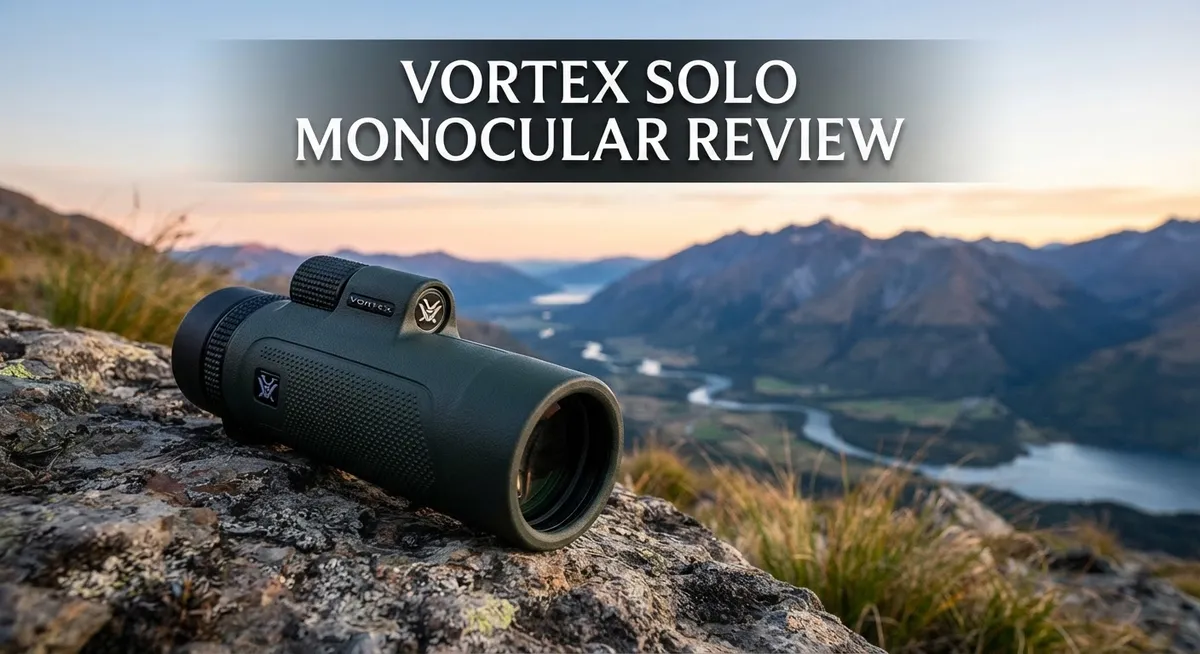
Vortex Solo Monocular Review: Live Up To The Hype?
Do you want a monocular that fits in your pocket but still delivers sharp views? The Vortex Solo might be your answer. This small optic packs a punch for hikers, birders, and travelers alike.
Many people skip monoculars because they expect blurry images or flimsy builds. The Solo breaks that pattern. It uses a fully multi-coated lens system to produce bright, clear images in a compact body.
You can choose between 8x and 10x magnification. Both options come with different objective lens sizes, so you can pick what suits your outdoor needs.
This monocular is also waterproof and fogproof. That means rain or cold mornings won’t stop you from spotting wildlife or scouting trails.
Vortex backs this product with its famous warranty. That gives buyers peace of mind for years of use.
In this review, we will look closely at the Solo’s performance, comfort, and durability. We will also compare it with other monoculars on the market today.
If you want a lightweight optic that performs well outdoors, keep reading. You might find your next favorite gear piece right here.
In a Nutshell
The Vortex Solo packs a lot of punch into a small body. Here is a quick summary of what you can expect.
-
Build quality stands out. The fit and finish feel solid. You get a rubber armor coating that protects against drops and knocks.
-
Optical performance impresses for its size. The SD Optical System delivers sharp images. You will notice minimal chromatic aberration in most lighting conditions.
-
Portability is a major strength. This monocular slides into a pocket or small pack easily. It suits hikers, birders, and travelers who want light gear.
-
Single eye use takes practice. Some users find it tricky to hold steady without shaking. Longer viewing sessions may cause mild eye strain.
-
Brightness has limits. Compared to monoculars with larger objective lenses, low light performance is not as strong. Long range clarity also drops off at a distance.
-
Right eye design may not suit everyone. Left eye dominant users might find this layout less comfortable.
Overall, the Solo delivers reliable performance with a few tradeoffs. It fits best for users who prioritize size and comfort over raw optical power.
Optical Quality and Image Clarity
The Vortex Solo delivers impressive optical clarity for a compact monocular. The SD Optical System with fully multi-coated lenses works hard to reduce light loss and color distortion. You get sharp, crisp images across the entire field of view, even at maximum magnification.
Chromatic aberration is minimal with this optic. You won’t see annoying colored fringes around high-contrast objects. This is a real strength when you’re scanning distant details like wildlife or landscape features.
Image brightness performs well in daylight conditions. The 8×25 and 10×36 models both produce vivid, clear views when the sun is up. The smaller 25mm objective still gathers enough light for solid daytime performance. The 36mm option pushes brightness a bit further, especially useful during overcast days or early morning hunts.
Low light situations tell a different story. The Solo struggles compared to monoculars with larger 42mm or 50mm objectives. If you plan evening glassing sessions or dawn observations, expect reduced image brightness. The smaller exit pupil limits how much light reaches your eye in dim conditions.
Edge clarity remains consistent across the field. Vortex engineers kept optical aberrations low, so you won’t see blurry edges or soft focus near the periphery. This matters when you’re tracking moving subjects or scanning wide areas.
The 10x magnification option provides more detail on distant targets. You can spot finer features like bird plumage or distant landmarks. However, higher magnification also amplifies vibration and hand shake. Stabilizing a 10x view with one eye takes real effort and practice.
The 8x magnification strikes a better balance. You gain decent detail while keeping the image steadier and easier to hold. Eye strain decreases with the lower power option, especially during extended viewing sessions.
Overall, optical quality punches above the weight class. The Solo won’t match premium monoculars costing significantly more, but it delivers solid, clear images for everyday outdoor use. Daylight performance is genuinely sharp. Low light remains the main limitation, not a deal breaker for most users who hunt or observe during brighter hours.

- 10x magnification and 36mm objectives lens, the Solo Monocular is a small, lightweight optic with fully...
- The monocular is fully rubber armored providing a non-slip grip to the user and making it extremely...
Last update on 2026-10-06 / Affiliate links / Images from Amazon Product Advertising API
Build Quality and Durability
The Vortex Solo stands out for its robust construction and attention to detail. Every component feels solid in your hands. The rubber armor coating provides excellent grip and shock absorption. You won’t worry about drops or bumps during outdoor adventures.
The optic uses fully multi-coated lenses that resist scratches and maintain clarity over time. This coating also reduces glare and improves light transmission. The barrel construction feels tight with no loose parts or rattling. Vortex engineered this monocular to last through years of regular use.
Waterproofing is a major durability feature. The Solo is completely waterproof and fogproof. You can use it in rain, snow, or humid conditions without hesitation. Internal seals prevent moisture from entering the optical chamber. Fog will never cloud your view from temperature changes.
The lightweight design doesn’t sacrifice durability. This monocular weighs almost nothing, making it ideal for backpacking trips. Despite the compact size, the build quality matches heavier optics. You get strength without the burden.
The focus mechanism operates smoothly and maintains its position. Adjustment rings feel precise and don’t slip during use. This reliability matters when you’re glassing in challenging terrain. The eyepiece rotates freely for comfortable viewing angles.
Vortex backs this product with an exceptional lifetime warranty. This warranty covers defects in materials and workmanship. It reflects the company’s confidence in the Solo’s durability. You have peace of mind knowing repairs are covered.
Real world testing shows the Solo handles regular use well. Hikers, hunters, and outdoor enthusiasts report consistent performance over multiple seasons. The rubber armor absorbs impacts that would damage other optics. Internal components stay protected even after rough handling.
The only durability concern involves extended single eye use. Your eye muscles may fatigue, but this doesn’t affect the monocular itself. The optic remains dependable regardless of how you use it.
Overall, the Vortex Solo delivers impressive durability for its size and design. Build quality exceeds expectations at this level. You can trust this monocular to perform in tough conditions and last for years.
Portability and Lightweight Design
The Vortex Solo shines when you need optics that fit in your pocket. This monocular weighs just enough to feel solid, yet light enough for all-day carry without fatigue. Whether you’re hiking a mountain trail or stuffing it into a backpack, the compact form factor makes a real difference.
The 25mm and 36mm objective options give you flexibility. Choose the smaller 25mm if weight matters most to you. Pick the 36mm if you want slightly better light gathering without adding much bulk. Either way, you’re carrying something that won’t slow you down.
The rubber armor design protects the optic while keeping things lightweight. It absorbs bumps and drops better than bare glass. The material feels grippy in your hands, even when wearing gloves. This matters when you’re navigating rough terrain or quick outdoor activities.
Single eye use requires you to hold the monocular steady. This takes practice, especially during extended viewing sessions. Your arm tires faster than with binoculars. For short glances and quick observations, this setup works great. For long-range spotting or surveillance, you might want something different.
The 8x magnification option offers better stability than 10x. Less magnification means less shake from hand tremors. If you struggle with steadiness, the 8x version feels more forgiving. The 10x gives you more detail on distant objects, but demands a firmer grip or tripod support.
Portability doesn’t mean fragility here. The optic handles regular outdoor use without issues. The focus knob stays put once adjusted. The waterproof and fogproof sealing means you can use this in rain or sudden weather changes. The compact design actually protects the optics better since they’re tucked into a smaller package.
For backpackers, hunters, and outdoor enthusiasts who value lightweight gear, the Solo delivers real portability. You won’t notice it in your pack. You won’t miss it in your pocket. The trade off is that extended single eye viewing demands patience and practice. For quick observations and mobile outdoor work, this monocular excels.
Top 3 Alternatives
Nikon Prostaff Monocular

- PREMIUM OPTICS WITH 6X MAGNIFICATION - The Nikon PROSTAFF 1000 delivers bright, high-contrast viewing...
- PRECISE RANGING UP TO 1000 YARDS - Offers fast, reliable distance readings from 6 to 1000 yards...

Last update on 2026-10-06 / Affiliate links / Images from Amazon Product Advertising API
The Nikon Prostaff brings solid optical performance to field use. You get clear glass that handles bright daylight well. The focus wheel turns smoothly, letting you lock onto distant objects fast. Many users appreciate the lightweight design for extended hand-holding sessions.
The monocular performs best in open terrain. Hunters and birdwatchers find it reliable for spotting game at medium distances. The close focus capability helps you see fine details on nearby subjects too.
Leupold Gold Ring Monocular

- 10x magnification and 25mm objectives lens, the Solo Monocular is a small, lightweight optic with fully...
- The monocular is fully rubber armored providing a non-slip grip to the user and making it extremely...
Last update on 2026-10-06 / Affiliate links / Images from Amazon Product Advertising API
Leupold’s Gold Ring stands out for its amber-tinted lens coatings. These coatings boost contrast and color separation in low light. You’ll notice sharper edges and better definition when viewing through trees or brush.
The build quality feels premium in your hand. The rubber armor protects against drops and bumps during outdoor adventures. Eye relief is generous, so glasses wearers stay comfortable. The focus mechanism responds quickly to small adjustments, making target acquisition simple.
Zeiss Terra Monocular

- ZEISS T* COATING - Guaranteed brilliant, high-contrast images, particularly in adverse light conditions...
- A CLEAR VIEW IN ANY WEATHER - There are always exciting things to be seen in the world of nature, even in...
Last update on 2026-10-06 / Affiliate links / Images from Amazon Product Advertising API
Zeiss Terra delivers premium German optics in a compact package. The glass quality produces bright, crisp images across the entire viewing field. Color rendition stays true, so you see nature as it actually appears.
The optical design minimizes glare and internal reflections. This means better performance during sunrise and sunset hours. The monocular handles moisture well, resisting internal fogging even in humid conditions. Users report that the Terra feels balanced and natural to hold for long periods, reducing hand fatigue during extended observation sessions.
Stabilization and Ease of Use
Single eye viewing requires steady hands and proper technique. The monocular’s compact size means you’re holding a smaller object, which demands more focus and control than binoculars. Practice makes perfect here. Most users find their stability improves after a few outings.
The 8x magnification option provides noticeably better stability than the 10x variant. Higher magnification magnifies hand shake along with the image. If you struggle with shaky hands, the 8x model is your better choice. The 10x delivers more detail but demands rock solid positioning.
Your grip matters significantly for stabilization. Hold the monocular with both hands when possible. Brace your elbows against your body or a solid surface. This simple adjustment dramatically reduces image shake and eye strain during extended viewing sessions.
The focus mechanism responds smoothly and quickly. You can lock onto targets without fumbling with the dial. The knurled focus ring sits comfortably under your thumb. Adjustments feel intuitive once you get familiar with the travel distance.
Extended single eye use does cause fatigue for some users. Your eye works harder to gather all the visual information. Taking breaks every 15 to 20 minutes helps prevent discomfort. Closing your other eye completely, rather than keeping it open, actually reduces strain for many people.
The right eye only design limits flexibility for left eye dominant users. You’ll need to adapt your viewing technique or accept some awkwardness. Some users switch the monocular to their left eye and view with their right eye open, which takes practice.
The Solo excels in ease of use once you understand its quirks. The lightweight design means less arm fatigue during long viewing sessions. The compact size fits easily into packs, bags, or jacket pockets. Setup requires no complicated adjustments. Simply raise it to your eye and focus.
For stationary viewing from a tripod or rest point, the Solo performs exceptionally well. Mounting options exist if you want hands free operation. This setup eliminates stabilization concerns entirely and opens up new possibilities for extended observation sessions.
Warranty and Customer Support
Vortex Optics stands behind the Solo Monocular with an exceptional lifetime warranty that covers defects in materials and workmanship. This warranty applies for the life of the original owner, which gives you genuine peace of mind.
The warranty covers optical coatings, mechanical components, and the housing. If your Solo develops internal fogging, mechanical failure, or coating damage from manufacturing defects, Vortex will repair or replace it at no charge. You don’t need to register your optic, though doing so can simplify the claims process.
Vortex’s customer support team responds quickly to warranty inquiries. Most owners report friendly, straightforward interactions when submitting claims. The company handles repairs in their Arizona facility, and turnaround times typically range from two to four weeks depending on workload.
Damage from drops or impacts falls outside warranty coverage, which is standard across the industry. Normal wear and tear on rubber armor or focus mechanisms also isn’t covered. However, Vortex does offer affordable repair services for out of warranty damage, making fixes accessible without breaking the bank.
The warranty doesn’t cover user error or modifications. If you disassemble the optic or attempt repairs yourself, coverage becomes void. Proper maintenance and storage help preserve your Solo and keep the warranty active.
Vortex also provides excellent technical support before and after purchase. Their website includes detailed user guides, maintenance instructions, and troubleshooting tips. You can contact their support team via phone or email with questions about operation, care, or warranty status.
Many owners appreciate that Vortex stands behind their products without complicated registration requirements. The lifetime warranty reflects the company’s confidence in their manufacturing quality. For outdoor enthusiasts who invest in gear they’ll use for years, this warranty offers real value and reassurance.
The combination of responsive customer service and comprehensive warranty coverage makes the Solo a low risk purchase. You get a quality optic backed by a company that actually supports its customers long term.
Pros and Cons
Pros
- Sharp, bright images with minimal color fringing across all magnification levels
- Lightweight and compact enough to slip into a pocket or backpack without extra weight
- Solid construction with rubber armor that handles outdoor conditions reliably
- Outstanding lifetime warranty with responsive customer support
- 8x and 10x magnification options let you choose stability versus zoom power
Cons
- Single eye viewing causes noticeable fatigue during extended use sessions
- Brightness drops compared to larger objective lenses, especially in low light
- Right eye only design creates inconvenience for left eye dominant users
- Stabilizing the monocular requires steady hands and proper grip technique
Who Should Buy It
The Vortex Solo Monocular works best for specific users who understand what a monocular does well and what it doesn’t.
Hunters and outdoor enthusiasts benefit most from this optic. You get a lightweight tool that fits in your pack without adding bulk. The 8x magnification option gives you steady glassing for spotting game across meadows or hillsides. If you hunt from a blind or elevated stand, the Solo shines because you can rest it against your shoulder or brace point.
Backpackers and hikers appreciate the compact size. You won’t feel the weight during long treks. The monocular lets you glass distant terrain, scout ahead, or identify wildlife without carrying binoculars. Rubber armor protects it during rough handling on the trail.
Birders with steady hands do well with the Solo. The sharp optics reveal fine feather details. Single eye viewing takes practice, but once you develop proper technique, you can locate and track birds effectively. The 10x model works for stationary viewing from a tripod or against a rest point.
Left eye dominant users should pause here. The right eye only design creates real frustration if your natural eye is your left. You’ll force an unnatural shooting or viewing position, which causes discomfort during extended sessions.
People expecting binocular performance should look elsewhere. If you want to scan wide areas quickly or need both eyes open for situational awareness, a monocular feels limiting. Extended single eye use causes fatigue for many users, especially during all day glassing sessions.
Casual users on a budget might struggle with the learning curve. The Solo demands proper grip, steady hands, and correct technique. Without these skills, you’ll experience frustration rather than enjoyment.
Stationary observers get excellent results. Mounted on a tripod or supported by a rest, the Solo performs exceptionally well. Brightness and clarity remain solid for extended viewing from fixed positions.
The Solo Monocular fits people who prioritize portability, accept single eye viewing limitations, and plan to use it from stable positions. It rewards users who invest time learning proper technique and handling.
Final Verdict
The Vortex Solo Monocular earns its place as a reliable companion for specific tasks. It shines when you need a quick, lightweight tool to scan terrain or check distant details.
This optic rewards patience. Once you learn to hold it steady and align your eye correctly, the views become clear and satisfying.
Think of it as a specialized tool, not an all purpose optic. It solves certain problems well but won’t replace binoculars for every situation.
Who should buy it? Anyone who values a slim profile and quick access will find this monocular useful. It fits in a jacket pocket or glove box without adding bulk.
Scouts, campers, and casual nature watchers often find this optic matches their needs. They don’t require constant high magnification, so the Solo’s limitations matter less.
Who should skip it? Serious long range shooters or wildlife photographers may feel restricted. Their work demands sustained clarity that only larger optics provide.
The single eye format also means some users adapt faster than others. Give yourself time before judging the experience.
Overall, this monocular proves that small gear can still perform well. Vortex built a product that respects its own limits instead of overselling itself.
Final takeaway: Buy this monocular if portability and simplicity matter more than raw power. Skip it if you need extended viewing sessions or maximum brightness in low light.
The Solo won’t try to be everything. It focuses on doing one job well, which is exactly what makes it dependable for the right user.
If your activities call for grab and go optics, this product delivers solid performance. Match your expectations to its design, and you’ll likely walk away satisfied with the results it provides on each outing.
Frequently Asked Questions
Can I use the Vortex Solo Monocular with my left eye?
The Solo Monocular is designed for right eye use only. This means left eye dominant users will find it awkward to operate comfortably. You would need to switch your dominant eye or hold the monocular in an unnatural position.
If you’re left eye dominant, consider exploring other optics that offer ambidextrous designs or look at the Vortex Solo R/T as an alternative option.
How does the 8x versus 10x magnification affect my viewing experience?
The 8x magnification provides a wider field of view and steadier image. It’s easier to hold stable without support, making it better for moving targets or quick scanning.
The 10x magnification gives you more zoom power for distant objects. However, it magnifies hand shake more, so you’ll need a steadier hand or external support to use it effectively.
What’s the difference between the 25mm and 36mm objective lenses?
The 25mm model is more compact and lighter, perfect for pocket carry and backpacking. It sacrifices some light gathering ability, so images appear slightly dimmer in low light conditions.
The 36mm objective collects more light and produces brighter images. It weighs more and takes up extra space, but delivers superior performance in shade or dawn and dusk situations.
Will this monocular work for long range shooting or wildlife photography?
The Solo Monocular has limited long range clarity compared to full size binoculars or spotting scopes. Single eye viewing also makes it difficult to judge distance and depth accurately.
For serious shooting or photography work, you’ll want optics with larger objectives and higher magnification. The Solo works best for general scouting and quick range checks at moderate distances.
How waterproof is the Vortex Solo Monocular?
The monocular is fully waterproof and fogproof. It uses an SD optical system with multi coated lenses to prevent internal fogging and moisture damage.
You can safely use it in rain, near water, or in humid conditions without worry. The rubber armor also protects it from accidental splashes and wet handling.

Joyce is the passionate founder of Chirping Hearts, a website dedicated to sharing her love for birds and providing valuable information about avian life. With a background in ornithology and years of experience in birdwatching, Joyce aims to inspire others to appreciate the beauty and diversity of birds. Through her engaging articles and guides, she hopes to foster a community of bird enthusiasts who share her enthusiasm for these incredible creatures. When she’s not writing, Joyce enjoys exploring nature trails and observing birds in their natural habitats.