
How Big Are Baby Hummingbirds? Insights Into Their Development
Baby hummingbirds are tiny when they are born. They are about one inch long and weigh just a few grams. As they grow, they go through interesting changes. They grow feathers and start to stretch their wings.
But their early days are not easy. They face several challenges. They rely on their parents for food and warmth. They learn to fly and find food. Each small step prepares them for their first flight. Watching them grow is a special experience. These little birds have a big journey ahead.
A Quick Overview
Baby hummingbirds are really tiny when they are born. They are just a few centimeters long and weigh only 1 to 2 grams. When they first hatch, they are about one inch long and weigh less than a gram. At this stage, they have no feathers, just bare skin and tiny feather buds.
They need a lot of care from their parents to grow strong. Both mom and dad hummingbirds help by bringing food and keeping the babies safe. As the baby birds grow, they start to gain feathers. They move around more and get ready for their first flight. Parental care is very important for baby hummingbirds to survive and thrive.
The Size of Newborn Hummingbirds

Newborn hummingbirds are really tiny! They're often just a few centimeters long. This size makes them one of the smallest birds when they're born. For example, a baby Ruby-throated Hummingbird can weigh only 1-2 grams. That's light enough to sit on your fingertip!
When we look at baby Anna's Hummingbirds, they may seem a bit bigger, but both types of hummingbirds are very delicate. You can see their bare skin, tiny wings, and those small feather buds. These features show just how vulnerable they're at this stage.
Learning about these small sizes helps us appreciate how each kind of hummingbird has special traits that help them survive.
As you think about their tiny beginnings, you can feel more connected to nature and see how amazing it is! Each bird starts its journey in such a small way.
The Nesting Process and Egg Development
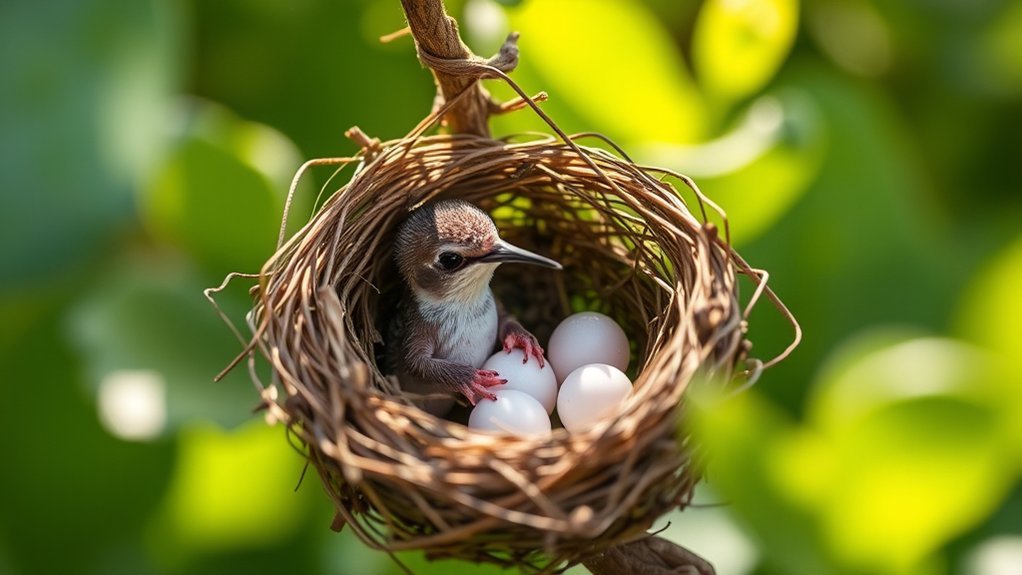
Newborn hummingbirds are tiny, but their journey begins long before they hatch. The nesting process is important and requires a lot of care.
Let's look at three main steps in how they get ready for life outside the egg:
- Building the Nest: The mother hummingbird picks materials like plant fibers, spider silk, and soft feathers. She weaves these together to make a safe home for her eggs.
- Keeping the Eggs Warm: Once she lays her eggs, she sits on them to keep them warm. She does this for about 14 to 23 days. Her body heat helps the eggs grow.
- Growing Inside the Egg: While the mother incubates the eggs, the baby birds grow quickly inside. They prepare to come out and start their new lives.
This whole process brings the mother and the future hummingbirds closer together as they get ready for the incredible adventure ahead.
Hatchling Growth Stages

Hatchling hummingbirds go through important growth stages. At first, they're very small, about one inch long and weighing less than a gram. They depend a lot on their mother's care.
As the days go by, you can see them grow. They start to get feathers and become more active. By the end of their first week, they stretch and flap their wings. This shows they're getting ready to fly. During this time, they gain muscle and fat, preparing for their first flight.
Each stage is vital for their journey. It highlights how delicate they're and how much they want to be independent.
Birdwatchers and nature lovers feel proud to watch these milestones. These moments are exciting and remind us of nature's wonders.
The Role of Parental Care
Parental care is very important for hummingbirds. Both mom and dad take care of their baby birds. They do many things to help them grow strong and healthy.
- Feeding: The parents quickly find nectar and bugs. They feed their chicks so they get enough nutrition.
- Nest Care: They keep the nest clean and safe. This helps protect the baby birds from animals that might want to eat them and from bad weather.
- Keeping Warm: The parents take turns sitting on the eggs and baby birds to keep them warm and cozy.
Watching how they take care of their young helps us see just how important parental care is for hummingbirds.
First Flight: When Do They Take Off?
As young hummingbirds grow, they reach an exciting time in their lives—their first flight.
You might see them flapping their wings while sitting on a branch or stretching their little bodies. These are signs they're getting ready to fly. Usually, they try to take their first flight when they're about three weeks old.
It's amazing to watch them carefully test their wings, using their instincts and encouragement from their parents.
This moment is important. It's not just about leaving the nest; it's a sign they're becoming independent and capable.
When you see this, it feels special. You can connect with the beauty of nature and see how nurturing and growth happen for these little birds.
Challenges Faced by Baby Hummingbirds
Every baby hummingbird faces many challenges after leaving the nest.
When they go out into the world, they need to deal with things that can make it hard for them to survive and grow.
Here are three main challenges they face:
- Predators: Young hummingbirds can become easy targets for predators. Snakes, bigger birds, and insects can all see them as meals. Because of this, they must stay alert to avoid danger.
- Loss of Homes: As cities grow and nature changes, baby hummingbirds lose places to live. This means they've a harder time finding food and safe spots to build their nests.
- Weather Problems: Bad weather can make life tough for these little birds. Rain, wind, and cold can stop them from finding food or getting shelter.
Knowing about these challenges helps us see how strong and brave baby hummingbirds are. They need to fight hard to thrive in a world that can be tough.
Frequently Asked Questions
How Long Do Baby Hummingbirds Stay in the Nest?
Baby hummingbirds usually stay in their nests for about three weeks. During this time, they grow quickly. They learn to fly and become strong enough to leave their nest. Watching them grow helps us appreciate these tiny birds and their journey to becoming independent.
What Do Baby Hummingbirds Eat During Development?
Baby hummingbirds eat a mix of foods as they grow. Their main diet includes sweet nectar and tiny insects. The nectar gives them energy, and the insects provide protein, which helps them grow strong. This special diet helps baby hummingbirds develop quickly and stay active.
Do Baby Hummingbirds Communicate With Their Parents?
Yes, baby hummingbirds talk to their parents! They make sounds to let their moms and dads know when they are hungry or scared. This is very important. It helps the parents understand what the babies need. When the baby birds communicate, it helps them grow and get the care they need.
How Do Environmental Factors Affect Baby Hummingbird Growth?
Baby hummingbirds grow well when the temperature is just right and their home is clean and safe. Good weather helps them stay strong and healthy. But when the weather is bad or their habitat is not good, it can be hard for them to grow and live.
In simple terms, nice weather and a good place to live help baby hummingbirds thrive. When things are not ideal, it can make it tough for them. So, keeping their homes safe and watching the weather can help these tiny birds grow better.
What Predators Threaten Baby Hummingbirds in the Wild?
In the wild, baby hummingbirds face many dangers. Hawks can swoop down and catch them. Snakes hide nearby, ready to strike. Insects also hunt baby birds. On top of that, people can accidentally harm them, making their lives even harder. Baby hummingbirds have to be careful every day to stay safe.

Joyce is the passionate founder of Chirping Hearts, a website dedicated to sharing her love for birds and providing valuable information about avian life. With a background in ornithology and years of experience in birdwatching, Joyce aims to inspire others to appreciate the beauty and diversity of birds. Through her engaging articles and guides, she hopes to foster a community of bird enthusiasts who share her enthusiasm for these incredible creatures. When she’s not writing, Joyce enjoys exploring nature trails and observing birds in their natural habitats.


