
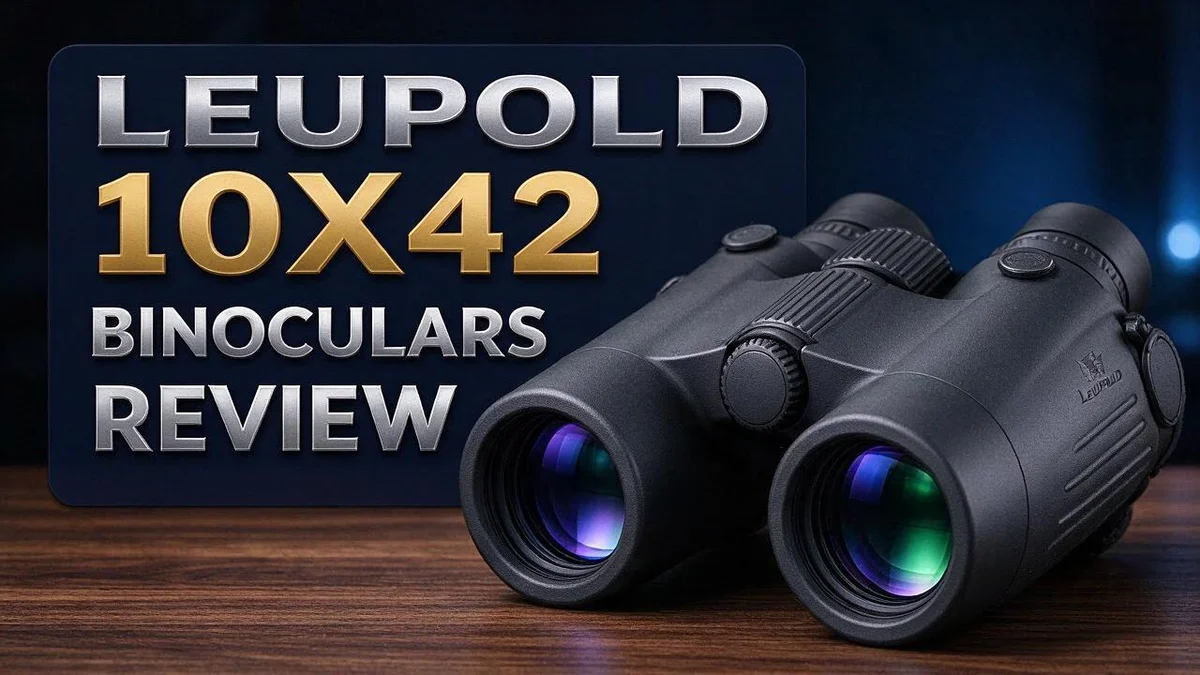
Leupold 10×42 Binoculars Review: Should You Buy This?
Looking for binoculars that handle tough days in the field? The Leupold 10×42 binoculars deserve a close look. Many hunters and outdoor fans trust this size for steady, clear views.
The 10×42 setup strikes a nice balance between power and size. That makes it handy for long days outside.
Low light is where these glasses really shine. Some models deliver very good performance when the sun drops. Hunters often rely on that edge.
Weather can be harsh, so build quality matters. Certain Leupold bodies use a lightweight yet durable magnesium frame. That makes them easy to carry all day.
In this review, we walk through the key features. We also compare them with top rivals. Let’s see if this pair earns a spot in your pack.
In a Nutshell
-
Built for harsh weather: One Leupold 10×42 model has a body made to handle tough conditions. You can keep using it through rain, cold, and dust.
-
Strong performance in dim light: This model delivers very good results when the sun drops. Dawn and dusk outings become much easier.
-
Light but tough frame: The Range HD line uses a magnesium body. This material keeps the weight down while the frame stays durable on long walks.
-
Rangefinding for longer shots: The Range HD model measures distances up to 2,600 yards. You can judge shots with more confidence.
-
Front thread for accessories: The Range HD model includes a front thread that works with standard tripod style adapters. This feature adds flexibility in the field.
-
Clear optics and comfort: The Pro Guide HD Gen 2 line offers improved optical clarity and better ergonomics. Your eyes and hands both get a more comfortable experience.
Optical Clarity and Magnification

- Model #187990 - BX-3 Alpine HD 10x42mm binoculars in shadow gray
- 100% Waterproof and fogproof and backed by Leupold's legendary customer care
Last update on 2026-11-10 / Affiliate links / Images from Amazon Product Advertising API
Clear views matter most when you scan a distant ridge or a tree line. The Leupold 10×42 setup offers 10 times magnification. Objects look closer without feeling far away.
The number 42 refers to the front lens diameter in millimeters. A larger front lens gathers more light. That extra light helps the image look bright and detailed.
Exit pupil is another number worth knowing. Divide 42 by 10 and you get 4.2 millimeters. This size suits many conditions, from bright afternoons to early dusk.
Sharp focus is the goal. A good image should look crisp from the center to the edges. Many buyers only check the middle. Try panning across a fence line to test the edges.
Color also matters when you look for game. Natural greens, browns, and grays help you spot movement in brush. Washed out colors can hide an animal in shade.
Magnification brings a tradeoff. Higher power magnifies every tiny hand movement. Ten power keeps the view steady for most people. A lower power gives a wider view, which helps when you scan big open areas.
Eye relief deserves a look too. Good eye relief lets you see the full field while wearing glasses. Adjust the eyecups until the whole circle of light appears.
Focus speed affects the experience. A smooth focus wheel lets you track a moving target. Quick adjustments keep you on the action.
Clear optics reduce eye strain. When the image stays sharp, your eyes work less. Long hours in the field feel easier, especially during early mornings and late evenings.
Test the optics before you commit. Look at a far target in shade and then in direct sun. Notice whether the image stays clear and easy to read.
Consider your own hunting style. Still hunters may prefer a pair that feels light for quick scanning. Stand hunters may value a steady view for longer sessions.
Low-Light Performance
Dawn and dusk are often the best times to hunt. Light fades fast, though, and game gets harder to spot. A good pair of binoculars keeps the view bright when the sun drops.
Many shoppers assume that more power always means a brighter image. That is not true. Brightness depends on how well the glass gathers and passes light to your eyes.
The Leupold 10×42 line handles this job well. The HD model performs very well in ultra low light. Shapes and outlines stay easy to read, even when the woods turn gray.
Good low light performance comes from more than glass quality. Your eyes need time to adjust, so steady views help. Smooth, clear images reduce strain during long evening watches.
Contrast plays a big role in dim conditions. Dark brown shapes against shadowy brush can blend together. A bright, clean image helps you separate the animal from the background.
Brightness also helps when you scan slowly. Hold the binoculars steady and sweep across the edge of a clearing. Take your time, because the best sightings often happen in the last minutes of light.
Plan your scan before the sun sets. Start with the open fields, then move to the tree lines. Work from the nearest spot to the farthest one.
Compare the Leupold 10×42 with other 10×42 options before you commit. Check how each pair handles shade and fading light in person. Test a few models at dusk if you can.
A quick field test tells you more than any chart. Bring the pair to the spot you hunt most often. A clear view at the right hour makes the decision easy.
Low light views also reduce fatigue. Your eyes work less when the image stays clean and sharp. Less strain means you can watch longer without losing focus.
Build and Weather Resistance
Build quality decides how long your binoculars last in the field. Rain, dust, cold, and bumps add up fast over many seasons.
Think about how the glasses feel in your hands. A solid frame should feel firm, not loose or creaky when you hold it steady.
Check the seals first. Good seals keep moisture and dust out of the housing. Also check the product page for water and fog ratings.
Rubber armor matters too. A grippy coating absorbs knocks and helps you hold on wet mornings. It also protects the body if you drop the glasses on rock.
Eyecups play a role in weather protection. Eyecups that fold down block wind and stray light. They also keep rain off your eyes when you scan a wet ridge.
Hinges and focus knobs take a beating. Smooth, firm movement suggests strong internal parts. Gritty or stiff focus often signals trouble later.
Cold weather brings its own problems. Glasses can fog when you move from cold air into a warm car. Keep them in a case and let them warm slowly.
Lens caps and a rain cover add another layer of defense. Keep them handy during storms or long sits in camp.
Dust matters too. Fine grit can work into hinges and focus parts. A clean lens cloth and a soft brush keep the glasses working well.
Many shoppers search for waterproof binoculars before rainy hunts. A sealed body helps keep fog off the inside lenses.
Test the build in person when possible. Hold the binoculars, shake them gently, and listen for rattles. A quick check tells you more than a spec sheet alone.
Remember the purpose. Strong build helps you stay focused on the animal, not your gear. Pick the model that fits your weather and your hunting trips.
Top 3 Alternatives
Nikon Monarch 5

- PREMIUM OPTICS WITH ED GLASS - Nikon MONARCH M5 binoculars feature Extra-low Dispersion (ED) glass lenses...
- BRIGHT & NATURAL VIEW IN ANY LIGHT - Dielectric high-reflective multilayer prism coatings enhance light...

Last update on 2026-11-10 / Affiliate links / Images from Amazon Product Advertising API
The Nikon Monarch 5 gives you bright, clear views for hiking and bird watching. It uses a roof prism design with multicoated lenses. These coatings help more light reach your eyes.
The body is waterproof and fogproof, so it handles rain and humid mornings well. The eye relief works nicely for people who wear glasses. This model suits anyone who wants reliable performance every day.
Vortex Diamondback HD

- 10x magnification & 42mm objective lenses, these Diamondback HD binos are optimized with select glass...
- Fully multi-coated lenses increase light transmission with anti-reflective coatings on all air-to-glass...
Last update on 2026-11-10 / Affiliate links / Images from Amazon Product Advertising API
The Vortex Diamondback HD brings wide, flat fields of view to your outdoor trips. Its HD glass reduces color fringing around bright objects. Focusing feels smooth, even in low light.
This model handles dust, rain, and cold weather. The rubber armor adds grip and protects the body from bumps. Vortex also offers a solid warranty, which gives you extra peace of mind. It works well for hunting, sports events, and stargazing.
Celestron Nature DX

- THE PERFECT BINOCULARS FOR EVERY ADVENTURE: Nature DX 8x42 offers sharp, detailed views in a compact...
- 8X MAGNIFICATION: Get detailed views of birds, wildlife, and distant landscapes. 8x power strikes the...
Last update on 2026-10-13 / Affiliate links / Images from Amazon Product Advertising API
The Celestron Nature DX is a great pick for beginners. It has fully multicoated optics that improve light transmission. The image stays sharp from the center to the edges.
The lightweight frame makes long walks less tiring. A fast focus wheel and a firm center hinge make the binoculars easy to handle. Simple controls help new users learn quickly. The water resistant body also keeps working in light rain.
Rangefinding Features
Some Leupold 10×42 models do more than show you the target. They also tell you how far away it is. This feature is called rangefinding, and it can save time in the field.
The Range HD TBR/W model stands out here. It measures distance up to 2,600 yards. That reach covers most open country and long ridge lines.
Why does distance matter so much? Bullet drop, wind drift, and shot angle all change with range. Knowing the exact yardage helps you make a better decision.
Guessing distance is hard. Most people misjudge how far a deer stands, especially across a valley. A quick reading removes the guesswork.
Speed matters too. A fast reading lets you check a target while the animal stays calm. You spend less time glassing and more time planning your approach.
Many hunters also look at the angle of the shot. A steep uphill or downhill shot can change where the bullet lands, so judge that carefully. The rangefinder gives you the line distance, and you supply the rest.
Rangefinding also supports safety. Knowing the distance to a fence line, a property edge, or another hunter keeps you within safe limits. It also helps you stay inside legal boundaries.
Practice before the hunt. Range a few known objects at home or at a shooting range. Compare the readings with a tape measure so you trust the tool.
Check the display as well. Look for a clear readout that stays easy to see in early morning light. A dim screen slows you down when the game moves fast.
Battery life is another point to check. A rangefinder that runs on a small battery needs a spare for longer trips. Pack extras in a dry pocket so they stay ready.
Use rangefinding as a tool, not a crutch. Read the yardage, then judge the wind and terrain yourself. Good habits make the feature far more helpful.
Overall, the rangefinding feature adds real value for hunters who shoot at longer distances. It works best when you practice with it first.
Ergonomics and Handling
Good ergonomics start in your hands. A binocular that feels heavy can wear you down during a long glassing session.
The magnesium body on the BX-4 line keeps the weight low. Less weight means your arms stay steady for longer.
Try holding the glasses with one hand for a full minute. This simple test shows how the balance feels in real use.
Eye relief matters a lot for people who wear glasses. A longer eye relief lets you see the full image without pressing your eyes against the lens.
Eyecups that twist up or fold down let you adjust the distance. Choose the setting that keeps your view sharp and your face comfortable.
Check how the hinge sets the eyepiece width. The barrels should move smoothly so the image lines up with both eyes.
Grip shape affects control too. A slim body fits small hands well, while larger hands often prefer a fuller grip that stays steady during quick scans.
The focus wheel needs good reach. Your index finger should rest on it naturally without shifting your grip.
Pay attention to the center focus feel. Smooth turns help you lock onto a target fast, especially when a deer moves behind brush.
Think about gloves as well. Many hunters wear thick gloves on cold mornings, so the focus knob should still turn easily.
Strap design plays a role too. A wide, padded neck strap spreads the weight across your shoulders and keeps the glasses from swinging when you walk.
Compare your results with other models too. Hold the Vortex Viper HD 10×42 and a few other options side by side so you can spot the difference in comfort.
Test everything before the hunt. Spend time with the binoculars in your hands and notice where fatigue starts. That quick check tells you more about comfort than any spec sheet.
Pros and Cons
Pros
– Strong performance in very low light for dawn and dusk hunts
– Body built to handle extreme weather without fuss
– Durable frame holds up over long days in rough country
– The BX-4 Range HD TBR/W can read distances up to 2,600 yards
– Newer BX-4 Pro Guide HD Gen 2 brings sharper optical clarity
Cons
– The research lists no clear drawbacks for these models
– Several 10×42 versions exist, so check the exact model before buying
– Rangefinding features add a learning curve for new users
– The 42mm lens gathers less light than a 50mm rival like the Vortex Razor UHD 10×50
Who Should Buy It
These binoculars suit people who spend long hours scanning open country. Think ranchers checking fence lines or hunters glassing a ridge before dawn.
Scouts who plan ahead will find them useful. A pre-season trip often involves hours of looking for trails, feeding areas, and bedding spots.
Bird watchers who work in wooded areas may also enjoy the 10x magnification. The steady view helps them spot small movement among branches.
Hunters who move between habitats benefit most. A morning in a field can turn into an afternoon in thick timber without swapping gear.
Consider how you hunt, too. Still hunters who move slowly need quick focus on nearby brush, while blind hunters need a calm, wide view of the field.
Beginners can also do well with these models. The power feels manageable for most people, and the view stays clear during daylight tasks.
If you already use a rifle scope, these binoculars act as a wide search tool. They help you find targets first, then the scope takes over.
Families who share gear should check the fit for each person. Adults and teens often have different hand sizes and head shapes.
Mapping your routine helps you choose wisely. Write down a typical hunt from start to finish, including walking time, waiting time, and glassing time.
Compare models side by side before you decide. Look at the views in the same light, because real use tells you more than a spec sheet.
Anyone who values one pair for many seasons gets long-term use. Good optics handle deer season, elk camps, and summer hikes with equal ease.
Choose these if your days involve long glassing and changing terrain. Think again if your main need is a pair that fits in a small pack.
Final Verdict
If you want one pair of binoculars that handles dawn hunts and long days, the Leupold 10×42 lineup deserves a close look. It delivers strong performance across many conditions.
Your final choice comes down to how you plan to use them. The BX-T HD suits people who hunt in dim light and rough weather.
The BX-4 Range HD TBR/W suits people who need help judging distance. Its rangefinding reach changes how you plan each shot.
The research shows no clear drawbacks for these models. That gives buyers confidence, yet no pair fits every hunter.
The 42mm objective lens gathers less light than a 50mm rival. Hunters who glass deep timber at last light should weigh that trade carefully.
Think about your typical day. Do you cover wide open country, or do you sit in one blind for hours? Your answer narrows the field fast.
Think about light and weather too. Dawn, dusk, rain, and cold all test optics in different ways.
A pair that stays clear in poor light gives you more confident decisions. Clear views help you spot movement sooner.
Put the Leupold options beside the Maven B1.2 10×42 and the Vortex Viper HD 10×42.
Notice how each pair feels after an hour of glassing. Real comfort often tells you more than any spec sheet.
Store your binoculars in a padded case between trips to protect the lenses.
Read the specs, then hold each pair before you commit. Your eyes and hands will tell you the rest.
In short, these binoculars make a strong long-term partner. They suit hunters, scouts, and nature watchers who want one dependable pair.
Final thought: choose the pair that fits your hands, your habits, and your terrain. The right binoculars feel like a natural extension of your hunt.
Frequently Asked Questions
Can these binoculars handle low light?
Yes. The HD model built for ultra-low light keeps images clear at dawn and dusk. Check the model name before you buy, since several versions exist.
How do they compare with the Vortex Viper HD 10×42?
Both models share the same 10x magnification and 42mm lens size. Hold each pair up in the same light. Notice edge sharpness and how smoothly the focus turns in your hands.
Is 10x magnification too much for steady viewing?
Ten power shows hand shake quickly. Brace your elbows against your chest or lean on a tree. A tripod or bipod helps during long glassing sessions.
Do they suit people who wear eyeglasses?
Eyeglass wearers need enough eye relief to see the full view. Check the eye relief rating before you buy. Try them on in a shop if you can.
How should I care for them in wet or dusty conditions?
Blow off grit before you wipe the lenses. Use a soft microfiber cloth for the glass. Store the binoculars in a dry case after every trip to protect the seals and coatings.

Joyce is the passionate founder of Chirping Hearts, a website dedicated to sharing her love for birds and providing valuable information about avian life. With a background in ornithology and years of experience in birdwatching, Joyce aims to inspire others to appreciate the beauty and diversity of birds. Through her engaging articles and guides, she hopes to foster a community of bird enthusiasts who share her enthusiasm for these incredible creatures. When she’s not writing, Joyce enjoys exploring nature trails and observing birds in their natural habitats.