
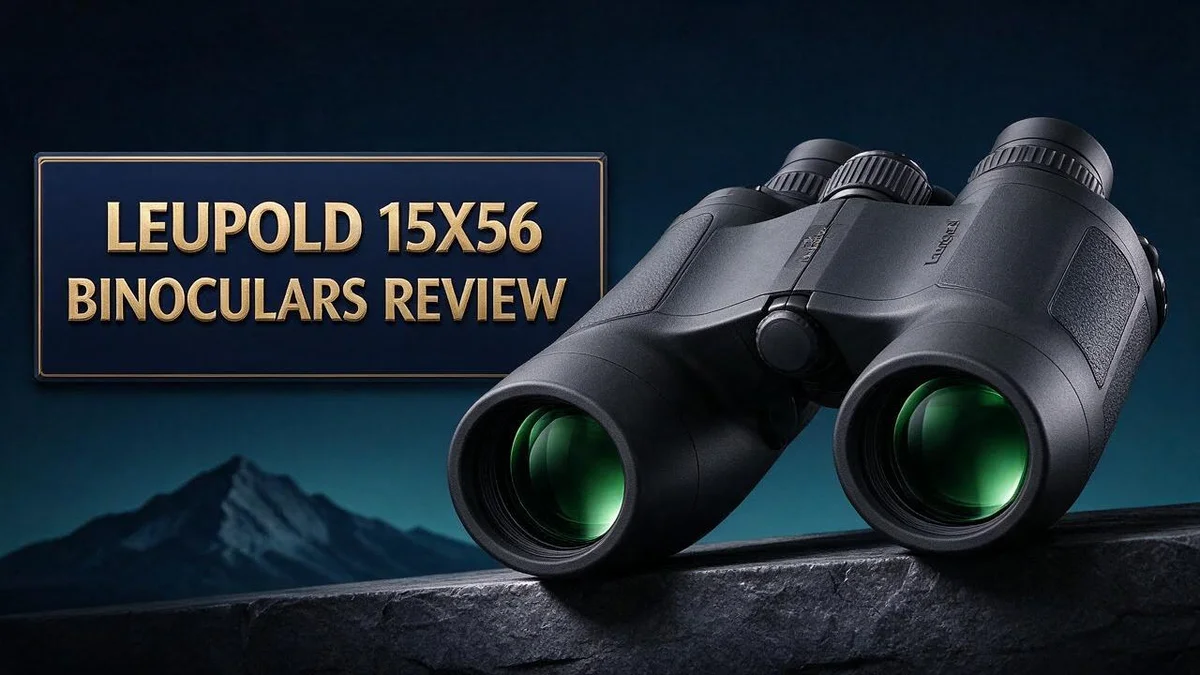
Leupold 15×56 Binoculars Review: Does It Really Work?
Looking for binoculars that bring distant land into sharp focus? The Leupold Santiam HD 15×56 is a strong choice for serious glassing.
This flagship model offers 15x magnification and a 56 mm objective lens. Its 4 degree field of view helps you scan wide, open country fast.
Made in Japan, these binoculars come with a GO Afield shoulder strap, a durable case, and lens covers. One reviewer said they feel significantly better than other binoculars he has used.
They weigh 45 ounces, though. That makes them larger than many low profile hunting models. This bulk matters if you plan to move quietly through the brush.
Below, we break down the specs, pros, cons, and top alternatives. Keep reading to see if these big binoculars fit your next outdoor trip.
In a Nutshell
- Wide view at distance: The linear field of view reaches 70 meters at 1,000 meters. This helps you scan large open land quickly and find game faster.
- Bright image in low light: The exit pupil measures 3.73 mm. This size works well during early morning and late evening hours when light is poor.
- Easy tripod setup: The box includes a binocular tray tripod adapter. This accessory lets you glass from a steady base for long periods without fatigue.
- Strong owner praise: One reviewer called them significantly better than other binoculars he has used. That kind of feedback helps build trust in the brand.
- Best for sitting and waiting: Their size and weight suit a seated or tripod setup better than a fast walk. Hunters who cover ground quickly may prefer a lighter pair.
- Quality concerns to check: One owner reported a warranty return and quality control issues. Shoppers should review the warranty terms and compare options like the Maven B2 12x before deciding.
Optical Performance and Magnification

- Model #185700 - BX4-Range HD Gen 2 TBR/W 12x50 Shadow Gray
- Guard-ion lens coating sheds water, dirt, and fingerprints for a clear, crisp image
Last update on 2026-11-10 / Affiliate links / Images from Amazon Product Advertising API
Magnification is the first thing most buyers check. The Leupold Santiam HD 15×56 pushes that number high. Details that look like blurs at 500 yards start to take shape.
Higher power has a cost. Every extra step of zoom also magnifies hand shake. Many users find that a steady rest matters more than the lens itself.
The angular field of view is 4 degrees. This number tells you how much of the scene you see at once. A narrower view means less room to scan quickly.
Narrow fields suit targets at long range. They make it harder to find a moving animal in the first moment. Many hunters spot game with a wider lens, then switch to this one.
Sharpness depends on more than power. Glass quality, coatings, and alignment all shape the final image. Public specs do not list coating details, so check independent tests.
Good image edges matter too. A sharp center is only part of the picture. Clear edges help when you pan across a valley or track a bird in flight.
Light gathering depends on large front lenses. Plenty of light helps at dusk. Many shooters use optics like this near sunrise and sunset, when game moves most.
Eye placement also affects comfort. Long sessions at high power can strain the eyes if the focus feels off. Adjust the diopter and interpupillary distance before each outing.
Test the view in person. Look at a fence post or power line at distance. Straight lines should stay straight, with no curving or color fringes.
Colors look natural in good light. Buyers often judge a view by how clean it feels at first glance. Try the glass at both dawn and midday to see the difference.
In short, this model suits hunters who value detail at long range. Pair it with a steady rest and a wider glass for scanning.
Field of View and Viewing Experience
Scanning a wide area feels different from locking onto one spot. Slow, steady sweeps work best with this model.
Pick a clear landmark first. Find a tree line or rock outcrop, then move the glass in small steps. This keeps your place in the scene.
Some hunters carry a second pair for wide searches. An 8×42 covers ground quickly, while the 15×56 shows fine detail on a far target.
Your eyes can tire after a long session. Stare through strong magnification for hours and eye strain builds. Take short breaks and look at a near object to refresh your focus.
Rest your elbows on a stump, a rock, or a bag. A steady base keeps the image calm. Your arms will thank you after an hour behind the glass.
The view also depends on clean lenses. Dust, fingerprints, and morning dew can dull the image fast. Wipe the lenses with a soft cloth before each outing.
Eye relief is not stated in available specs. If you wear glasses, check how far your eyes must sit from the eyepieces. Try the binoculars in person before you decide.
Track a moving target like a bird in flight. Smooth panning shows how well the view follows motion. Practice this in your backyard before a hunt.
Lighting changes the scene too. Early morning light makes the view look warm and soft, while midday glare can wash out shadows. Plan your scanning window around the light.
Think about your seat and posture too. A comfortable position lets you hold the glass still for longer. Adjust your stance until the view feels natural.
Wind can also shake the scene. Brace your body against a tree when gusts pick up. Calm air gives you the clearest view.
In short, this model rewards patience. Slow scanning, steady support, and clean glass bring out its best view. Hunters who take their time will see the most.
Size, Weight and Handling
At 45 ounces, the Leupold 15×56 is a heavy pair of binoculars. You will feel that weight after a few hours in the field. Plan for it before you head out.
Your neck and shoulders will notice the load. Hang the binoculars around your neck for ten minutes at home. Pay attention to how your neck and upper back feel. This quick test shows whether the size suits your body.
The GO Afield shoulder strap helps spread the weight. A wide strap sits more comfortably than a thin cord. Check that the strap stays in place on a thick jacket or a loaded pack.
Handling feels different with a larger body. Your hands need a firm grip to keep the view steady. Many users rest their forearms on a support to hold the glass still.
Carrying space matters too. The durable case protects the lenses but adds bulk to your pack. Clear room in your bag before the trip. Keep the lens covers on when you walk.
Think about how you hunt. The size and weight make this model a poor match for a fast spot and stalk approach. Moving slowly through brush with heavy glass can tire you quickly. Save these binoculars for days when you sit, wait, and scan.
Where you hunt also changes the experience. A ridge, a ground blind, or a tree stand gives you a steady place to rest. Set the binoculars on a bag or tripod between scans. This habit saves your arms and keeps your eyes fresh.
Size and weight are not flaws on their own. They are simply trade-offs. If you value a steady view over a light pack, this pair fits well. If you walk far every day, consider a lighter option for your main kit.
Top 3 Alternatives
Looking for a strong pair of binoculars with big views? These three options offer great magnification and bright images. Each one fits a slightly different need.
Celestron SkyMaster

- POWERFUL 15X MAGNIFICATION: Giant astronomy binoculars with massive 70mm objective lenses and 20x power...
- WORKS WITH YOUR TRIPOD: Due to their size & weight, most users mount SkyMaster binoculars on a...

Last update on 2026-11-10 / Affiliate links / Images from Amazon Product Advertising API
The Celestron SkyMaster gives you powerful 15x magnification for viewing distant objects. Its large front lenses gather plenty of light. This helps when you watch stars or wildlife at dusk.
It works well on a tripod, so your arms can rest. Many stargazers choose it for steady views of the night sky.
Orion GiantView

- POWERFUL 25X MAGNIFICATION: Giant astronomy binoculars with massive 70mm objective lenses and 25x power...
- WORKS WITH YOUR TRIPOD: Due to their size/weight and high magnification, most users mount SkyMaster...
Last update on 2026-11-10 / Affiliate links / Images from Amazon Product Advertising API
The Orion GiantView is known for its wide, bright field of view. Big objective lenses pull in more light for clear images at night. Beginners often find it easy to aim and focus.
Its sturdy build handles regular outdoor use. You can also add a tripod for longer viewing sessions.
Vortex Diamondback

- 10x magnification & 42mm objective lenses, these Diamondback HD binos are optimized with select glass...
- Fully multi-coated lenses increase light transmission with anti-reflective coatings on all air-to-glass...
Last update on 2026-11-10 / Affiliate links / Images from Amazon Product Advertising API
The Vortex Diamondback focuses on sharp color and crisp edges. Its lenses use multiple coatings to reduce glare. Hikers and birdwatchers appreciate its comfortable grip and clear detail.
This option feels light in hand. It suits people who want quality views during long days outdoors.
Each binocular offers a different mix of power, light, and comfort. Think about where you plan to use them most. That choice will help you pick the right pair.
Build Quality and Included Accessories
Build quality starts with the place where the binoculars are made. This Leupold 15×56 model is made in Japan. It serves as the flagship model for the brand.
Many buyers look for that kind of origin when they want a tool that lasts.
Feel matters, so judge the body yourself. Pick up the pair in a shop if you can.
Check the focus wheel, the eyecups, and the hinge. Work each part several times. Look for smooth motion and no loose parts.
The accessory kit completes the package. You receive a binocular tray tripod adapter. It lets you mount the glass on a tripod for steady viewing.
Setting up the adapter takes only a few minutes at home. This matters most when you scan far ridges for long periods.
The lens covers protect the front and rear glass from dust, rain, and scratches. Keep them on when you travel or walk through brush.
Clean them with a soft cloth before each use. Replace them quickly if they tear, since a torn cover offers little protection.
Quality concerns deserve a closer look. One owner reported a warranty return and raised questions about quality control.
A single report does not prove a pattern. Still, you should buy from a seller with a clear return policy. Ask the seller how returns work before you commit.
Test the pair within the return window.
Register the warranty after purchase. Save the receipt and the box.
Store the lens covers in the case when you finish a hunt, so the glass stays clean and ready for the next trip.
Accessories shape your first day with the binoculars. Open the box and check every item against the list.
Confirm that the tripod adapter, lens covers, and case arrive intact before you leave the store. Missing items are easier to fix on the same day.
Best Use Cases and Pairing Strategy
The Leupold 15×56 shines in open country. Wide valleys, long meadows, and mountain faces reward its high power. You can scan distant slopes and spot animals that blend into the far tree line.
Early and late light matter most. Game often moves when the sun rises or sets. The large objective lens gathers extra light, so you can keep glassing longer as the shadows grow.
Pair it with a close range companion. Dense timber and thick brush need a wider view. An 8×42 pair handles those tight spaces well.
The 15×56 covers the distance. The lighter glass covers the nearby cover. Switch between them as the terrain changes, and you rarely miss a chance.
Use a 20×60 for flat, endless country. Some hunters add a higher power pair for desert plains or wide prairies. Bring it only when the land demands extra reach.
Glass from your vehicle when possible. A truck window or a stable tailgate gives a steady platform. You can scan big areas without hiking far.
Plan the day in stages. Start with the big glass to find animals. Then switch to the lighter pair once you know where to go.
Scouting works well with this model too. Mark trails, water sources, and bedding areas from a distance. This saves time and reduces the wear on your boots.
Weather changes the choice too. Fog and heavy rain can soften the image at high power. On those mornings, a lower power pair often gives a clearer view.
A strong pairing plan also saves weight. Carry the heavy glass only on days when you expect long views. Leave it in the truck when you plan a short walk.
Let the terrain guide your pairing. Open ground calls for the big glass. Thick cover calls for something lighter. Match the tool to the land, and your hunt will feel more focused.
Pros and Cons
Pros
– Reviewers often call them clearly better than other binoculars they have used.
– The large lenses gather more light for viewing at dusk.
– The high power suits hunters who scan long distances.
– Many hunters enjoy glassing for long stretches from one fixed spot.
– Owners who value image clarity may find this model worth a close look.
Cons
– Hikers may feel the extra load on steep climbs.
– Eye relief figures are hard to confirm from the published sources.
– Direct comparisons with rival models come from only one forum thread.
Who Should Buy It
The Leupold 15×56 fits hunters who spend long hours scanning distant ground. Its high power pulls distant animals into clear view. Many of these hunters sit on a ridge or rim and search slowly for game. They want to study details before they plan a stalk.
Ranchers and land managers also gain from this model. They check fence lines, livestock, and grazing pastures from a truck or a porch. For them, a steady view matters more than a light frame.
Wildlife watchers with a fixed viewing spot can benefit too. Think of a deer feeding ground, a marsh edge, or a mountain overlook. You can mount the binoculars on a tripod and study animals for an hour without fatigue.
This model is not the best choice for every outdoor fan. Anyone who plans to move quickly through brush will feel the bulk. Spot and stalk hunters need a lighter pair that they can carry all day.
Bird watchers who chase small songbirds in thick woods may prefer a wider and closer view. Shorter focus ranges help with fast movement, so a compact pair often works better for them.
Beginners should think carefully before buying. A 15x magnification makes hand shake very obvious. Practice with a lower power pair first, then move up when your steady hold improves.
Travelers face another issue. Long flights and road trips punish heavy gear, so consider how often you will carry the binoculars.
Ask yourself three simple questions before you decide. Do you glass long distances often? Do you have a steady place to rest the binoculars? Will you handle the weight on most outings? If you answer yes to most questions, this pair fits your needs well.
Final Verdict
Our final verdict is clear. The Leupold 15×56 earns a solid recommendation for hunters who sit and scan. It rewards patience with a sharp, detailed view of distant ground.
Weight is the main trade off. At 45 oz, these binoculars ask a lot from your neck and shoulders. Treat them as a glassing tool, not an everyday carry pair.
Inspect the optics before you commit. One owner reported a warranty return, so careful checks matter. Test focus across the whole field in daylight and look for color or edge issues.
Buy from a seller with a clear return policy. A simple return window protects you if the glass does not meet your needs. Keep your receipt and the original box for easy claims.
The accessories help you start fast. The tray tripod adapter, shoulder strap, case, and lens covers come in the box. You can head to the field without buying extra gear.
Try a handling test first. Hold the binoculars for a full minute while you raise them to your eyes. If your arms tire quickly, expect the same fatigue on a long hunt.
Read recent owner reviews too. Look for comments about focus, alignment, and customer service. Patterns tell you more than one glowing review.
Care keeps the optics sharp. Wipe the lenses after each trip and store the binoculars in the case. Dust and moisture cause many early problems.
Think about your typical day. Plan to spend hours on open ground during long glassing sessions. If you need a light pair for quick moves, look elsewhere.
Our bottom line stays simple. The Leupold 15×56 delivers strong power and a large view for patient hunters. Choose it for steady scanning, and check the build before you buy.
Frequently Asked Questions
What does 15x magnification mean for you?
It means distant objects look fifteen times closer than they do to the naked eye. This power helps you spot animals across wide valleys. You can see small details on far ridges that would blend into the land.
How wide is the view through these binoculars?
The angular field of view is 4 degrees. At 1000 meters, you see about 70 meters of ground. A narrow view means you need a little practice to follow fast movement across the glass.
Where are the Leupold 15×56 binoculars made?
The BX-5 Santiam HD 15×56 is the flagship model, and it is made in Japan. Some buyers look for that detail when they compare optics. It helps you know where your gear comes from before you buy.
Can I use these with other binoculars?
Yes, many users pair them with other sizes. Some carry an 8×42 for close range and keep a 20×60 for longer reach. Mixing sizes gives you options for different terrain and light levels.

Joyce is the passionate founder of Chirping Hearts, a website dedicated to sharing her love for birds and providing valuable information about avian life. With a background in ornithology and years of experience in birdwatching, Joyce aims to inspire others to appreciate the beauty and diversity of birds. Through her engaging articles and guides, she hopes to foster a community of bird enthusiasts who share her enthusiasm for these incredible creatures. When she’s not writing, Joyce enjoys exploring nature trails and observing birds in their natural habitats.