
Small Olive Green Birds: Identification and Habitats
When you spot small olive green birds, look for important features like wing patterns and the shape of their beaks. These birds usually measure about 4.5 to 6 inches long and their olive coloring can change based on the light. They like to live in dense shrubs and mixed forests, so knowing this can help you find them more easily.
Identifying these birds is fun! Their behaviors often connect to where they live. For example, their colors help them blend in with the leaves, protecting them from predators. Watching their movements can also give you clues about their habits and interactions in the environment. By learning more about these birds, you can enjoy birdwatching even more!
A Quick Overview
Small olive green birds are about the size of your hand, measuring between 4.5 to 6 inches long. Their feathers change a bit with the light, showing different shades of green. You can tell them apart by looking at their wing stripes, the shape of their beaks, and the color of their legs.
These birds love to hang out in thick bushes, forests with trees that lose leaves, open grass fields, and wet areas. They find their food and stay safe from predators in these places. Often, you'll see them in small groups, which helps them stay safe and find food more easily.
Sadly, their numbers are going down. This happens because of things like losing their homes due to building and other animals taking over their space. It's important for us to help protect them and their habitats.
Common Species of Small Olive Green Birds

When you visit different habitats, you may see small olive green birds like the common yellowthroat and olive warbler. These birds play important roles in nature.
During breeding season, male birds show off their bright colors and cool moves to attract females. This shows that they're healthy and strong.
These birds have special feather patterns that help them blend in with leaves. This helps them stay safe from predators. They also search for food in ways that help spread seeds and keep insect numbers in check.
Key Identification Features
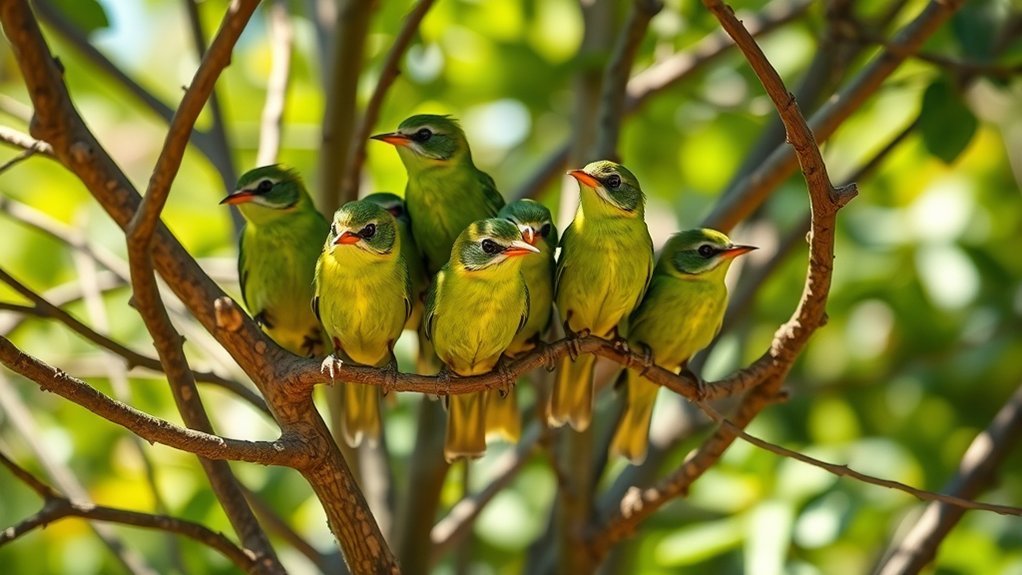
To identify small olive green birds, look for some key features that make them stand out.
First, check their size. Most of these birds are between 4.5 to 6 inches long. This size can help you figure out which type you might be seeing.
Next, pay attention to their color. Their olive green feathers can change a bit, from dull yellowish-green to bright shades, depending on the light and the bird itself.
Another thing to notice is their wings. Look for stripes or spots, as these can help you tell one species from another.
Also, the shape of their beaks and the color of their legs can give you more clues about what kind of bird it is.
By keeping an eye on these details, you'll get better at spotting and identifying these interesting birds.
Plus, you'll be able to share your findings with other bird watchers!
Understanding Bird Songs and Calls
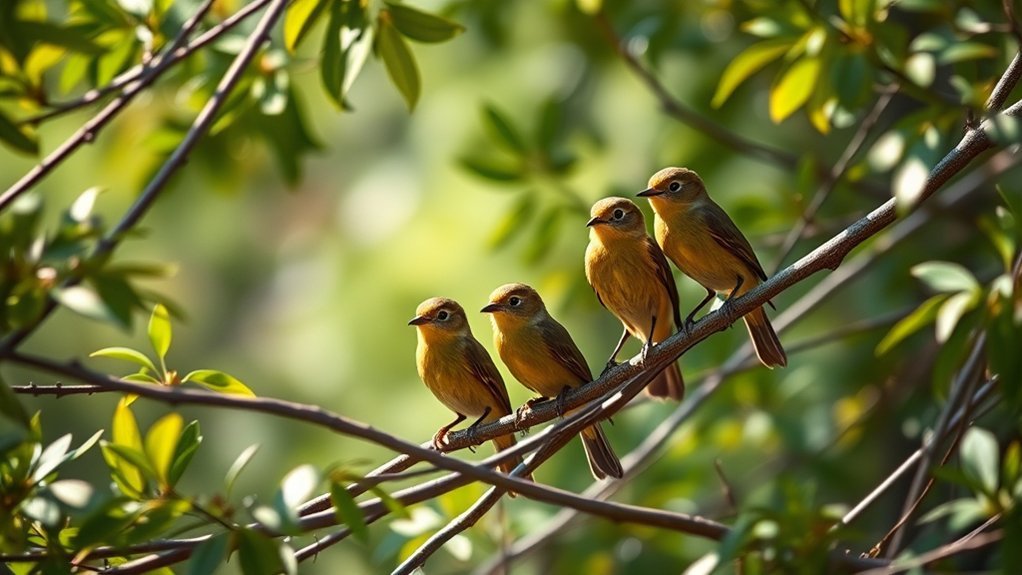
To find small olive green birds, listen to their songs and calls. These sounds help you know they're nearby and what they're doing.
Here are some easy tips to help you notice their vocalizations:
- Bird songs: Pay attention to their tunes. Some birds have complex songs with patterns, while others have simple notes.
- Calls: These are short, quick sounds. Different birds make different calls, and they use them to talk to each other.
- Timing: Notice when you hear the sounds. Birds often sing more in spring and summer.
- Interactions: Watch how they react to other birds or changes in their environment when they call.
Learning these tips will help you understand small olive green birds better. You'll feel more connected to nature, and birdwatching will be more fun!
Behavior and Feeding Habits
Small olive green birds show interesting behaviors and feeding habits. These birds often gather in small groups. This helps them stay safe from danger. They eat in different ways. Some birds catch insects by hovering and snatching them from leaves. Others like to pick seeds or fruit off trees.
You can see them looking for food in mixed places like forests or gardens. They enjoy different types of food. When they eat, they also communicate with each other. They signal if there's danger or show where to go next.
These actions help them stay together as a group. Watching these birds can make you appreciate how they live and work together. They play important roles in nature, both as individuals and as part of their community.
Preferred Habitats and Range
Habitat preferences greatly affect where olive green birds live and how well they survive. These birds thrive in places that meet their basic needs for food, shelter, and nesting. Here are some habitats where you can find them:
- Dense shrubs and underbrush: These areas help the birds hide from predators.
- Deciduous and mixed forests: These forests have many insects, which serve as food for the birds.
- Grasslands and savannas: These open areas are great for finding seeds and foraging.
- Wetlands and riparian zones: These locations have plenty of water, crucial for the birds' survival.
Knowing where olive green birds like to live can make birdwatching more enjoyable. It helps you appreciate nature better, too.
Taking care of these habitats is important so these birds can continue to thrive in their homes.
Seasonal Migration Patterns
As the seasons change, we can learn a lot from the migration patterns of olive green birds. These birds are very good at adapting to their surroundings. They start moving when the weather gets colder and the days get shorter.
They follow certain paths when they migrate, which often leads them along rivers and mountains. This helps them find their breeding areas in the summer and their winter homes where food is easier to find.
Usually, they leave their breeding spots in late summer and fly to warmer places.
Watching these birds migrate can help you appreciate nature more. It shows how different animals depend on seasonal changes. By learning about their journeys, you can feel more connected to the natural world.
Tips for Spotting Olive Green Birds
Spotting olive green birds can be fun and exciting! Here are some simple tips to help you find them during their migration:
- Look in shrubby areas. Olive green birds like to hide among the leaves.
- Watch for movement. They jump from branch to branch, which can make them hard to see.
- Listen closely. These birds have special calls and songs that can help you know where they are.
- Use binoculars to check the treetops, but try to stay still. This way, you won't scare them away.
With these tips, you can enjoy watching olive green birds and learn more about them!
Happy birdwatching!
Role in Ecosystems
Olive green birds are important for nature. They help flowers grow by moving pollen and spreading seeds. This makes sure plants can grow in different areas.
When they eat, they also help mix up different plant types, which is good for nature's variety.
These birds are part of the food chain, too. They provide food for bigger animals, like hawks. At the same time, they help keep bugs in check. This balance is vital for a healthy environment.
Watching these birds interact with plants shows us how they connect with everything around them. Their presence helps make our ecosystems lively and diverse.
It's cool to see how every piece fits together in nature!
Conservation Status and Challenges
Small olive green birds are important for nature, but their numbers are dropping. This is happening because they're losing their homes, the weather is changing, and people are moving into their areas.
To help these birds, we need to understand what's hurting them:
- Building in cities breaks up their nesting sites.
- Fewer kinds of plants mean less food for them.
- Invasive species take their resources.
- Climate change alters their migration routes.
Protecting their homes is very important. This means they need safe places to breed and find food.
You can help by joining local conservation programs. By raising awareness and taking action, you can support the survival of these birds.
Together, we all share the responsibility of caring for our feathered friends and keeping nature balanced.
Resources for Birdwatching Enthusiasts
If you love watching birds, especially little olive green ones, there are great tools to help you enjoy this hobby even more. You can use birdwatching apps like Merlin Bird ID or eBird. These apps help you identify birds and connect with other bird lovers.
When picking out binoculars, look for reviews that talk about things like clarity, weight, and how much you can see. This will help you choose binoculars that feel right for you and work well whether you're out for a short walk or a long day of birdwatching.
Joining a local birdwatching club is also a fantastic idea. You can meet other birdwatchers, share stories, and learn new tips.
All these resources can make your birdwatching adventure more fun and help you feel closer to nature and other people who enjoy it too. Happy birdwatching!
Frequently Asked Questions
What Do Olive Green Birds Symbolize in Different Cultures?
In many cultures, olive green birds bring messages of renewal and hope. These birds often stand for harmony and balance in nature. People see them as reminders to connect with the world around them. When you spot an olive green bird, think about its meaning. It can inspire you to appreciate nature and the beauty it holds.
How Do Olive Green Birds Adapt to Climate Change?
Olive green birds adapt to climate change in interesting ways. They change where they build their nests and what they eat. These changes help them survive in new conditions.
When the weather gets warmer or food becomes harder to find, olive green birds show their smartness. They can adjust and find different places to live. They also search for new types of food. This flexibility helps them stay alive even when things around them change.
Watching how these birds react to their environment is amazing. Their ability to adapt shows just how strong and clever they are.
Are There Any Myths Associated With Small Olive Green Birds?
Small olive green birds are often found in stories and myths. These birds usually stand for good luck and new beginnings. People believe that spotting one can bring happiness and hope. These tales connect us to nature and help us understand how different cultures see the world. Enjoying these stories can make you appreciate the beauty around you even more.
What Is the Breeding Behavior of These Birds?
These birds show interesting courtship behaviors. They display bright feathers and sing beautiful songs to attract mates. When it comes time to nest, they choose hidden places. This helps keep their eggs safe and gives their baby birds a good chance to grow up strong.
Do Olive Green Birds Migrate Individually or in Flocks?
Olive green birds mostly travel in flocks during migration. They fly together to stay safe and help each other find their way. This group movement makes their journey easier and keeps them safer as they move between different homes. Traveling in numbers helps them face dangers better and find food along the way. So, if you spot olive green birds flying, they're likely in a group, supporting each other on their journey.

Joyce is the passionate founder of Chirping Hearts, a website dedicated to sharing her love for birds and providing valuable information about avian life. With a background in ornithology and years of experience in birdwatching, Joyce aims to inspire others to appreciate the beauty and diversity of birds. Through her engaging articles and guides, she hopes to foster a community of bird enthusiasts who share her enthusiasm for these incredible creatures. When she’s not writing, Joyce enjoys exploring nature trails and observing birds in their natural habitats.