
Oriole Species Across America and Europe You Should Know
When you look at oriole species in America and Europe, you'll see they have special traits and skills. The colorful Baltimore Oriole and the flexible Bullock's Oriole show how different they can be in their homes. In Europe, the stunning Eurasian Golden Oriole stands out in the scenery. Learning about how these birds live helps us understand what they do and how they help their surroundings. What does make them different? What helps them survive? These questions can help us know more about these amazing birds.
A Quick Overview
Here are some oriole species you should know about:
- The Baltimore Oriole is bright orange and black. You can see it in the eastern United States during migration seasons.
- Bullock's Oriole is very colorful and can adapt well. It lives in the western United States, often near rivers and lakes.
- The Eurasian Golden Oriole has striking yellow feathers. It enjoys living in forests and helps keep ecosystems healthy in Europe.
- Orchard Orioles are often found in orchards. They are important for pollination and have different colors for males and females.
- The Hooded Oriole lives in the southern U.S. and Mexico. It sings beautifully and likes to nest in palm trees.
These birds not only add color to our world but also play important roles in nature.
Baltimore Oriole: The Iconic American Bird

The Baltimore Oriole (Icterus galbula) is a beautiful bird with bright orange and black feathers. But there's more to this bird than its looks. The Baltimore Oriole is fun to watch as it moves around trees. It has cool ways of finding food, like insects and sweet nectar.
These birds like to live in places with lots of trees, like forests, orchards, and even suburban areas. They build their nests hanging from branches.
You can see them during migration season in the eastern United States. Watching them helps you learn about the local environment. Getting to know the Baltimore Oriole can make you feel more connected to nature and the world around you.
Bullock's Oriole: The Western Counterpart
The Bullock's Oriole is a colorful bird found in the western United States. It looks a lot like the Baltimore Oriole, which is more common in the east. You can see Bullock's Orioles flying around rivers and lakes, showing off their bright orange and black feathers against green trees.
Here are some cool facts about Bullock's Orioles:
- Nesting: They like to build their nests in leafy trees, especially near water.
- Food: They eat fruits, nectar, and insects. This tasty diet helps them raise their young.
- Migration: When winter comes, they fly to warmer areas. This migration shows how well they adapt to changes.
Learning about the Bullock's Oriole helps us appreciate the variety of birds in North America. These beautiful animals bring us closer to nature and make our world more interesting.
Orchard Oriole: A Small but Striking Species
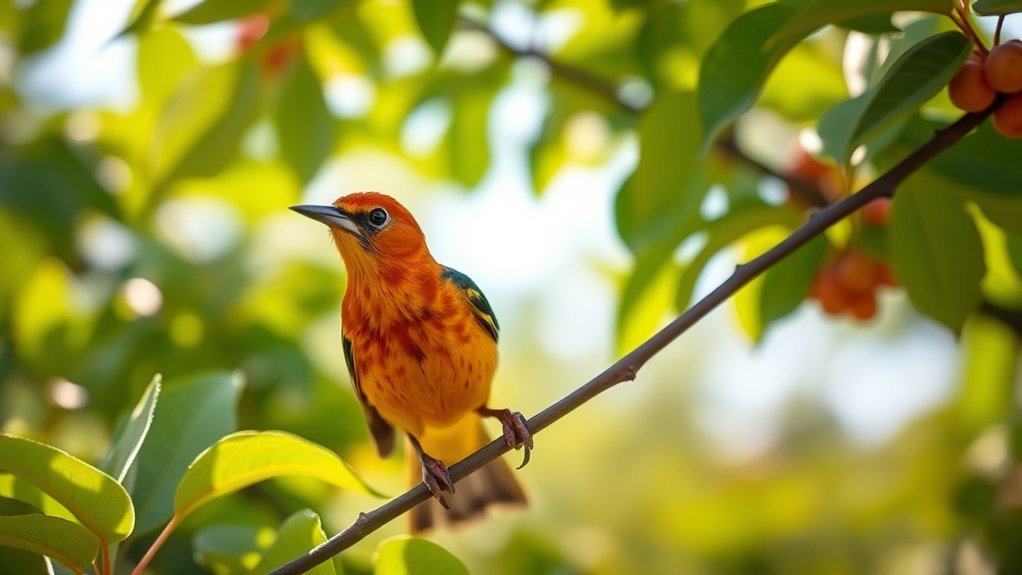
The Orchard Oriole is a small, bright bird that catches the eye of many birdwatchers. This beautiful bird is often seen in orchards, where it lives among fruit trees and bushes. These places offer both shelter and plenty of food for the Oriole.
It mainly eats insects, fruits, and nectar. This diet helps with pollination, which is important for plants. When you watch an Orchard Oriole, you may see it darting between branches or hanging upside down to grab food. These behaviors show how adaptable the bird is.
The male Orchard Oriole has striking orange and black feathers, while the female has more subtle yellow-brown colors. This difference makes them even more interesting to look at.
Hooded Oriole: A Tropical Delight
Spotting a Hooded Oriole is like seeing a bright splash of color in sunny areas of the southern United States and Mexico.
These beautiful birds like to stay in palm trees and thick bushes where they build fun nests.
Here's what you need to know about them:
- Habitat: Hooded Orioles enjoy warm places and often live in gardens and open fields.
- Diet: They love to eat nectar from flowers, fruits, and insects. This shows how they can change their food choices based on what's around them.
- Behavior: You'll often hear their sweet songs. They're skilled at picking food, which makes them fun to watch.
Every time you see a Hooded Oriole, you connect with nature. They're a lovely part of the birdwatching experience!
Eurasian Golden Oriole: The European Gem
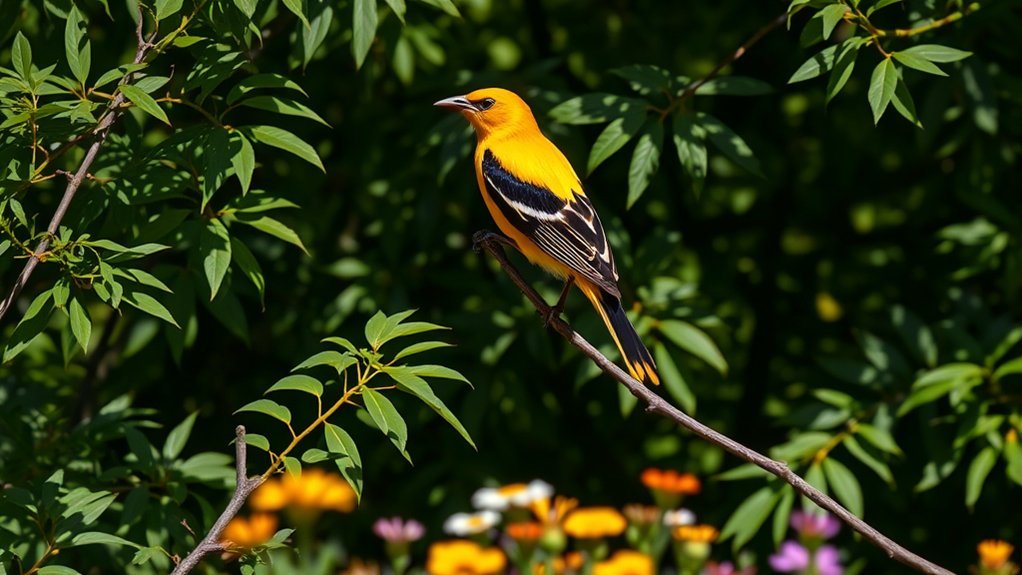
The Eurasian Golden Oriole is one of Europe's most beautiful birds. With bright yellow feathers, it shines brightly against the green leaves of its home. These birds like to live in places with rich trees, such as woods or along rivers.
Eurasian Golden Orioles mostly eat fruit and insects. This helps keep their environment healthy. When you see them flitting from tree to tree, listen to their lovely songs. Their calls make you feel connected to nature.
These orioles aren't just pretty; they play a big role in supporting many plants and animals around them. The presence of the Eurasian Golden Oriole shows that the ecosystem is thriving, making it a special part of our world.
Streaked Oriole: A Lesser-Known Beauty
The Streaked Oriole is a colorful bird that catches the eye of many birdwatchers in parts of Asia and the Pacific. This beautiful bird has some really interesting traits. Here are three cool things about the Streaked Oriole:
- Habitat: You can usually find the Streaked Oriole in wet evergreen forests. It likes to stay among the thick trees and plants.
- Behavior: This bird is known for its fun and playful ways. It often hangs upside down while looking for bugs to eat.
- Vocalization: The Streaked Oriole sings lovely songs! You can hear its sounds as they travel through the treetops.
Learning about the Streaked Oriole helps make birdwatching even more enjoyable. This special bird can really make your time outside even better!
Black-vented Oriole: Unique to Central America
Let's talk about the Black-vented Oriole! This bird is special to Central America. It loves to live in moist lowland forests, where it finds plenty of food.
You can often spot these beautiful birds hopping around in the tree tops. The Black-vented Oriole eats fruits, insects, and nectar. It uses its sharp eyes to find food hidden in the leaves.
Birdwatchers enjoy listening to their lovely songs and watching their bright colors. Learning about the Black-vented Oriole helps us appreciate these amazing birds and their role in nature.
Frequently Asked Questions
What Do Orioles Eat in Their Natural Habitat?
In their natural habitat, orioles enjoy a mix of foods. They mainly eat insects, fruits, and nectar. Some of their favorite treats are ripe berries and sweet liquids. These foods give orioles the energy they need to stay active and lively.
How Can I Attract Orioles to My Backyard?
To attract orioles to your backyard, hang bird feeders filled with fruits like oranges and grapes. Watch which fruits they like best. Keep offering a mix of these fruits so they feel happy and want to come back to your yard. Enjoy watching these beautiful birds!
Are Orioles Migratory Birds?
Yes, orioles are migratory birds. They move from one place to another based on the seasons. In the spring, they fly to warmer areas to breed and find food. In the fall, they travel back to cooler places.
Watching these birds can be exciting. You might see them come to your backyard in spring. Understanding where they go helps us appreciate their journeys. It's amazing how far they travel!
What Is the Lifespan of an Oriole?
The lifespan of an oriole is usually about 3 to 4 years in the wild. Some orioles can live longer, even reaching up to 10 years if they have good living conditions. Their life can be affected by things like predators and where they live. So, the right environment can help them live a bit longer.
Do Orioles Mate for Life?
Orioles don't usually mate for life. Instead, they have seasonal mating habits. This means they may form short-term bonds during the breeding season, but these partnerships can change every year. So, one year they might be with one partner, and the next year they might find a new one. Orioles enjoy their freedom and can switch mates as they like.

Joyce is the passionate founder of Chirping Hearts, a website dedicated to sharing her love for birds and providing valuable information about avian life. With a background in ornithology and years of experience in birdwatching, Joyce aims to inspire others to appreciate the beauty and diversity of birds. Through her engaging articles and guides, she hopes to foster a community of bird enthusiasts who share her enthusiasm for these incredible creatures. When she’s not writing, Joyce enjoys exploring nature trails and observing birds in their natural habitats.