

How to Help an Injured Wild Bird: Essential Steps for Care
When you see an injured wild bird, it's important to help it in the right way. The first things you do can really affect how well the bird heals. Start by watching the bird from a distance. Look for signs of injury but try not to scare it. It's also good to think about how to keep the bird safe.
Next, what should you do? Let's go over the steps to take care of the bird properly.
- Stay Calm: If you find an injured bird, take a deep breath. Staying calm helps you think clearly and act quickly.
- Observe: Watch the bird without getting too close. You want to see how it behaves. Does it move? Is it trying to fly? This can give clues about its injuries.
- Create a Safe Place: If you feel it's necessary to help the bird, find a quiet, safe space for it. Use a box or a pet carrier. Line it with a soft cloth to make it comfortable.
- Don't Feed or Give Water: It's best not to feed or give water to the bird yet. Some birds may choke or get sick if you do this.
- Contact a Professional: Call a local wildlife rehabilitator or animal rescue. They know how to care for injured birds. They can give you specific advice on what to do next.
- Be Patient: Helping an injured bird can take time. Be gentle and wait for help to arrive.
Remember, helping an injured wild bird can make a big difference. By following these steps, you can give the bird a better chance to heal and return to its home in nature.
A Quick Overview
- Stay calm and look at the bird's condition. Watch how it acts and check for any danger around it. Make sure it feels safe where it is.
- Move slowly and quietly. Your soft voice can help the bird relax. Keep a distance so it doesn't get scared.
- Try to figure out what kind of bird it is. Look for any injuries like broken wings or bleeding. Take notes if you see anything unusual.
- Get in touch with a wildlife expert. They know how to help birds get better. Follow their advice to make sure the bird heals properly.
- Help birds in the future by reducing window glare and planting local plants. Talk to others about caring for wildlife too.
Assessing the Situation

When you find an injured wild bird, the first thing to do is stay calm.
Look at how the bird is acting. Is it flapping its wings, hopping around, or hiding? This can tell you how hurt or scared it is.
Also, check the area around the bird. Are there dangers like other animals or busy roads? These things can affect how safe the bird is.
Every bird is important for nature. They help with things like spreading pollen and controlling pests.
By paying attention to the bird's condition and its surroundings, you can help it better.
Try to create a safe space for the bird. If you see any injuries, take note of them. This careful look will help you take the right action and respect both the bird and its environment.
Being kind starts with understanding.
Approach With Caution
As you get close to the injured bird, move slowly and quietly so you don't scare it more.
Watch how the bird acts to see if it's scared. If you make sudden moves, it might feel even more nervous.
Try to stay a good distance away, so the bird doesn't feel trapped. Talk to it softly and calmly to help it feel better.
Remember, if the bird is really scared, it might hurt itself trying to escape.
If it looks too stressed or tries to fly away, back off a little and give it some space. Your gentle way can help the bird feel safe, making it easier for you to help later.
Be patient; it's important in this situation.
Identifying the Type of Bird
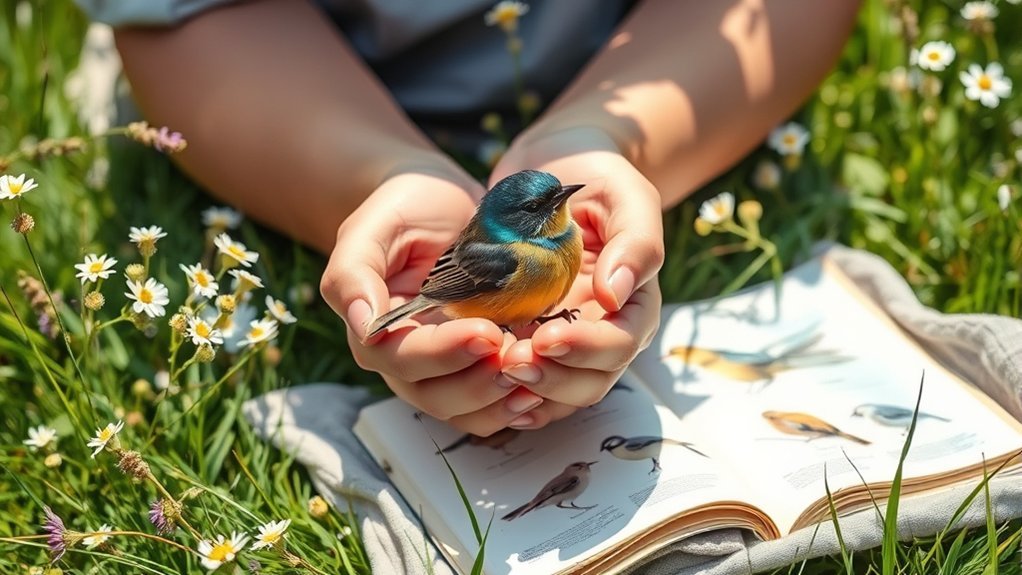
How can you find out what type of bird you've seen? Start by looking at its size and colors. Notice any special patterns or markings. You can use bird books or apps to compare what you see.
Think about how the bird moves—does it hop on the ground or sit in a tree? This helps narrow down the options.
Listen for the bird's sounds, too. Many birds have unique calls or songs that can help you recognize them. Every detail you notice brings you closer to figuring out what kind of bird it is.
Remember, birds are important to nature. Knowing what kind of bird you're looking at helps you take care of them better.
Plus, learning about birds can be fun and connects you with nature. So take your time, enjoy the process, and discover the amazing world of birds!
Checking for Visible Injuries
When checking for visible injuries on an injured wild bird, start by gently looking at the bird. Look for signs that it's hurt, like broken wings, bleeding, or missing feathers.
Check if any part of its body looks swollen or is in an unusual position. These can show that the bird is badly hurt.
Take your time and move slowly. Quick movements can scare the bird more.
Don't forget to check the beak and feet, as they can also be injured. It's important to stay calm and show kindness to the bird during this time.
If you see any injuries, write them down. This information will help wildlife helpers take care of the bird better when you get in touch with them.
Creating a Safe Space

Creating a safe space for an injured wild bird is very important. It helps the bird recover and feel better. Here's how you can do it:
- Find a Quiet Spot: Choose a calm and quiet place. This should be away from loud noises and pets. The bird needs peace to heal.
- Mimic Nature: Make the area feel like the bird's home. You can use soft things like towels or grass for bedding. This makes the bird comfortable.
- Provide Food and Water: Make sure the bird has fresh water and the right food. This helps it get better faster.
- Reduce Stress: Keep the area dimly lit. Bright lights and loud sounds can scare the bird. A quieter space helps the bird relax.
Providing a Temporary Shelter
If you find an injured wild bird, giving it a temporary shelter can help it get better. You can use a cardboard box, a pet carrier, or a small birdhouse to make a safe space for the bird. Make sure the shelter is easy to get into, but also strong enough to keep the bird safe.
Here's what to do:
- Gather soft bedding like old towels or newspaper to make it comfy.
- Add a small dish of water and some bird seed for food.
- Place the shelter in a quiet, dimly lit spot away from pets and busy areas.
This safe space will help the bird feel calm and secure, which is important for its recovery. Your care can really make a difference for this little bird!
Keeping the Bird Calm
To help the injured bird get better, it's very important to keep it calm.
First, gently put the bird in a quiet, dark place. This helps reduce its stress. You can cover the container softly with a light cloth to create a cozy and safe spot while still allowing some air.
Use calm voices or soft sounds to comfort the bird. It's important to avoid sudden movements and loud noises. These can make the bird feel more anxious.
Keep an eye on how the bird is breathing and acting. If it shows signs of being upset, offer gentle reassurance.
Your main goal is to make the bird feel safe and relaxed while it heals. A little kindness and patience will help this delicate creature recover.
Offering Food and Water
When the injured bird feels safe and relaxed, it's time to help with its basic needs: food and water. Start by offering bird seed, which is great for its nutrition. You can use a mix that fits the bird's type or just put some sunflower seeds in a shallow dish.
Place the dish nearby and give the bird space to come over when it's ready.
Next, get some fresh water for the bird. Make sure the water is clean and not too deep so the bird won't drown. A small dish or even a bottle cap works well for this.
Watch how the bird responds to the food and water. It might take time for it to feel comfortable. Your kindness and patience create a friendly space that helps the bird regain its strength.
Knowing When to Call a Professional
When should you call a wildlife expert for an injured bird? If you're not sure about the bird's health, it's best to contact bird rehabilitation experts or local wildlife rescue groups. They know how to help and can give the bird the care it needs.
Here are three signs that mean it's time to get help:
- The bird has serious injuries, like a broken wing or is bleeding.
- The bird is very tired or not moving at all, with no signs of getting better.
- The bird is in a dangerous place, like near busy roads or in risky spots.
If you notice any of these signs, don't wait. Reach out to professionals for help!
Transporting the Bird Safely
Transporting an injured wild bird requires care. First, get a safe carrier. A small box or a pet carrier with ventilation holes works well. Line the bottom with a soft cloth to make the bird comfy during the ride.
Keep the inside dark and quiet. This will help the bird feel less stressed. Gently put the bird inside the carrier. Make sure it's secure but not too tight. Then, close the carrier carefully.
While driving, keep the carrier steady. Avoid sudden moves. Your calm presence can help soothe the bird. This way, you both have a smoother experience.
Remember, you're helping!
You are making a difference!
Understanding Local Laws and Regulations
Taking care of an injured bird is really important. However, before you help, you need to know the rules about wildlife in your area.
Here are some simple things to remember:
- Learn the laws: Different places have different rules about helping wildlife. Make sure you know what you can and can't do.
- Talk to local experts: If you're not sure what to do, reach out to local wildlife agencies. They can tell you how to help the bird correctly and if you need any special permits.
- Get help from professionals: If you're still unsure, it's best to ask a licensed wildlife rehabilitator. They know how to take care of birds and can give the best help.
Always remember that helping wildlife is great, but following the rules is just as important!
Post-Recovery Release
After taking care of a hurt bird and making sure it's all better, it's important to think about how to let it go back into the wild. Here are some tips to help with the release.
First, pick a safe and familiar place for the bird. Opening the cage in a park or your backyard can be a good choice.
It's best to do this early in the morning or later in the evening when it's quieter outside. This way, the bird can feel more at home.
After you let the bird go, watch how it behaves. See if it can find food and a place to stay.
If the bird seems confused or struggles, you might want to catch it again and help it a little more.
Your main goal is to help the bird live happily in nature.
It's also fun to share this experience with other people who love wildlife. Enjoy your time watching your feathered friend fly free!
Preventing Future Injuries
To help keep wild birds safe and healthy, you can make your home and community a better place for them. Here are three easy ways to do that:
- Reduce Window Glare: Put up stickers or screens on your windows. This will help birds see the glass and avoid crashing into it.
- Make Your Yard Safe: Use natural products instead of harmful chemicals. Plant native plants that give birds a place to hide and find food.
- Spread the Word: Talk to your friends and family about how to help birds. Share tips for making safe spaces for wildlife in your neighborhood.
Every little bit helps.
Frequently Asked Questions
What Should I Do if the Bird Is Unresponsive?
If the bird is unresponsive, watch it closely. Look for any signs of injury, like cuts or a strange position. Stay calm and try to keep the bird safe. It's a good idea to get help from someone who knows about birds, like a vet or a wildlife expert. They can help make sure the bird gets the care it needs.
How Can I Tell if a Bird Is a Fledgling or a Nestling?
To tell if a bird is a fledgling or a nestling, look at a few key features. Fledglings have feathers and a rounder body. They are often clumsy but ready to explore. On the other hand, nestlings do not have feathers yet. Their eyes are closed, and they are smaller in size.
Knowing these differences can help you understand what the young bird needs. If you find one that is a fledgling, it might just be learning to fly. If it is a nestling, it may need more care and help getting back to its nest. Always approach these young birds with kindness and care.
Is It Safe to Handle a Wild Bird Without Protection?
Handling a wild bird without protection is not safe. You can get hurt or catch a disease. Always use gloves or other protective gear. This keeps you safe and helps protect the bird too. Taking these steps makes sure both you and the bird are okay. Remember, it's best to admire wild birds from a distance!
What Are Common Signs of Stress in Injured Birds?
You can spot stress in injured birds by watching for a few clear signs. If the bird breathes fast, fluffs up its feathers, or acts aggressive, it might be stressed. You should also look for physical signs like limping or bleeding, which show the bird is in distress.
To help them feel safe, stay calm and gentle when you are around them. This can make a big difference for the bird. Taking small, quiet actions may help them relax.
How Long Should I Wait Before Seeking Professional Help?
If you see an injured bird, don't wait too long to get help. Try to reach out to a bird rescue expert within a couple of hours. They know what to do to help the bird get better. Quick action gives the bird the best chance to recover. Your help can really make a difference!

Joyce is the passionate founder of Chirping Hearts, a website dedicated to sharing her love for birds and providing valuable information about avian life. With a background in ornithology and years of experience in birdwatching, Joyce aims to inspire others to appreciate the beauty and diversity of birds. Through her engaging articles and guides, she hopes to foster a community of bird enthusiasts who share her enthusiasm for these incredible creatures. When she’s not writing, Joyce enjoys exploring nature trails and observing birds in their natural habitats.


