
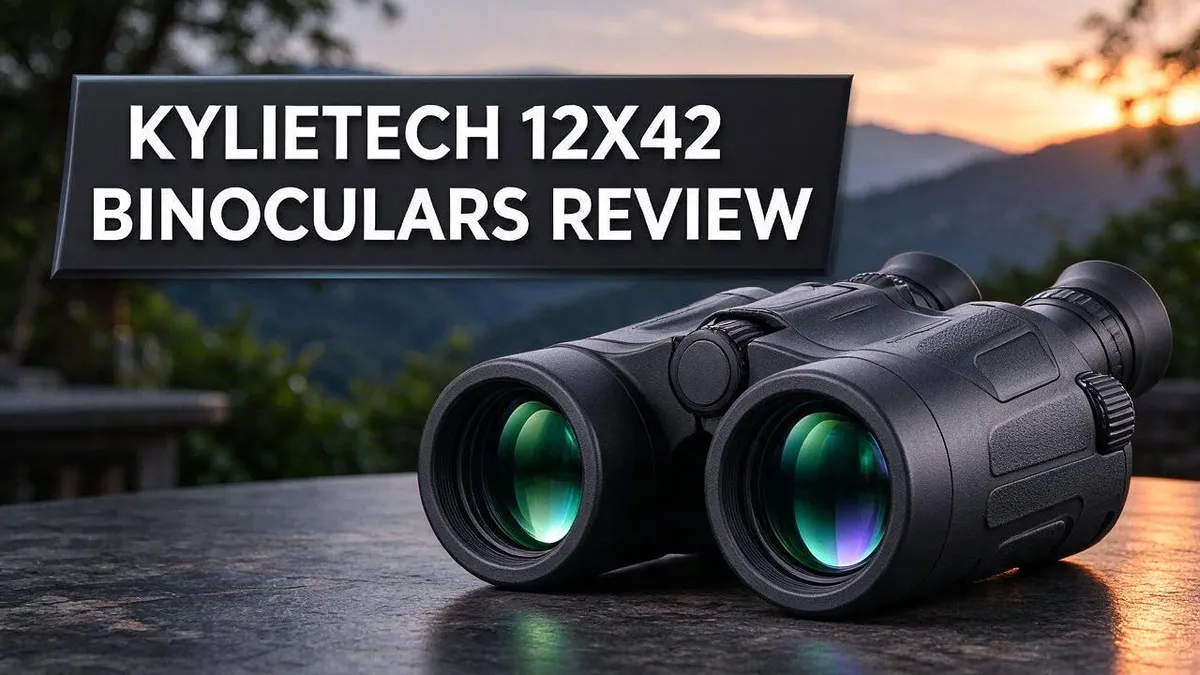
Kylietech 12×42 Binoculars Review: Is It Worth The Hype?
Do you love watching birds from a distance? A good pair of binoculars makes every sighting feel close and clear.
The Kylietech 12×42 binoculars aim to bring that view right to your eyes.
These binoculars pack 12x magnification and a 42 mm objective lens.
They use BAK4 prisms and fully multi-coated lenses for bright, sharp images.
Many people also use them for concerts and hunting.
The build feels tough. It is waterproof, fog proof, and shock resistant.
A tripod mount adds extra stability when you need it.
Still, there are some downsides.
High magnification can make handheld viewing shaky, so a steady stance helps.
Night viewing is also a weak spot, since these suit daytime use best.
In this review we look at design, performance, and everyday use.
Keep reading to see if this pair fits your needs.
In a Nutshell
- Who it suits best: Daytime bird watchers and outdoor fans who want one pair for several activities will likely feel at home with these binoculars.
- Where it may fall short: Night watchers should look elsewhere. A 7×50 model often works better for handheld use after dark, so plan your gear around when you plan to watch.
- Spec check first: Listings show either a 42 mm or 44 mm objective. Confirm the exact size before you compare models, since small differences can affect brightness.
- Find a steady spot: Lean against a fence, tree, or car roof when you hold the view for long periods. A stable rest makes fine details easier to follow.
- Other models to compare: Shoppers often look at the Vortex, Nikon 12×50 AE, Pentax 12×50 PCF WP II, Kite Optics 12×42, Ghime 12×42, and Adorrgon 12×42. Each option offers a slightly different feel, so compare them side by side.
- Bottom line: Choose these if daytime use is your main goal and you want a flexible pair for birding, concerts, or hunting. They work best when you know what you plan to watch.
Optical Performance

- 【High Power 12x42 Roof Prism Binoculars】 With 12x high power magnification and wide-angle 42mm lens...
- 【Dual focus Capability & Precise Adjustment】User-friendly with focus knob and diopter rings, an...
Last update on 2026-11-10 / Affiliate links / Images from Amazon Product Advertising API
Light gathering is where the optics do their main work. A 42 mm objective lens creates an exit pupil of about 3.5 mm. That size suits bright daylight well. Birds in open fields look vivid and clear.
Think of the exit pupil as the bright circle you see through the eyepiece. A larger circle lets more light reach your eye. In dim forest shade or at dusk, this pair may look darker than you expect.
The BAK4 prisms help keep colors natural. They guide light through the glass with less loss. Colors look clean when the sun sits behind you.
Fully coated lens surfaces cut down on glare and reflections. This matters most when you scan a lake or a pale sky. Fewer reflections mean higher contrast, so feathers and branches stand out.
Eye strain is another angle to consider. High magnification packs fine detail into a small view. Your eyes work harder to lock onto it. Take short breaks during long birding walks to stay comfortable.
Focus needs a simple routine. Set the eyepiece diopter first, then adjust the center focus wheel. Start with a distant tree, then move closer to birds. This keeps the image sharp for your whole session.
Eyepiece size also plays a role. Listings mention an 18 mm eyepiece on at least one version. Glasses wearers should check the eye position before a long trip.
Compare the view with rival models in daylight. Stand in the same spot and switch between binoculars. Note which one shows more detail in shadows and bright sky. Your eyes give the final verdict.
Lighting changes everything for this pair. Morning sun from the side brings out texture on feathers. Harsh overhead light may flatten the view a little.
Clean lenses also matter for clarity. Wipe them gently with a soft cloth before each outing. Dust and smudges can soften the image.
Test brightness at your usual spot before you commit to long trips. Watch at dawn and midday to see how the view changes.
Build and Weather Resistance
Weather can change fast when you spend time outdoors. Rain, mist, and cold air can ruin a good day in the field. That is why build quality matters so much.
The Kylietech 12×42 binoculars list waterproof and fog proof features. These claims suggest the optics can handle wet mornings and damp trails. Still, inspect the body after any rough outing.
Fog forms when warm breath meets cold glass. Inside a sealed body, the air should stay dry. Dry internal air helps prevent the foggy view that spoils a sighting.
Shock resistance is another useful feature. Bumps on a trail or a knock against a car door happen often. A sturdy housing helps protect the internal parts from those everyday accidents.
Compact size also adds to the outdoor appeal. A smaller body fits easily in a jacket or daypack. You carry them more often, so you use them more often.
Rain can make your hands cold and slippery. Wet gear is harder to control. A pair that handles water lets you focus on birds, not the weather.
Carry them in a case when you travel. Store them somewhere dry after a rainy outing. Wipe off salt spray or mud before it dries on the housing.
Temperature changes can also test any binocular. Moving from a warm car into cold air may cause fog on the lenses. Let the glasses adjust slowly before you lift them to your eyes.
Lens caps add another layer of protection. Keep the caps on when you walk between spots. They block dust, rain, and fingerprints from the front glass.
A quick check helps before every outing. Look for loose parts, cracked seals, or foggy lenses. Fix small problems early so your view stays clear. Clean the lenses with a soft cloth.
In short, the build and weather features suit wet days in the field. Pair them with careful storage and you can enjoy them for many seasons.
Handling and Steadiness
Magnification makes every movement visible. At 12x, even small hand shakes move the image across the view. This happens with most pairs at this power level.
The listing shows a tripod mount, so a tripod is a smart add-on. A small tripod or monopod keeps the view still. Mount the pair, then scan slowly across the scene.
Grip matters too. Hold the barrels near the center hinge instead of the front lenses. This balances the weight and keeps your hands calm. Use both hands, with one on each barrel.
Tuck your elbows against your ribs. This locks your upper body in place. Your arms act like a built-in support.
Breathe out slowly before you look. Pause for a second, then focus. Short pauses help reduce wobble when you follow a bird in flight.
Sit down when you can. Rest your elbows on your knees or on a picnic table. A seated position gives you more support than standing.
Wind makes steady viewing harder. On breezy days, keep your body low and face away from the gusts. Stand with your feet apart for a wider base.
A neck strap helps during long walks. Let the binoculars rest on your chest between views. Tired arms shake more, so rest often.
Practice at home for a few minutes each day. Aim at a fixed object, like a door frame, and hold for thirty seconds. Your muscles learn the routine over time.
Watch for signs of fatigue. If the view starts jumping after several minutes, lower the pair and shake out your hands. Then try again with fresh focus.
Steady hands take practice. With a tripod, a firm grip, and calm breathing, the view becomes much easier to hold. Most users notice a clear improvement after a few outings.
Top 3 Alternatives
Looking for a different pair of binoculars? These three options deliver strong views and solid build quality. Each one makes a good alternative for birding, hiking, and everyday outdoor use.
Nikon Monarch 5

- PREMIUM OPTICS WITH ED GLASS - Nikon MONARCH M5 binoculars feature Extra-low Dispersion (ED) glass lenses...
- BRIGHT & NATURAL VIEW IN ANY LIGHT - Dielectric high-reflective multilayer prism coatings enhance light...

Last update on 2026-11-10 / Affiliate links / Images from Amazon Product Advertising API
The Nikon Monarch 5 gives bright, sharp images in many lighting conditions. Its waterproof and fog-proof body handles rain, humidity, and cold weather well.
The grip feels comfortable in your hands. You can use it for long hours without strain. Many hikers and birders choose it for full days outdoors.
Vortex Diamondback HD

- 10x magnification & 42mm objective lenses, these Diamondback HD binos are optimized with select glass...
- Fully multi-coated lenses increase light transmission with anti-reflective coatings on all air-to-glass...
Last update on 2026-11-10 / Affiliate links / Images from Amazon Product Advertising API
The Vortex Diamondback HD offers crisp edges and high contrast views. Its rubber armor protects the body from bumps and drops.
Vortex also backs its products with a lifetime warranty. This gives buyers extra peace of mind. You can take it on rough trails with confidence.
Celestron Nature DX

- THE PERFECT BINOCULARS FOR EVERY ADVENTURE: Nature DX 8x42 offers sharp, detailed views in a compact...
- 8X MAGNIFICATION: Get detailed views of birds, wildlife, and distant landscapes. 8x power strikes the...
Last update on 2026-10-13 / Affiliate links / Images from Amazon Product Advertising API
The Celestron Nature DX is a lightweight pair that travels easily. It uses a roof prism design, so the body stays compact.
It resists water and fog, which helps during wet weather. Beginners often enjoy its clear views and simple focus. It also works well for casual stargazing.
Daylight Versus Low-Light Viewing
Daylight is where this pair feels most at home. Bright sun gives a clear view of birds, wildlife, and distant scenery.
Fine details stand out when the sun is high. Feathers, branches, and far off signs look sharp and easy to follow.
Things change once the sun drops. Shadows grow longer, and the scene loses its punch. Faint birds and distant trees often fade faster than expected.
Low light asks much more from any binocular. The reviewer quoted in the research notes that this model suits daytime birding more than night viewing.
Handheld night use brings its own challenge. At 12x, every tiny movement gets magnified. Dim scenes make that shake feel even stronger.
Many people suggest a 7×50 model for handheld night viewing. Lower power keeps the image steadier and gives a wider view of dark areas.
Contrast also shifts after dark. Daylight brings warm colors and crisp edges. Twilight softens those edges and hides small markings on wings.
Timing makes a big difference. Early morning and mid afternoon often bring the best results. Plan walks so you finish before the light fades.
Cloudy skies can dim the scene early in the day. A gray sky often feels like dusk, so the view may look flatter than usual.
Your position matters too. Shade under trees can drop brightness fast, while open fields keep more light. Stand where the sun hits your subject for the clearest image.
Evening concerts test this pair in a different way. Stage lights help, but dim crowds and shadows can flatten the view. Sitting near the front often helps.
Try a quick test at different times of day. Compare how a bird looks at noon and in late afternoon. This simple habit shows where the pair performs best for your needs.
Keep expectations realistic for dusk and night. This pair works best for daytime tasks with occasional use at dusk.
If night viewing matters most, look for a model made for darker conditions. Daylight is the real strength here, and low light shows its limits clearly.
Pros and Cons
Pros
- The 42 mm lenses can gather good light for bright daytime scenes.
- Multi-coated lenses can help cut glare on sunny days.
- One pair can handle birding, concerts, and hunting trips.
- The build holds up well in wet and damp conditions.
- The compact body is easy to pack for day trips.
Cons
- The narrow view at 12x can make fast-moving birds hard to follow.
- Listings do not agree on details, so you should confirm the specs first.
- Finding a sharp focus takes more time at high magnification.
Who Should Buy It
This pair suits a clear group of buyers. Daytime bird watchers will likely get the most from it. Bright sunlight shows feather colors and small field marks in fine detail, so identifying species becomes easier.
New bird watchers can also benefit a lot. Learning to spot and name birds takes time and patience. A clear, bright view makes that learning process more enjoyable. Backyards, local parks, and lakeside trails become simple training grounds for building skills.
Families who share gear may like it too. Parents can pass the pair around at zoos, nature centers, or picnic spots. Kids often enjoy the close look at animals they would otherwise miss. Everyone takes turns, so the pair gets used often.
Concert fans seated far from the stage can use it as well. From the back rows, the stage can look distant and blurry. This pair helps you read facial expressions and watch instrument work. The compact body also slips into a jacket pocket without much fuss.
Hunters who scout open land may find it useful. Glassing distant fields helps you spot movement before you approach. The waterproof and fog proof build also handles early morning dew and damp air. Use it during daylight hours for the best results.
Travelers who plan scenic hikes can bring it along. Mountain overlooks, coastal cliffs, and wildlife preserves often offer long views. A compact design keeps the load light on a full day outdoors.
Some buyers should look elsewhere. Stargazers and night wildlife fans will want models built for dim light. Anyone who needs a wide, fast view for quick movement may also prefer a lower power option.
Overall, daytime explorers who want one versatile tool will likely feel happy with this pair. Check the listed specs before you commit, since listings do not always agree on details. A quick review of your own habits will show whether this pair fits your plans.
Final Verdict
Choosing binoculars can feel like a big step. The right pair should match how you spend your free time. This model suits a buyer who wants one everyday optic.
Here is the honest bottom line. The Kylietech 12×42 makes a practical choice for daytime outings. It handles bird watching and casual trips with ease.
Ask yourself three quick questions before you buy. Do you mostly view things in daylight? Will you carry the pair on long trips? Do you need a clear view at dusk or night?
If you answered yes to the last question, look at a brighter option. Models like the Nikon 12×50 AE or the Pentax 12×50 PCF WP II collect more light. Their larger lenses can help during dim evenings.
Shoppers who want a 12×42 design may also compare Kite Optics, Ghime, and Adorrgon. Each brand offers a similar size and magnification. Check the eye relief numbers if you wear glasses.
Do not skip the return policy. Test the eyecup twists and the hinge feel in person when possible. A seller with easy returns gives you a safety net.
Think about comfort before you commit. Hold the pair for a few minutes at a store or at home. If the weight feels wrong, another model may suit you better.
Cleaning matters too. Wipe the lenses with a soft cloth after each trip. Gently brush the eyepieces to keep the coatings clear over time. Good care extends the life of any optic.
Overall, this pair earns a solid recommendation for daytime users. Buyers who want versatility will likely feel satisfied. Those who need strong night performance should keep shopping.
Frequently Asked Questions
Is this pair a good first pair for a beginner?
It can work well for a new birder who views mostly in daylight. The 12x zoom makes steady aiming harder, so practice with short sessions first.
Can I mount it on a tripod?
Yes, the listings mention a tripod mount. A tripod keeps the view steady at 12x. This is the simplest fix if the image feels shaky.
Do I need to wear glasses to use it?
Glasses wearers should check the eye relief before they buy. The research lists an 18 mm eyepiece, but it does not confirm eye relief. Try the pair in person if you can.
What if I want a brighter view in dim light?
The Nikon 12×50 AE and Pentax 12×50 PCF WP II have larger 50 mm lenses. These can gather more light in low light settings. Compare the size and weight before you choose a model.

Joyce is the passionate founder of Chirping Hearts, a website dedicated to sharing her love for birds and providing valuable information about avian life. With a background in ornithology and years of experience in birdwatching, Joyce aims to inspire others to appreciate the beauty and diversity of birds. Through her engaging articles and guides, she hopes to foster a community of bird enthusiasts who share her enthusiasm for these incredible creatures. When she’s not writing, Joyce enjoys exploring nature trails and observing birds in their natural habitats.