
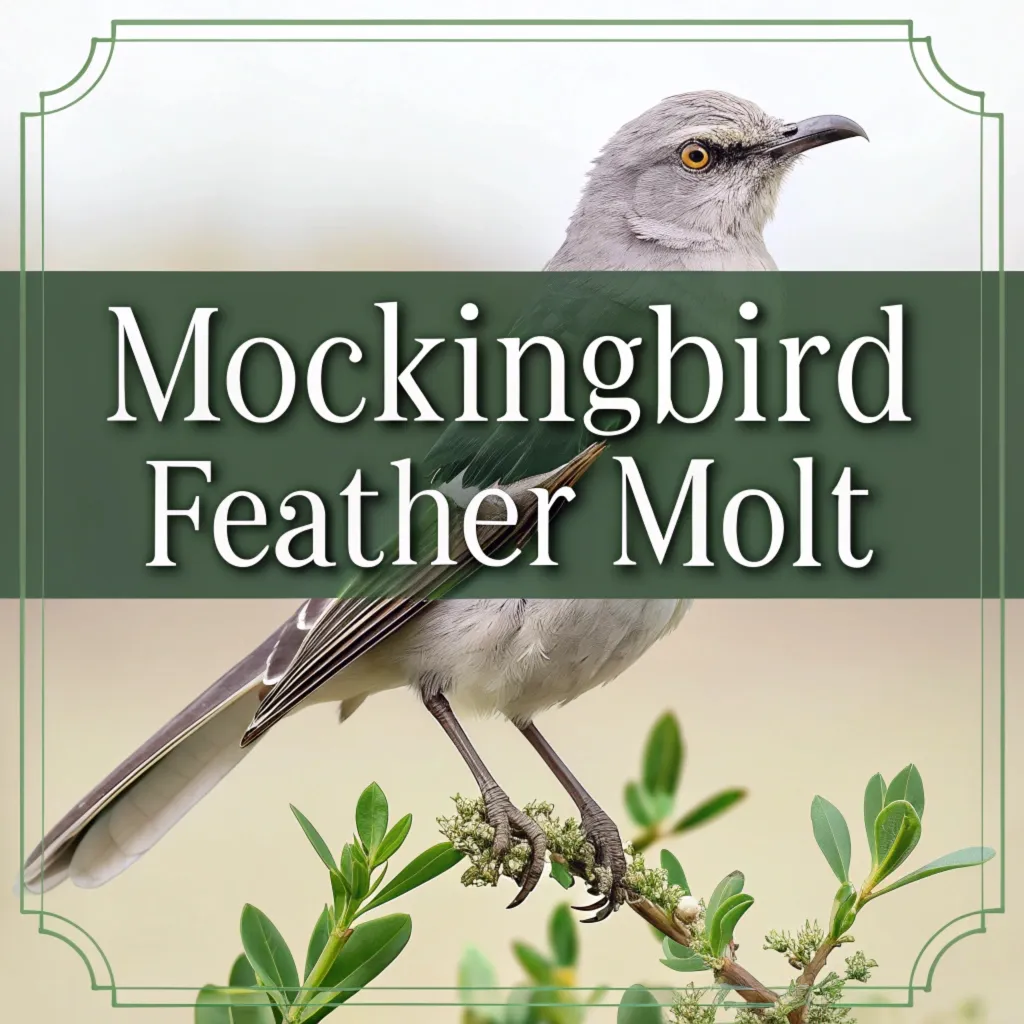
Mockingbird Feather Molt: Everything You Need to Know
Mockingbirds, like other birds, experience feather molt. This process involves shedding old feathers and growing new ones.
However, stress and fright can affect this natural cycle.
This article explores the factors that influence mockingbird feather molt, focusing on stress and fright-induced feather loss.

Key Takeaways: Mockingbird Feather Molt and Stress Factors
- Normal molt is a gradual, systematic process that occurs annually or semi-annually
- Stress-induced molt can cause rapid, irregular feather loss
- Fright molt is a sudden shedding of feathers triggered by fear or acute stress
- Environmental stressors like predators and human disturbance can cause abnormal feather loss
- Feather clumping may indicate stress or health issues in mockingbirds
- Recognizing abnormal molt patterns is crucial for bird health and conservation
- Mockingbirds can exhibit aggressive behavior, which may indirectly affect their molt patterns
- Proper nutrition and a stress-free environment are essential for healthy feather growth
- Fright molt serves as a defense mechanism, allowing birds to escape predators
- Recovery from stress-induced molt typically occurs within several weeks
Understanding Normal Mockingbird Molt Patterns
Mockingbirds, like most bird species, undergo a regular molt cycle. This process involves the gradual replacement of old feathers with new ones. Typically, mockingbirds molt once or twice a year, depending on various factors such as age and environmental conditions.
During a normal molt, feathers are shed systematically. This ensures that the bird maintains its ability to fly and regulate body temperature. The process is usually slow and controlled, allowing new feathers to grow before the old ones fall out completely.
The timing of molt in mockingbirds is crucial for their survival and reproductive success. Generally, these birds undergo a complete molt after the breeding season, which allows them to replace worn feathers before the challenges of migration or winter.
This strategic timing ensures that mockingbirds have a fresh set of feathers for optimal flight performance and insulation when they need it most.
Juvenile mockingbirds have a slightly different molt pattern compared to adults. They typically undergo a partial molt within a few months after fledging, replacing some of their body feathers but retaining their flight feathers.
This partial molt helps young birds transition from their juvenile plumage to a more adult-like appearance while conserving energy for growth and development.
Stress-Induced Feather Loss in Mockingbirds
Stress can significantly impact a mockingbird’s feather condition. When exposed to stressful situations, mockingbirds may experience abnormal feather loss. This type of molt differs from the regular, systematic shedding of feathers.
Stress-induced feather loss in mockingbirds can manifest as:
- Rapid shedding of multiple feathers
- Patchy or uneven feather loss
- Formation of bald spots on the bird’s body
The physiological mechanisms behind stress-induced feather loss in mockingbirds are complex. When a bird experiences stress, its body releases stress hormones like corticosterone, which can interfere with the normal feather growth cycle.
These hormones can cause the premature release of feathers from their follicles, leading to sudden and often excessive feather loss. Additionally, stress can redirect energy away from feather maintenance and growth, further compromising the bird’s plumage.
Chronic stress can have long-lasting effects on a mockingbird’s feather health. Prolonged exposure to stressors can lead to persistent feather abnormalities, such as poor feather quality, delayed molt, or incomplete feather growth.
This can significantly impact the bird’s ability to thermoregulate, attract mates, and evade predators, ultimately affecting its overall fitness and survival chances in the wild.
Fright Molt: A Unique Defense Mechanism
Fright molt is a specific type of stress-induced feather loss. It occurs when a mockingbird experiences sudden fear or acute stress.
This defense mechanism allows the bird to escape potential predators by shedding a cluster of feathers, potentially confusing or distracting the threat.
Key characteristics of fright molt in mockingbirds include:
- Sudden loss of multiple feathers
- Feathers often falling in clumps or piles
- Typically triggered by immediate danger or perceived threats
The evolutionary significance of fright molt in mockingbirds is fascinating. This adaptation has likely developed over thousands of years as a survival strategy.
When a predator grabs a mockingbird by its feathers, the ability to quickly shed those feathers can mean the difference between life and death.
The sudden release of feathers can startle the predator, giving the mockingbird a crucial moment to escape. Additionally, the lost feathers may serve as a decoy, momentarily confusing the predator and allowing the bird to flee to safety.
While fright molt is an effective defense mechanism, it comes with certain costs for the mockingbird. The sudden loss of feathers can temporarily impair the bird’s flight ability and thermoregulation.
Moreover, regrowing these feathers requires significant energy expenditure, which can be challenging if the bird is already under stress.
However, the trade-off between immediate survival and these short-term costs has proven beneficial enough for this trait to persist in mockingbird populations.
Environmental Stressors Affecting Mockingbird Feather Health
Several environmental factors can contribute to stress-induced feather loss in mockingbirds:
- Predator presence: The threat of predators like hawks or domestic cats can trigger fright molt.
- Human disturbance: Construction noise, traffic, or frequent human activity near nesting sites can cause stress.
- Habitat loss: Changes in the mockingbird’s environment due to urbanization or deforestation can lead to increased stress levels.
- Climate changes: Extreme weather conditions or sudden temperature fluctuations may impact feather health.
The increasing urbanization of natural habitats poses a significant challenge to mockingbird populations. As cities expand, mockingbirds are forced to adapt to new environments that often come with increased stressors.
Urban areas typically have higher levels of noise pollution, light pollution, and human activity, all of which can contribute to chronic stress in these birds.
Additionally, the fragmentation of habitats in urban settings can lead to increased competition for resources and territory, further exacerbating stress levels.
Climate change is another critical factor affecting mockingbird feather health. As global temperatures rise and weather patterns become more erratic, mockingbirds face new challenges in maintaining their feather condition.
Extreme heat waves can cause heat stress, leading to increased feather loss as the birds attempt to regulate their body temperature.
Conversely, unusually cold snaps or prolonged periods of wet weather can also stress the birds, potentially triggering abnormal molt patterns or compromising feather quality.
Recognizing Signs of Stress-Induced Molt in Mockingbirds
Identifying abnormal feather loss in mockingbirds is crucial for their health and conservation. Some signs to look out for include:
- Excessive feather loss in a short period
- Uneven or patchy feather distribution
- Bald spots or areas of thin feather coverage
- Piles of feathers on the ground near feeding or nesting areas
Behavioral changes can also indicate stress-induced molt in mockingbirds. Stressed birds may exhibit increased aggression, reduced singing, or unusual lethargy.
These behaviors, combined with visible feather loss, can signal that a mockingbird is experiencing significant stress.
Additionally, mockingbirds undergoing stress-induced molt might spend more time preening or scratching, attempting to manage their compromised feather condition.
It’s important to note that not all feather loss is necessarily due to stress. Mockingbirds, like other birds, can experience feather loss due to parasites, diseases, or nutritional deficiencies.
However, if you observe rapid or extensive feather loss accompanied by other stress indicators, it’s more likely to be stress-induced molt.
Monitoring the bird’s environment and behavior over time can help distinguish between normal molt patterns and those triggered by stress or fright.
The Impact of Mockingbird Behavior on Feather Health
Mockingbirds are known for their territorial and aggressive behavior. This characteristic can indirectly affect their feather health and molt patterns.
Constant territorial disputes and aggressive interactions with other birds may lead to increased stress levels, potentially triggering abnormal feather loss.
The bold and fearless nature of mockingbirds, while advantageous in many situations, can sometimes lead to increased stress and consequent feather issues.
These birds are known to fiercely defend their territories against perceived threats, including much larger birds and even humans.
This constant state of alertness and readiness to engage in confrontations can elevate stress hormones, potentially disrupting normal feather growth and maintenance processes.
Interestingly, the social dynamics within mockingbird populations can also influence feather health. In areas with high mockingbird density, competition for mates and resources can be intense.
This competition often leads to frequent aggressive encounters, which not only cause direct physical stress but can also result in psychological stress.
Over time, these social pressures can manifest in poor feather condition or irregular molt patterns, highlighting the complex interplay between behavior, stress, and physical health in these remarkable birds.
Nutrition and Its Role in Mockingbird Feather Health
Proper nutrition plays a vital role in maintaining healthy feathers and supporting normal molt cycles in mockingbirds. A balanced diet rich in proteins, vitamins, and minerals is essential for feather growth and overall bird health.
Key nutritional factors for mockingbird feather health:
- Protein: Essential for feather structure and growth
- Vitamin A: Supports feather development and skin health
- Calcium: Important for feather strength and formation
- Zinc: Aids in feather pigmentation and overall health
The quality and variety of a mockingbird’s diet can significantly impact its ability to grow and maintain healthy feathers. In their natural habitats, mockingbirds are omnivorous, consuming a wide range of insects, fruits, and berries.
This diverse diet provides them with the necessary nutrients for optimal feather health. However, in urban or suburban environments, mockingbirds may face challenges in obtaining a sufficiently varied diet, which can lead to nutritional deficiencies and subsequent feather problems.
Seasonal changes in food availability can also affect mockingbird feather health. During periods of food scarcity, such as harsh winters or droughts, mockingbirds may struggle to obtain adequate nutrition.
This nutritional stress can delay molt, reduce feather quality, or even trigger stress-induced feather loss.
Conversely, during seasons of abundance, mockingbirds can build up the nutritional reserves necessary for successful molt and feather growth, highlighting the importance of consistent access to diverse food sources throughout the year.
Recovery and Regrowth After Stress-Induced Molt
After experiencing stress-induced feather loss, mockingbirds typically begin the process of feather regrowth.
This recovery period is crucial for the bird’s overall health and survival. The duration of feather regrowth can vary but usually takes several weeks.
Factors influencing recovery from stress-induced molt:
- Severity of feather loss
- Overall health of the bird
- Environmental conditions
- Availability of proper nutrition
The process of feather regrowth in mockingbirds is a complex and energy-intensive endeavor. Each new feather develops from a follicle in the skin, growing from a blood-rich shaft called the quill.
As the feather grows, it unfurls and develops its characteristic structure and coloration. This process requires a significant amount of protein and energy, which is why proper nutrition is crucial during the recovery period.
Environmental factors play a crucial role in the success of feather regrowth after stress-induced molt. Favorable conditions, such as moderate temperatures and low stress levels, can promote faster and more efficient feather growth.
Conversely, harsh weather or continued exposure to stressors can delay recovery or lead to poor-quality feather growth.
Additionally, the timing of regrowth in relation to the bird’s annual cycle can impact recovery. If stress-induced molt occurs close to the natural molting period, it may disrupt the bird’s normal feather replacement cycle, potentially affecting its long-term feather health and overall fitness.
Conservation Implications of Stress-Induced Molt in Mockingbirds
Understanding stress-induced molt in mockingbirds has important implications for conservation efforts. By recognizing the signs of abnormal feather loss, conservationists and bird enthusiasts can:
- Identify potential environmental stressors
- Implement measures to reduce human-caused disturbances
- Protect critical habitats to minimize stress on mockingbird populations
- Educate the public about the importance of maintaining bird-friendly environments
The study of stress-induced molt in mockingbirds serves as a valuable indicator of overall ecosystem health. Mockingbirds, being adaptable and widespread, can act as sentinel species, providing early warnings about environmental stressors that may affect other wildlife.
By monitoring mockingbird populations and their feather health, conservationists can gain insights into the broader impacts of urbanization, climate change, and habitat degradation on avian species.
Conservation strategies aimed at reducing stress-induced molt in mockingbirds can have far-reaching benefits for urban ecosystems.
Creating bird-friendly urban spaces with diverse native plantings, water sources, and reduced pesticide use can not only support mockingbird populations but also enhance biodiversity in cities.
Furthermore, public education initiatives about the impacts of human activities on bird stress levels can foster a greater sense of environmental stewardship among urban residents, potentially leading to more sustainable urban development practices that benefit both wildlife and human communities.
Comparing Mockingbird Molt to Other Bird Species
While mockingbirds experience stress-induced molt, it’s important to note that this phenomenon is not unique to them.
Many bird species exhibit similar responses to stress and fright. However, the specific patterns and severity of feather loss can vary among different species.
The comparison of molt patterns across different bird species provides valuable insights into avian biology and evolution. While many birds undergo stress-induced molt, the extent and frequency of this phenomenon can vary significantly.
For example, some species may be more prone to fright molt as a defense mechanism, while others might experience more gradual feather loss in response to chronic stress. These differences often reflect the species’ evolutionary history, habitat preferences, and life strategies.
Migratory birds, unlike the largely sedentary mockingbirds, face unique challenges when it comes to molt and stress. Many migratory species have precisely timed molt cycles that must be completed before their long journeys.
Stress-induced feather loss during migration preparation could have severe consequences for these birds. In contrast, mockingbirds’ more flexible molt patterns and sedentary lifestyle allow them to better cope with occasional stress-induced feather loss.
This comparison highlights the diverse ways in which different bird species have adapted their molt strategies to suit their specific ecological niches and life histories.
Strategies for Promoting Healthy Feather Growth in Mockingbirds
To support healthy feather growth and minimize stress-induced molt in mockingbirds, consider the following strategies:
- Provide diverse food sources to ensure a balanced diet
- Create safe habitats with adequate shelter and nesting sites
- Minimize human disturbances in areas frequented by mockingbirds
- Maintain clean feeding areas to prevent disease transmission
- Implement predator control measures to reduce stress from potential threats
Community involvement plays a crucial role in promoting healthy feather growth in urban mockingbird populations.
Citizen science projects that engage local residents in monitoring mockingbird health and behavior can provide valuable data for conservation efforts while also fostering a sense of connection between people and their local wildlife.
These initiatives can help identify areas where mockingbirds are experiencing high stress levels, allowing for targeted conservation interventions.
The creation of wildlife corridors in urban and suburban areas can significantly benefit mockingbird populations. These corridors, consisting of connected green spaces and native plantings, provide safe routes for birds to move between fragmented habitats.
This increased connectivity can reduce stress levels by allowing mockingbirds to access a wider range of resources and potential mates.
Additionally, these corridors can serve as buffers against urban stressors, offering quieter, more natural environments where mockingbirds can thrive and maintain healthy feather growth cycles.
FAQs About Mockingbird Feather Molt and Stress Factors
How often do mockingbirds typically molt?
Mockingbirds usually undergo a complete molt once or twice a year, depending on factors such as age and environmental conditions.
Can stress-induced molt affect a mockingbird’s ability to fly?
Yes, severe stress-induced molt can temporarily impair a mockingbird’s flight capabilities if a significant number of flight feathers are lost.
How long does it take for mockingbirds to regrow feathers after stress-induced molt?
Feather regrowth typically takes several weeks, but the exact duration can vary depending on the bird’s health and environmental factors.
Are there any long-term effects of repeated stress-induced molt on mockingbirds?
Frequent stress-induced molt can potentially impact a mockingbird’s overall health and reproductive success if it occurs repeatedly over time.
How can I help reduce stress for mockingbirds in my backyard?
Provide a safe environment with natural shelter, diverse food sources, and minimize disturbances near nesting or feeding areas.

Joyce is the passionate founder of Chirping Hearts, a website dedicated to sharing her love for birds and providing valuable information about avian life. With a background in ornithology and years of experience in birdwatching, Joyce aims to inspire others to appreciate the beauty and diversity of birds. Through her engaging articles and guides, she hopes to foster a community of bird enthusiasts who share her enthusiasm for these incredible creatures. When she’s not writing, Joyce enjoys exploring nature trails and observing birds in their natural habitats.