Do Peacocks Mate for Life? Insights Into Their Mating Behavior
Peacocks are known for their beautiful feathers, but how they mate is quite interesting! Unlike what many people think, peacocks do not stay with one partner for life. Their relationships change from season to season.
Male peacocks compete with each other to attract female peacocks. The females choose the males they like best. This behavior shows how peafowl interact and breed.
So, what can we learn more about how peacocks connect with each other? There's a lot to discover about their social lives and mating rituals!
A Quick Overview
Peacocks do not mate for life. They usually have many partners during their lifetime.
Male peafowls show off their bright feathers to attract different females during the mating season. These colorful displays help them stand out.
Female peafowls choose their partners based on how healthy and attractive they look. They pay close attention to the males' feathers and movements.
Males make special calls and perform courtship dances to impress females. These behaviors are important for winning over a mate.
Sometimes, male peafowls are territorial. They defend their space to attract more females and have a better chance of breeding.
In summary, peacocks are not monogamous and have colorful ways of attracting mates.
The Peacock's Courtship Display
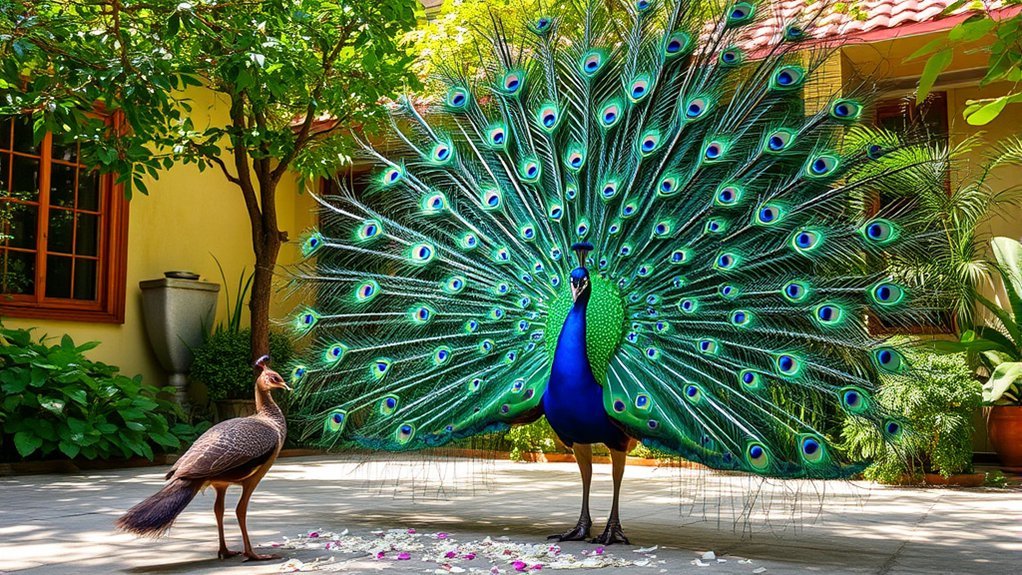
When you watch a peacock courtship display, you see a fascinating show. The peacock spreads its bright feathers to grab the attention of potential mates. This display isn't just about the colorful feathers. The peacock also moves its body in a special way and makes sounds that make it even more interesting to females.
As it struts and shakes its tail, the peacock creates a beautiful sight. This dance is important because it shows that the peacock is healthy and strong, which helps it attract a partner.
Understanding this display helps you see why peacocks are special in the animal kingdom. Beauty and instinct both play a big role in this dance of love.
Social Structure of Peafowl

Peafowl have a unique social structure that's interesting and easy to understand. In peafowl groups, there's a clear hierarchy. Male peafowl show off their colorful feathers to show they're dominant. This hierarchy helps guide how they interact with each other.
Peafowl often form close friendships. They like to stick together in small groups for safety and companionship. In these groups, they interact a lot. They share food and help each other out, which is important for their survival.
Understanding these relationships helps us see how peafowl live together. Each peafowl plays an important part in keeping the group balanced. The social connections among peafowl create a lively community that's fun to observe.
Mating Rituals and Behaviors
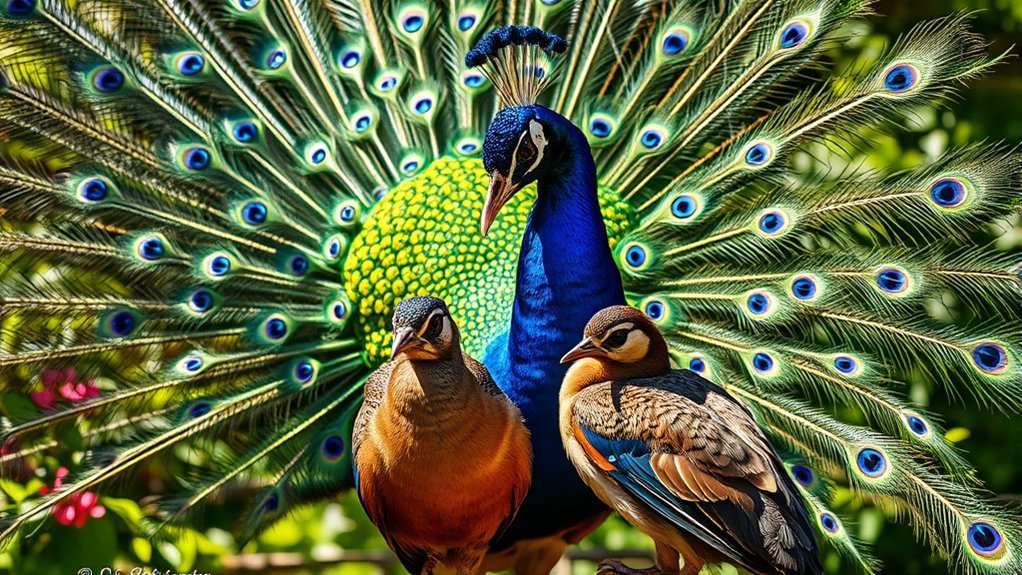
Peafowl, or peacocks, have interesting mating rituals that show how they attract partners. Male peacocks display their colorful feathers to get the attention of female peafowls. They puff up their feathers and strut around to show off their beauty. This amazing display isn't just for looks; it helps them stand out.
While showing off, male peacocks also make special calls. These sounds attract females and let them know the males are ready to mate. The calls add to their charm and make it easier for females to spot them.
When it comes to nesting, females look for safe places to lay their eggs. They want spots that are hidden from predators. This helps keep their eggs safe and increases their chances of success.
Role of Females in Partner Selection
When it comes to choosing a partner, female peafowls have a very important job. They watch the male peacocks closely. The males show off their beautiful tail feathers and perform funny dances to get attention.
Female peafowls look for certain things when picking a mate. They usually choose males with longer, bright tails. These features can mean the male is healthy and has strong genes. By making careful choices, females help keep the peafowl population strong and diverse.
This mate selection process is key for peafowls. It shapes the traits of future generations and helps the species grow.
Territoriality and Competition Among Males
Male peafowl, or peacocks, are known for their bright colors and beautiful feathers. They use these traits to compete for mates. Each male chooses a spot to call his own, called a territory. To keep this territory, they show off their feathers with impressive dances. This display attracts peahens, the female peafowl, and warns other males to stay away.
Peacocks pay close attention to their surroundings. They look for good places where they can see and be seen. Sometimes, they get aggressive, and fights can happen. These fights help to establish who's stronger and can help them find more mates.
Watching how peacocks interact shows how important territory is. Their displays and battles play a big role in how they find partners and build their community. Overall, territoriality helps keep their social order and supports their breeding opportunities.
Seasonal Breeding Patterns
Peacocks show off their colorful feathers during special times of the year. These times usually happen in the warmer months when it rains a lot and food is easy to find.
When the temperature rises, you'll see male peacocks spreading their beautiful tail feathers and dancing to attract female peacocks. This dance also helps them show other male peacocks that they're strong and in charge.
Timing is important for peacocks. If a male displays his feathers at the right time, he's a better chance to find a mate.
However, not all peacocks follow the same rules. Some adjust their behavior based on local weather and food changes. Watching these patterns can help us understand how peacocks adapt to their surroundings.
Lifespan and Reproductive Longevity
Peacocks usually live for about 15 to 20 years in captivity. Their lifespan can vary due to things like their environment.
A longer life gives male peacocks more time to show off their beautiful feathers. Older peacocks often have striking plumage, which helps them attract mates better.
But as peacocks age, they mightn't be able to reproduce as well. This can make them less appealing to females.
Younger males often have a better chance of mating because they've bright and colorful feathers that draw females in.
Understanding how lifespan and mating work together helps us see how peacocks choose their partners.
These factors play a big role in their social lives and mating habits. In short, their age and life expectancy shape how they find mates.
Insights From Research on Peacock Relationships
Research on peacock relationships shows interesting behaviors shaped by competition and how they show off. These factors help us understand peacock symbolism and how they maintain their genetic variety.
- Male peacocks show off their shiny feathers to attract females.
- Male peacocks compete with each other to show their strength and health.
- Female peacocks pick their mates based on bright feathers and dance moves.
- Peacocks interact in groups, showing social ranks and chances for breeding.
- Different mate choices help mix the genetic pool, leading to healthy babies.
These behaviors highlight how social connections and choices matter in peacock mating.
Watching these patterns makes us appreciate peacocks even more and shows us why they're important in nature.
Frequently Asked Questions
Do Peacocks Form Friendships Outside of Mating Relationships?
Peacocks can form friendships that go beyond just mating. They build social bonds with other peacocks in their group. These friendships help them feel happy and connected in their community.
When you watch peacocks, you can see them interact and play with each other. It's not all about finding a mate; they enjoy spending time together and supporting one another. Just like humans, these social connections are important for their well-being.
Can Peacock Offspring Inherit Specific Traits From Parents?
Yes, peacock babies can inherit traits from their parents. This means that if a peacock has bright feathers or a loud call, its young might have those same traits. This passing down of traits helps keep the peafowl population strong and adaptable over time. It's nature's way of making sure the best qualities stick around!
What Are the Major Predators of Peafowl?
Peafowl, or peacocks, face several predators in the wild. Major predators include leopards and tigers. These big cats hunt peafowl for food. Birds of prey, like eagles and hawks, also threaten them.
Peafowl need to be careful in their habitats. They often stay alert to spot danger. With their colorful feathers, they attract attention, making it extra important to be watchful.
Staying aware helps peafowl survive in the wild. They use their keen senses to detect predators and escape if needed. By being cautious, peacocks can protect themselves and thrive in their environment.
How Do Peacocks Communicate With Each Other?
Peacocks communicate in two main ways: with sounds and their beautiful feathers. They make different calls to share messages. For example, a call can show that they are ready to mate or that they want to protect their space.
When a peacock spreads its feathers, it's like showing off. The bright colors and shapes attract attention. This display can help them find a mate or scare off other peacocks.
Watching peacocks is interesting. Their sounds and colors tell us a lot about how they talk to each other!
Are There Different Species of Peacocks With Varying Behaviors?
Yes, there are different kinds of peacocks. Each kind has its own unique way of showing off and attracting mates. For example, Indian peacocks have very colorful and fancy feathers. They spread them out to impress others. On the other hand, green peacocks have their own special courtship moves. This shows how nature has different ways of helping animals attract partners and reproduce.

Joyce is the passionate founder of Chirping Hearts, a website dedicated to sharing her love for birds and providing valuable information about avian life. With a background in ornithology and years of experience in birdwatching, Joyce aims to inspire others to appreciate the beauty and diversity of birds. Through her engaging articles and guides, she hopes to foster a community of bird enthusiasts who share her enthusiasm for these incredible creatures. When she’s not writing, Joyce enjoys exploring nature trails and observing birds in their natural habitats.