
Meet the Blue Bird With a Red Chest: a Colorful Avian Encounter
When you see the blue bird with a red chest, you are looking at a special bird full of color. This bird is not just pretty; it also has important things about it that are fun to learn. The places it likes to live and what it eats are clues about its role in nature. Knowing these things helps us understand how it survives.
But this bird faces some tough problems in our changing world. How can we watch it better? You can find it in parks or gardens where it likes to search for food. Bring some binoculars to see its colors up close. Watching this bird can be both fun and educational, making it a great way to enjoy nature!
A Quick Overview
The blue bird with a red chest is called the Eastern Bluebird. It has beautiful colors, with bright blue feathers and a reddish breast.
Male Eastern Bluebirds sing pretty songs to attract females during mating season. They work hard to care for their young. Both mom and dad feed the baby birds and keep them safe.
Their diet changes with the seasons. In spring and summer, they mostly eat insects. When it gets colder, they like to eat berries.
To help Eastern Bluebirds survive, we should protect their homes. Threats like city development and climate change can make life hard for them. Conservation efforts can help keep these lovely birds around for a long time.
Overview of the Blue Bird
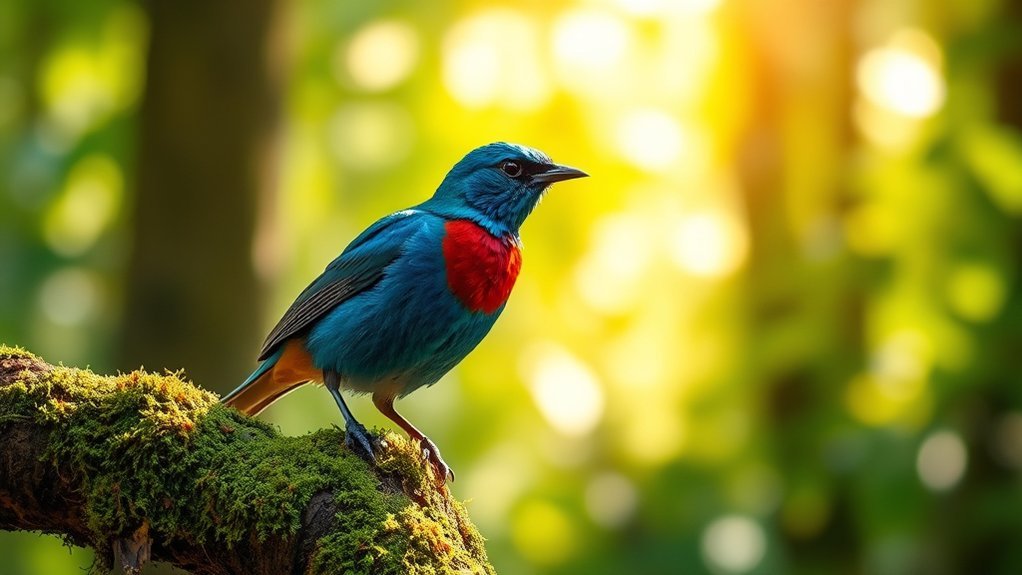
When you see a blue bird, you're looking at a special bird that has many unique traits. Male blue birds show off their bright colors and sing beautiful songs to attract female blue birds. These actions help them find mates and keep their population strong.
Blue birds also migrate, which means they travel long distances for food and better weather. This movement is important for their survival.
By learning about these behaviors, we can appreciate blue birds even more. Watching them helps us connect with nature and motivates us to protect these amazing birds.
Let's enjoy and celebrate the beauty of blue birds together!
The Vibrant Coloration of Plumage
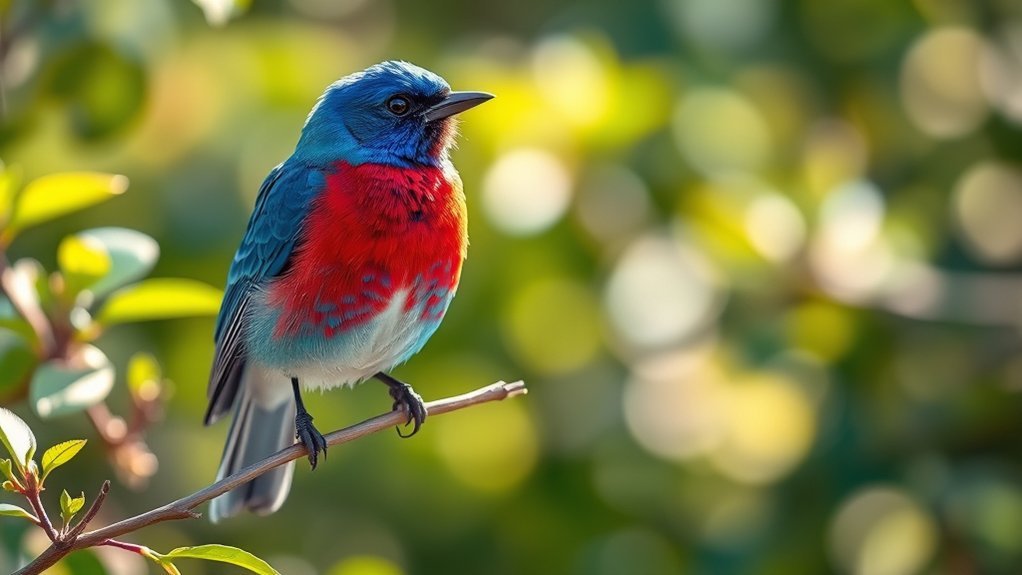
Male blue birds are famous for their bright colors. These colors help them attract mates and show how healthy they are. Here's how their beautiful plumage works:
- Color Patterns: The blue and red colors come from how light reflects off their feathers and from pigments in them.
- Plumage Variations: These birds have different patterns that can change with the seasons, making them look even more appealing.
- Environmental Influences: What they eat and where they live can affect their feather colors. This can change how easy it's to see them.
- Health Indicators: Bright colors mean the bird is healthy. This helps them stand out to mates and keep rivals away.
Understanding these details shows how important color is for blue birds. It helps them survive and find partners.
Unique Characteristics and Traits
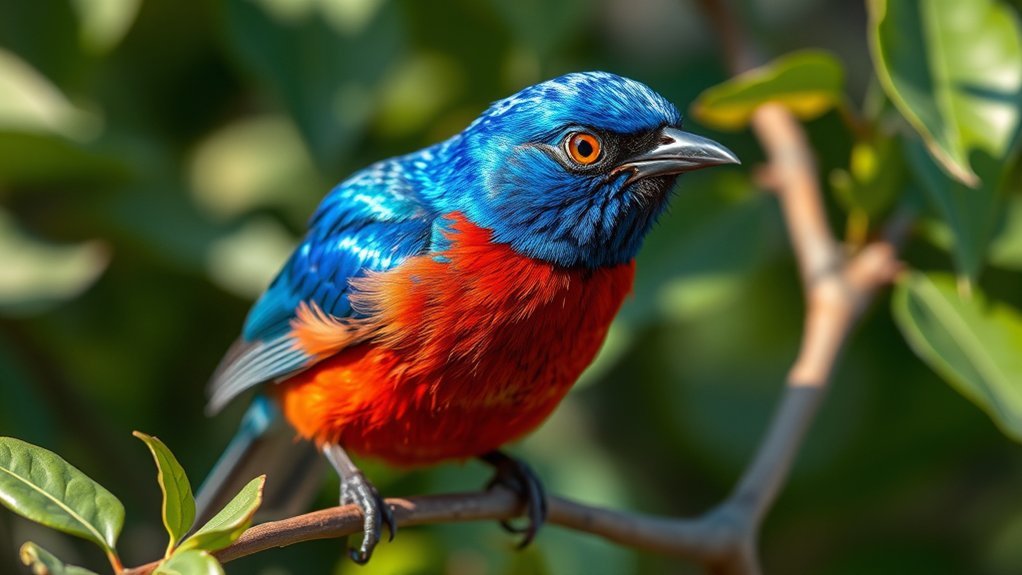
Blue birds have some cool traits that make them stand out from other birds. They've interesting ways of behaving, like living together in groups and singing unique songs. These behaviors help them communicate and build strong bonds, especially during mating.
Every year, blue birds migrate, which means they travel long distances. They do this to find the best places to breed and eat. Their trips are perfectly timed with the changing seasons.
This shows how smart they're when it comes to knowing what's happening in their environment.
Habitat Preferences and Range
Blue birds can live in many places, but they like open woodlands, fields, and gardens best.
These spots give them enough food and places to build nests. Their homes help decide where you can find them. Here are some places where blue birds love to be:
- Deciduous forests – These trees give blue birds a safe place to hide and find food.
- Grasslands – These wide-open areas have lots of insects, which are great snacks for blue birds.
- Urban gardens – Blue birds can live in cities too! They like the colorful flowers and plants in gardens.
- Scrublands – These areas give blue birds good spots to build their nests and stay safe.
You can spot blue birds in these different places, enjoying their homes and all the food around them!
Diet and Feeding Habits
Blue birds eat a variety of foods. They mainly like insects. Insects give them the protein they need for energy. To find food, they hop and flutter around. They're quick and have good eyesight, which helps them catch their prey.
When it's colder and insects are hard to find, blue birds eat berries and seeds. This change in diet helps them survive in different seasons.
Watching them search for food in the trees is fun and shows how they adapt to their surroundings. Their ability to find food in different ways makes them interesting birds to observe.
Nesting and Reproductive Behavior
Blue birds show a strong care for their young. They've special ways of attracting mates and making sure their babies grow up safe.
Watch how they choose their nesting spots carefully to keep their eggs safe.
Here are four main things about how blue birds nest and raise their young:
- Building the Nest: Male blue birds collect things like grass and twigs to make a cozy nest.
- Choosing a Spot: They like to find quiet and hidden places to keep their nest safe from danger.
- Laying Eggs: Female blue birds usually lay three to five eggs each time, which helps make sure some chicks will survive.
- Taking Care of the Young: Both mom and dad blue birds help feed their chicks and keep them safe, which helps the babies grow strong.
Blue birds work hard to raise their young, and their teamwork makes a big difference!
Songs and Calls: A Melodious Communication
Bluebirds use their voices to share important messages. They sing songs with different sounds that help them connect with each other. These songs can mean different things, like trying to find a mate or warning others about danger.
During spring, bluebirds make a lot of calls. Males use these calls to show their territory and keep other males away. Each sound they make has a specific meaning. This helps bluebirds communicate how they feel or if they see something risky.
If you listen carefully, you can hear their bright songs in the air. These sounds help bluebirds feel close to one another. They also create a joyful feeling for people who love watching these colorful birds.
Behavior and Social Structure
While watching bluebirds, you'll see their interesting behaviors and social groups that help them survive. These birds have strong friendships and work together. Here are some important things about how they act:
- Territoriality: Male bluebirds set up their own space to find food and attract mates.
- Grooming: Bluebirds often help each other by preening, which strengthens their bonds and calms them down.
- Vocalizations: They make different sounds to warn each other, show their presence, or work together.
- Cooperative Breeding: Sometimes, birds that don't have their own young help take care of babies. This teamwork boosts the chances of survival for everyone.
These behaviors show how bluebirds build strong communities and make life easier in the wild.
Conservation Status and Threats
Bluebirds are beautiful birds with bright colors and friendly behavior. However, they face many challenges that make it hard for them to survive. One major problem is habitat destruction. This happens because of things like city building, farming, and climate change. These changes lead to fewer places for bluebirds to nest and less food for them to eat.
To help bluebirds, many people are working on conservation efforts. They focus on protecting bluebird habitats and creating safe places for them to live. You can join in too! You can help by taking part in habitat restoration projects. You can also speak up for rules that help protect the environment.
Birdwatching Tips for Observation
If you want to spot bluebirds in nature, know where to look and how to watch. Here are four simple tips to help you enjoy birdwatching more:
- Go to the Right Places: Bluebirds like open fields and meadows. Look for areas with a few trees. They hunt for bugs there.
- Pick the Best Times: Early mornings and late afternoons are great times to see bluebirds. They're usually very active then.
- Be Patient: Sit quietly and still. Quick movements can scare bluebirds away. Enjoy the moment and wait for them to come to you.
- Use Good Binoculars: A good pair of binoculars helps you see bluebirds from far away. Look for their bright colors and beautiful details.
With practice, you'll enjoy every sighting and feel happy connecting with nature and other birdwatchers.
Happy birdwatching!
Cultural Significance and Symbolism
Birdwatching helps you love nature more. It also connects you to the stories and meanings different cultures have about birds.
Take the blue bird with a red chest. Many cultures see it as a symbol of hope and new beginnings. You'll find this bird in stories, where its bright colors stand for happiness and good luck.
Artists are inspired by this beautiful bird, using it in their art to show themes like freedom and beauty. By learning about these meanings, you can feel closer to nature.
Each time you spot a bird, it becomes more than just a view. It's a special moment filled with history and significance. Enjoy your birdwatching!
Fun Facts About the Blue Bird
When you spot a blue bird with a bright red chest, remember how special it is. This beautiful bird brings joy to anyone who sees it.
Here are some cool facts about this amazing creature:
- Where They Live: These birds can live in many places, like forests, fields, and even cities.
- What They Eat: They enjoy insects, seeds, and berries, showing they can adapt to different foods.
- Love Life: These birds stick to one partner and often come back to the same mate each year.
- Sounds They Make: They sing lovely songs that make any place feel happier.
These fun facts help us appreciate nature more. Seeing these colorful birds is always a special moment!
Frequently Asked Questions
What Is the Lifespan of the Blue Bird With a Red Chest?
The blue bird with a red chest usually lives for about 3 to 5 years. It likes to eat insects and berries. When it's time to make a home, this bird builds cozy nests in bushes or trees. These nests are often hidden, which helps keep the birds safe. They are charming creatures that bring a splash of color to nature!
How Can I Attract These Birds to My Backyard?
To attract birds to your backyard, start by putting up bird feeders. Fill them with seeds that the birds enjoy. It's also a good idea to plant native plants. These plants can give the birds natural food sources like fruits and seeds.
Make your backyard a friendly space for them. Keep it clean and safe. This way, the birds will feel comfortable and want to visit often. You'll get to enjoy watching them as they come and go!
Are There Any Similar Bird Species to the Blue Bird?
You can find several birds that are like the Blue Bird. Some examples are the Eastern Bluebird and the Blue Grosbeak. These birds are bright and blue, but each one has its own special features. They live in different places and have different habits. Each bird is unique, making them interesting to watch and learn about.
What Are Common Predators of the Blue Bird?
Blue birds face a few common dangers in nature. Hawks and snakes like to eat their eggs and young birds. These predators watch the nests closely. Because of this, blue birds change how they build their nests and find food.
For example, they might choose hidden spots to keep their nests safe. They also take extra care when feeding their young. Blue birds want to keep their babies alive and healthy. By being smart about where and how they nest and feed, they can protect their families from these threats.
What Time of Year Is Best for Spotting This Bird?
You can spot this bird best during spring migration. In spring, the bird gets busy looking for food and finding a mate. This is the perfect time to see it in action. The bird shows off with bright colors and lively movements in its home area. Get ready for a fun experience watching it!

Joyce is the passionate founder of Chirping Hearts, a website dedicated to sharing her love for birds and providing valuable information about avian life. With a background in ornithology and years of experience in birdwatching, Joyce aims to inspire others to appreciate the beauty and diversity of birds. Through her engaging articles and guides, she hopes to foster a community of bird enthusiasts who share her enthusiasm for these incredible creatures. When she’s not writing, Joyce enjoys exploring nature trails and observing birds in their natural habitats.