
Can Birds Eat Lizards? Understanding Avian Diets and Prey Choices
Birds have interesting diets. Some of them eat lizards. Eating lizards helps birds get important nutrients. But hunting lizards can be tricky for birds.
So, why do birds choose to eat lizards? Lizards provide good food that helps birds stay strong and healthy. Birds are clever hunters. They use different methods to catch lizards.
However, there are risks to eating lizards. Some lizards can be fast or even dangerous. Birds must be careful when they hunt.
In summary, lizards are a valuable part of some birds' diets. These birds have smart ways to catch their prey, but they also face challenges in the process.
A Quick Overview
Many birds, like green herons and hawks, eat lizards because they are full of protein. This helps birds get energy, grow strong muscles, and breed well.
When birds hunt lizards, they need to be careful. Some lizards can be toxic, which can make birds sick.
Changes in the environment, like climate change or new buildings, can affect how many lizards there are. This can make it harder for birds to find food.
Learning about how birds eat lizards shows us why keeping nature balanced is important. This is why we should take care of their homes and habitats.
The Diversity of Bird Diets

Birds eat many different types of food. This shows how well they adapt to different places and situations. Their eating habits help them find food that's available around them. Many birds can change what they eat based on what's in season. For example, a bird that usually eats seeds may eat insects when seeds are hard to find.
Birds have different ways to find food. Some dig in the ground, others catch insects in the air, and some search for food on the ground. These skills help them gather as much food as they need.
Learning about how birds eat can make you appreciate them more and help you understand the environment where they live.
Bird Species That Prey on Lizards
Many birds eat seeds, fruits, or insects, but some have learned to hunt lizards. For instance, green herons and different types of hawks have special skills for catching these reptiles. They've sharp eyesight and move quickly to find their prey.
These birds like to live in places with lots of plants and near water. This is where lizards often hide.
To catch lizards, birds change their hunting styles depending on where they are. Some sit quietly on a branch, while others dive down from the sky. This shows how they adapt to their environment.
Nutritional Benefits of Lizards for Birds
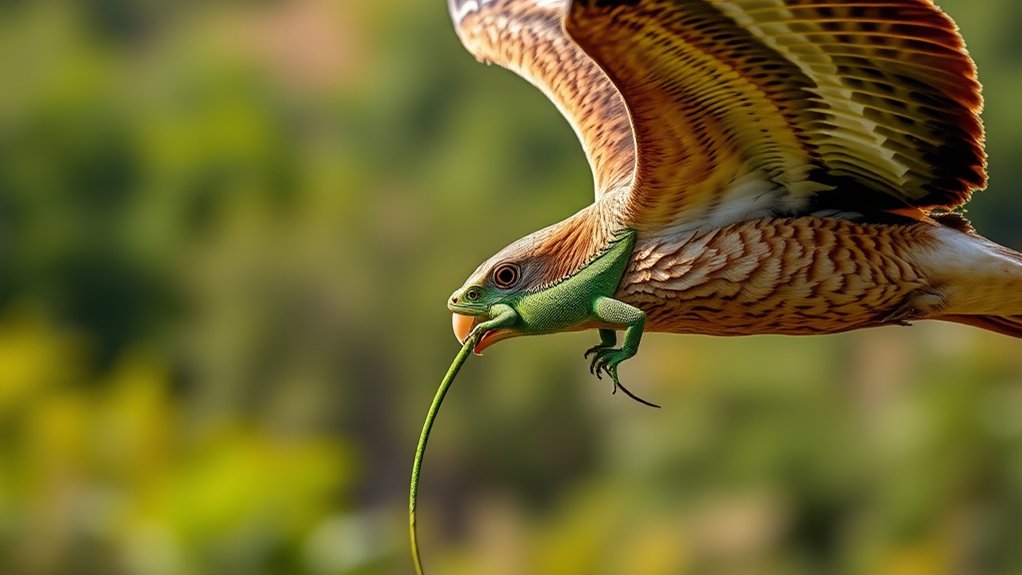
Predatory birds eat lizards, and this is good for their health. Lizards are full of protein, which helps birds build strong muscles and gives them energy. Eating lizards boosts their metabolism, helps them stay active, and supports their ability to have babies.
Lizards also have important vitamins and minerals like calcium and phosphorus. These nutrients help birds keep strong bones and feathers. A diet that includes lizards helps birds stay in good shape and makes them tougher against changes in their environment.
If you love birds, knowing how eating lizards helps them stay healthy makes you appreciate nature even more. Every part of the ecosystem is important.
Hunting Techniques Employed by Birds
Birds are amazing hunters. They use different tricks based on where they're and what they want to catch. For example, a hawk can see far away and will dive down to grab its meal.
A heron, on the other hand, stands very still by the water, waiting patiently for fish to swim by.
Birds pick their food carefully. They think about how big the prey is, how easy it will be to catch, and how good it's to eat. This smart way of choosing food helps them catch what they need to survive.
Learning about how birds hunt can make you appreciate them more. Each bird has its own way to fit into nature, and their hunting skills show how they adapt and thrive in their habitats.
Ecological Role of Lizards in Avian Diets
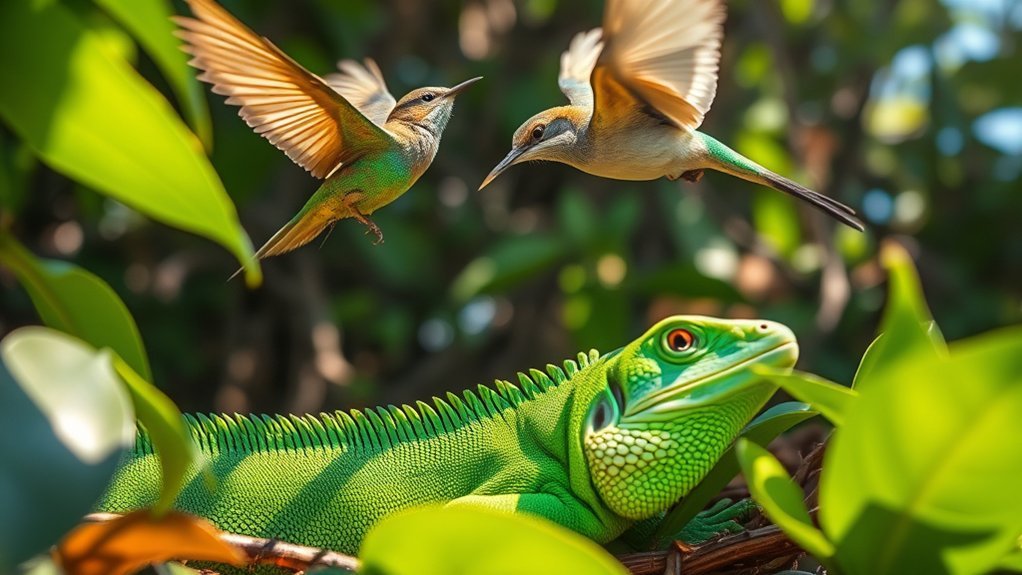
Lizards are important food for many types of birds. They give birds protein and energy, which helps them survive. When birds eat lizards, they make good use of the food available to them. This ability to eat lizards has helped birds grow and change over time.
Eating lizards also affects the environment. Different lizard species help shape the way other animals and plants interact with each other. For example, when birds eat lizards, they help control lizard populations, keeping ecosystems balanced.
Understanding how birds and lizards relate helps us appreciate nature more. It shows us how every creature plays a role in the big picture.
When we look at these connections, we see the importance of keeping our natural world healthy and full of life.
Risks of Eating Lizards for Birds
Eating lizards can give birds a good boost of nutrition, but it also comes with some risks.
Let's look at those risks so we can understand this part of a bird's diet better:
- Becoming Prey: When birds hunt for lizards, they can attract other animals that might want to hunt them. This makes it easier for other predators to catch these birds.
- Sickness: Lizards can carry germs and bugs that can make birds sick. If a bird eats a lizard with these harmful pests, it could get ill.
- Poison: Some lizards have toxins. If a bird eats one of these lizards, it could get hurt or even die.
Birds need to know which lizards are safe to eat.
Being careful while hunting lizards is important for birds to stay healthy and safe!
Adaptations for Catching and Consuming Lizards
Birds have special ways to catch and eat lizards. Different types of birds use unique methods, like flying fast to dive down or hiding to surprise their prey.
Birds of prey, like eagles and hawks, have sharp claws and curved beaks to grab and eat lizards easily. They also have great eyesight, which helps them see lizards that blend in with their surroundings.
After catching a lizard, birds have strong stomach acids that help them break down tough skin and bones. This way, they can get all the good nutrients from their food.
These skills in hunting and digesting food help birds thrive on a diet of lizards, allowing them to do well in their habitats. Learning about these abilities shows us how varied and interesting birds can be!
Case Studies of Birds That Feed on Lizards
Let's explore some amazing birds that love to eat lizards! These birds have unique ways to catch their food. Here are three interesting examples:
- Roadrunner: Roadrunners are fast! They run quickly to chase down lizards. When they get close enough, they make a swift strike to catch their meal.
- Banded Palm Civet: This bird is all about patience. It sneaks around in thick bushes, waiting quietly for the right moment to pounce on a lizard.
- Herons: Some herons are excellent fishermen. They also hunt lizards by using their sharp bills to spear lizards near water.
These birds show us how different skills help them find food. Each one has its own way of catching lizards!
The Impact of Environmental Changes on Bird-Lizard Interactions
As our environment changes due to climate change and cities expanding, the relationship between birds and lizards is getting affected.
When lizards lose their homes, it gets harder for birds to find their food. This can make it tough for some birds to eat.
You might see fewer lizards, which might force birds to change what they eat or even fly to new places.
Understanding how these animals depend on each other can help us appreciate the nature around us. It also encourages us to find ways to protect our environment from the effects of climate change and city growth.
Frequently Asked Questions
Do All Bird Species Eat Lizards?
Not all birds eat lizards. Different types of birds have different food preferences. Some birds like to eat insects, while others prefer seeds. A few bird species are good at hunting lizards. This shows that birds have many different diets.
How Do Lizards Defend Themselves Against Birds?
Lizards have smart ways to protect themselves from birds. One way is by using camouflage. This means they can blend in with their surroundings so birds can't see them.
Another trick lizards use is to drop their tails. When a bird tries to catch them, the lizard can lose its tail. The tail keeps moving for a bit, distracting the bird. This gives the lizard time to run away and hide.
These methods help lizards stay safe and survive in the wild. Isn't that cool?
Can Birds Safely Eat All Types of Lizards?
Not all lizards are safe for birds to eat. Birds tend to prefer lizards that are the right size, not toxic, and easy to find. Knowing these points can help you figure out which lizards are safe for your feathered friends to munch on.
What Size Lizards Can Birds Typically Consume?
Many birds like to eat small lizards. Most of the lizards they catch are just a few inches long, and some can be up to six inches. This size makes it easy for birds to eat them without any trouble. Birds need to find lizards that fit in their mouths, so smaller lizards are a good choice.
Are There Any Migratory Birds That Eat Lizards?
Yes, some migratory birds, like herons and hawks, eat lizards during their travels. These birds hunt for food as they move from one place to another. They change what they eat based on what's available, which helps them survive on their journey. So, when the opportunity arises, they might catch a lizard for a meal! It's fascinating to see how these birds adapt to find food while migrating.

Joyce is the passionate founder of Chirping Hearts, a website dedicated to sharing her love for birds and providing valuable information about avian life. With a background in ornithology and years of experience in birdwatching, Joyce aims to inspire others to appreciate the beauty and diversity of birds. Through her engaging articles and guides, she hopes to foster a community of bird enthusiasts who share her enthusiasm for these incredible creatures. When she’s not writing, Joyce enjoys exploring nature trails and observing birds in their natural habitats.