
Blue Jay Bird Feathers: The Beauty and Significance of Their Plumage
Blue Jay feathers are beautiful and useful. Their bright colors help in many ways. First, they attract mates. Second, they help the birds talk to each other. Third, the colors can influence their place in nature.
When we look closer at Blue Jay feathers, we can learn a lot about their lives. These feathers show how they find food and keep safe. They also tell us how Blue Jays fit into their environment and interact with other animals. What do these feathers reveal about the Blue Jay's role in nature?
A Quick Overview
Blue Jay feathers are special and come in three types: contour, flight, and down. Each type helps the bird stay warm and fly well.
The bright blue color of Blue Jay feathers is not from paint. Instead, it comes from light bouncing off the tiny structures in the feathers. This makes Blue Jays look stunning.
Each Blue Jay has its own feather patterns. These patterns help us tell them apart and help the birds hide in nature. This skill is very important for their safety.
During mating season, Blue Jays show off their colorful feathers. They flap their wings and puff up their bodies to catch the attention of potential mates. Bright feathers show that they are healthy and strong.
Feathers help the environment too! They help plants grow. In many cultures, Blue Jays represent wisdom and protection. People admire these birds for their beauty and meaning.
The Anatomy of Blue Jay Feathers

Blue Jay feathers are special. They've an interesting structure that helps these birds live in their environment. Blue Jays have three main types of feathers: contour, flight, and down feathers.
Contour feathers help shape the Blue Jay's body and keep it streamlined. Flight feathers are crucial for flying high and moving quickly through the air. Down feathers provide insulation and keep the birds warm during cold weather.
All these feathers work together. They help the Blue Jay be strong and safe.
Looking closely at Blue Jay feathers shows just how clever nature can be. Learning about their feathers helps us connect with nature and appreciate its beauty.
Coloration: The Science Behind the Blue
The bright blue color of Blue Jay feathers isn't just pretty; it comes from how light interacts with their feathers. When you see these vibrant feathers, you're looking at light being scattered through tiny structures inside them.
Unlike colors from pigments that soak up certain wavelengths of light, Blue Jay feathers reflect specific wavelengths to create blue while absorbing others.
These small structures make a beautiful effect that catches your eye. They also add depth to the bird's appearance, making it even more stunning.
Learning about this process helps you appreciate the Blue Jay more and enjoy the amazing designs in nature.
Patterns and Markings: A Closer Look
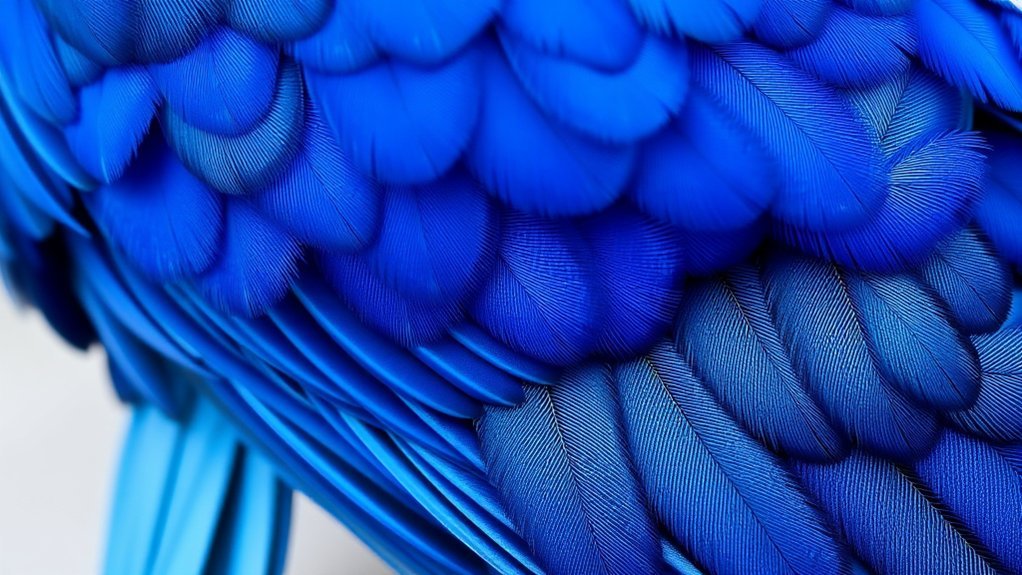
Blue Jays have beautiful feathers that help them look amazing and communicate with each other. Their feathers have interesting patterns, made up of bold spots and sharp lines. These designs help them blend in and stay safe from predators.
The mix of blue, black, and white colors makes them easy to spot, but also helps them hide in some environments. Each Blue Jay has a unique feather pattern, which allows bird watchers to tell them apart. This connection makes bird watching more fun!
These patterns aren't just pretty; they also play a role in how Blue Jays interact with one another. By looking at their feather designs, you can learn more about their behavior and their surroundings.
The Role of Feathers in Communication
Blue Jays use their feathers to talk to each other. Their bright colors and special patterns help show how they feel. When you see a Blue Jay, pay attention to their feathers! They use feather signals along with their calls to share different messages.
For example, when a Blue Jay lifts its crest feathers or spreads its colorful sides, it might be warning others about danger or claiming its space. These feather movements add more meaning to their sounds, making their communication richer and clearer.
Learning about how Blue Jays use their feathers helps us understand how birds communicate. The way they show their feelings and connect with each other is important for living together in their groups.
Feathers and sounds work together to help Blue Jays thrive in their community.
Mating Rituals and Feather Displays
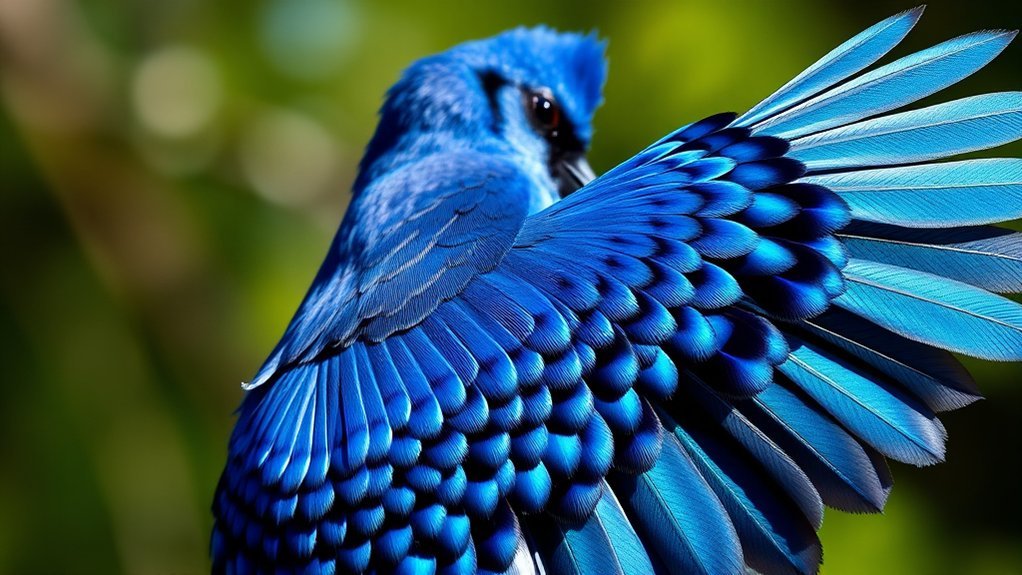
During mating season, Blue Jays show off their beautiful feathers. They do this to catch the eye of other Blue Jays. These birds put on fun displays. They flap their wings and make sounds to show off their bright colors. A Blue Jay might puff up its feathers to show off stunning blues and whites.
At the same time, they might dance around to impress a potential mate.
Keeping their feathers clean is very important. When their feathers are nice and neat, they look better to others. This care shows that they're healthy. It also helps them connect with a potential partner.
The Function of Feathers in Thermoregulation
Blue Jays have beautiful colors, but did you know their feathers are super important for keeping them warm or cool?
Their feathers help them stay at the right body temperature, no matter the weather.
When it's cold outside, the feathers trap air. This trapped air keeps the Blue Jay warm and safe from the chilly weather.
But when it's hot, their feathers let heat escape to help cool them down.
Blue Jays can also move their feathers around to change how warm or cool they feel.
Learning how these amazing birds use their feathers helps us see how they survive. It shows us the cool link between their pretty appearance and how they stay comfy!
Feathers in the Context of Flight
Blue Jays are amazing birds, especially when it comes to flying. Their feathers help them fly really well.
Let's look at how their feathers work together.
- Primary feathers help push them up when they flap their wings.
- Secondary feathers make it easier for them to glide through the air and keep steady.
- Contour feathers are smooth and help reduce wind resistance on their bodies.
- The way their feathers are arranged lets them change directions quickly.
- Their bright colors can also help others see them while flying.
Blue Jay Feathers and Their Role in Ecosystems
Blue Jay feathers are important for more than just flying; they help keep nature healthy. These colorful feathers have special designs that help Blue Jays live in different places. Their feathers help them talk to each other and stay healthy, which helps them be part of a strong community.
Blue Jays also help plants grow by spreading seeds. This helps shape the areas where they live.
Other animals often use Blue Jay feathers to build their nests, showing how connected all living things are. So, the next time you see a Blue Jay, remember that its feathers play a key role in keeping the environment balanced and supporting all kinds of life.
Cultural Significance of Blue Jay Feathers
Blue Jay feathers are more important than you might think. They hold special meanings in many cultures. People often use these feathers in stories, ceremonies, and artwork.
Here are some of the beliefs connected to Blue Jay feathers:
- They represent wisdom and intelligence.
- People see them as a way to connect the spiritual world with our everyday lives.
- They're used in ceremonies to represent protection.
- Tribal communities link them with loyalty and family bonds.
- Blue Jays are symbols of being resourceful and adaptable.
By learning about the meaning of Blue Jay feathers, you can feel more connected to the stories and traditions that celebrate these beautiful birds.
Appreciating these feathers helps you enjoy nature even more.
Feathers as Indicators of Health and Vitality
Feathers are important for Blue Jays. They can show us a lot about the bird's health. When you look at a Blue Jay's feathers, shiny and bright feathers mean the bird is healthy and eating well. If the feathers are dull or look worn out, it might mean the bird is sick or under stress.
It's essential for Blue Jays to take care of their feathers. This will help them stay healthy. Healthy Blue Jays spend time preening, which keeps their feathers in good shape and helps them stay dry.
By taking care of their feathers, these birds look better and improve their chances of survival.
When you understand how feathers relate to a Blue Jay's health, you can appreciate these amazing birds and their role in nature even more.
The Lifecycle of Blue Jay Feathers
The lifecycle of Blue Jay feathers is interesting and important for the bird's health. Let's break down how it works.
Blue Jays go through a process called molting. During molting, they lose old feathers and grow new ones. This is important for a few reasons:
- New feathers help protect the Blue Jay's body.
- The colors of their feathers can change with the seasons.
- New feathers keep the Blue Jay warm and dry.
- Fresh feathers help the Blue Jay fly better.
- The timing of molting can help attract mates.
These steps in feather growth are crucial for the Blue Jay's well-being and ability to live in different places.
Preservation and Use of Blue Jay Feathers
Blue Jay feathers are colorful and beautiful. Learning about these feathers can help us understand their purpose.
If you want, you can collect feathers in a safe way that doesn't harm their home. When you gather these feathers, you can create lovely art pieces. This art showcases the bright colors and details of Blue Jay feathers.
Collecting and using Blue Jay feathers can connect you to nature. But remember, it's important to follow local wildlife rules. This ensures we protect these birds and their feathers.
Conservation Efforts for the Blue Jay Species
Blue Jays are beautiful birds with bright colors. We must help keep their populations safe. Many groups are working hard to protect these birds.
Here are some easy ways you can help:
- Support local wildlife groups that protect their homes.
- Join community events to learn about Blue Jays.
- Plant native trees and bushes to make better homes for them.
- Tell your friends and family when you see a Blue Jay so we can keep track of them.
- Speak up for laws that protect nature.
Frequently Asked Questions
How Do Blue Jay Feathers Change With the Seasons?
As the seasons change, blue jays shed their old feathers in a process called molting. This helps them grow new feathers which can change color a bit. These new feathers help blue jays blend in with their surroundings, making it easier for them to hide from predators.
Watching how their feathers change can be fascinating! It also shows how healthy the bird is. The blue jay's beauty is always fresh and different because of these changes. So, keep an eye out for these lovely birds as they adapt to the changing seasons!
What Is the Lifespan of Blue Jay Feathers?
Blue jay feathers last about a year. They go through a process called molting, which helps them stay in good shape. Taking care of these feathers is important because it affects how long they last and how healthy they are.
How Can I Identify a Blue Jay's Feather?
To identify a blue jay's feather, look for some key features. Blue jays have bright blue colors. You can also see black and white patterns on their feathers. The shape of the feather is unique too. By checking these details, you can easily tell if a feather belongs to a blue jay.
Are Blue Jay Feathers Waterproof?
Blue jay feathers are not completely waterproof. However, their structure helps keep water away. Blue jays take care of their feathers by preening. This keeps their feathers in good shape and limits the amount of water they soak in. As a result, their bright colors stay shining and beautiful.
What Do Blue Jay Feathers Symbolize in Different Cultures?
Blue jay feathers have different meanings in many cultures. They often stand for smart thinking and good communication. People see them as symbols of protection too. These feathers remind us how we are all connected to nature and each other. They create a feeling of belonging and unity in our lives.

Joyce is the passionate founder of Chirping Hearts, a website dedicated to sharing her love for birds and providing valuable information about avian life. With a background in ornithology and years of experience in birdwatching, Joyce aims to inspire others to appreciate the beauty and diversity of birds. Through her engaging articles and guides, she hopes to foster a community of bird enthusiasts who share her enthusiasm for these incredible creatures. When she’s not writing, Joyce enjoys exploring nature trails and observing birds in their natural habitats.