Black and Blue Birds: Notable Species to Look For
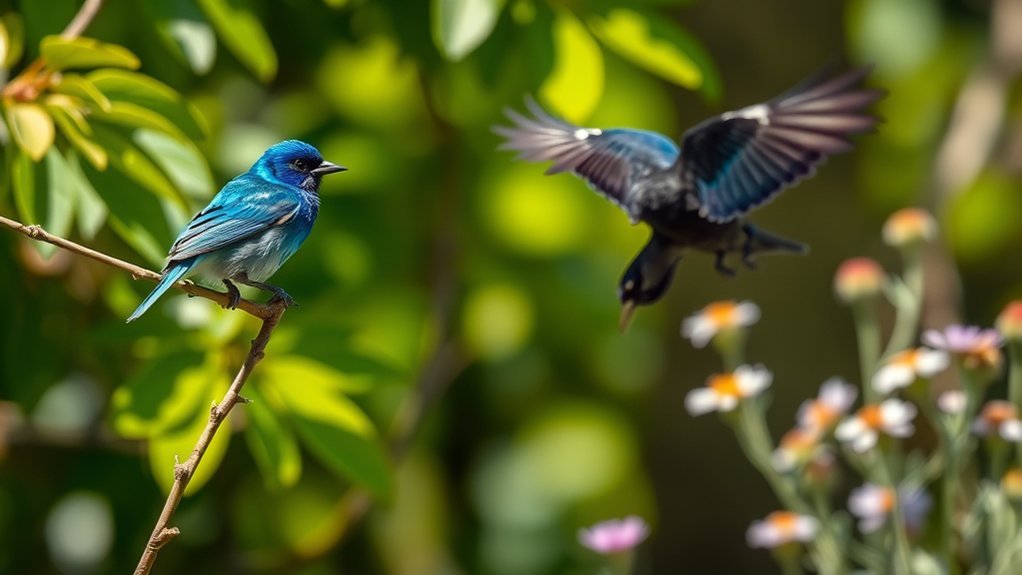
You can spot many black and blue birds! These birds are unique with interesting features and behaviors. For example, the bright Indigo Bunting and the well-known Blue Jay both have their own homes in different places. Each bird plays an important role in nature and can teach us more about the lives of birds. Which of these colorful birds will you notice next?
A Quick Overview
- The Indigo Bunting has bright blue feathers. It lives in different places across North America when it migrates.
- The Eastern Bluebird is also very blue. It likes open fields and often makes nests in tree holes or birdhouses.
- The Blue Jay stands out with its blue color and is very social. You can often spot it in backyards and parks.
- The Black-vented Oriole has beautiful black and yellow feathers. You can find it in tropical and subtropical forests.
- The Black-capped Chickadee has a black cap on its head. It is friendly and has a special call, making it a fun bird to watch.
Indigo Bunting
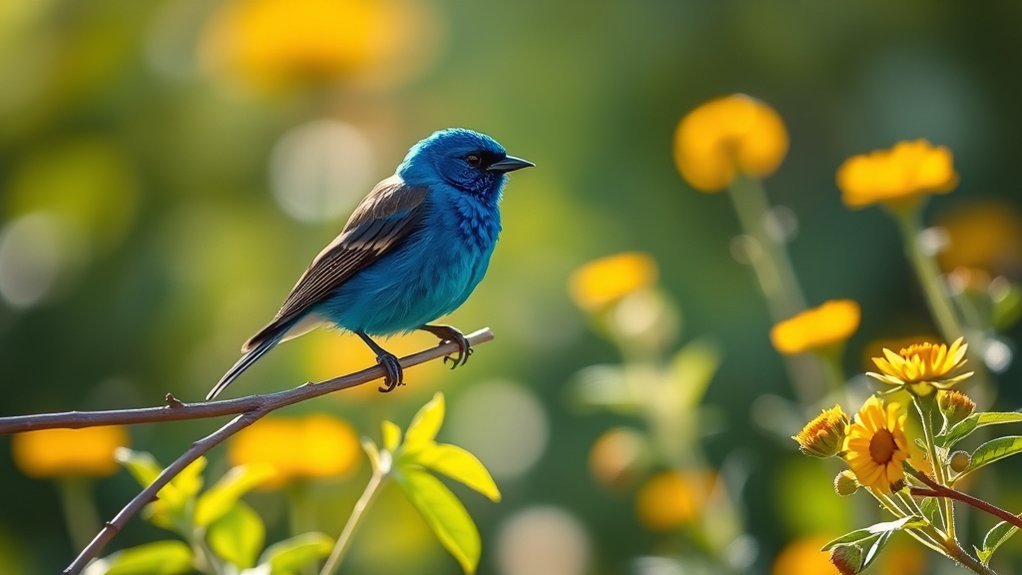
The Indigo Bunting is a beautiful bird that shines with bright blue feathers. You mightn't see them often, but they're very special. They like to live in open woods, fields, and places with shrubs where they can find plenty of food and safe spots to build nests.
In North America, you can find these birds during the breeding season, mainly in the eastern and central parts. As summer comes to an end, they begin their long journey south. They travel to Central America and Mexico for the winter. This trip helps them adapt to different climates, showing how strong they are.
Learning about where Indigo Buntings like to live and how they migrate can help you appreciate this amazing bird. Watching them can bring you closer to nature and make your outdoor adventures more exciting!
Eastern Bluebird
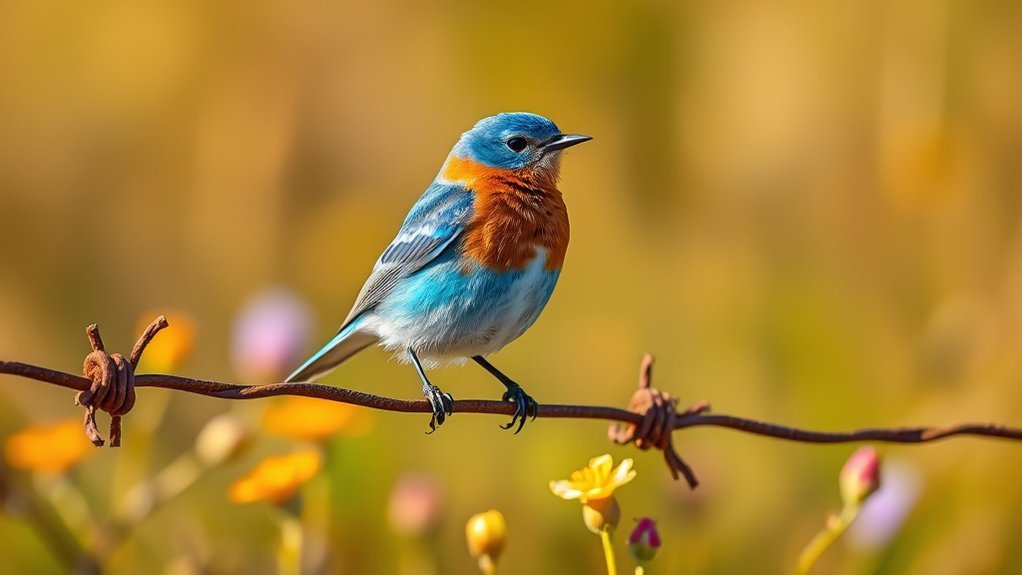
When you see an Eastern Bluebird, their bright blue feathers can make you smile.
These lovely birds like open fields, farms, and even neighborhoods. They thrive in places with some trees around. Watching how they act can be really interesting.
Here are three fun facts about Eastern Bluebird behavior:
- Mating Shows: Male bluebirds fly up high to impress females. They show off their bright colors during these displays.
- Eating Habits: Bluebirds mainly eat insects, but they also love berries. This makes them a cheerful sight in your garden.
- Nesting Spots: Eastern Bluebirds prefer to nest in tree holes or birdhouses. They often come back to the same spot every year.
Enjoy spotting these beautiful birds and learning more about them!
Blue Jay

The Blue Jay is a beautiful bird with bright blue feathers and striking black markings. You can often see these birds in North American backyards, woodlands, parks, and neighborhoods.
They're smart and social birds that enjoy being in small groups.
Blue Jays are known for their lively chatter and fun behavior. They can even imitate sounds from other birds, which makes them extra interesting.
Their diet includes nuts, seeds, and sometimes small insects.
If you want to attract Blue Jays to your yard, think about putting up a bird feeder. This will give them food and help you feel closer to nature.
Blue Jays are captivating creatures that can bring joy and life to your outdoor space!
Tree Swallow
While Blue Jays bring bright colors to our yards, Tree Swallows have their own special charm. They fly gracefully and have shiny blue-green feathers. You can often see them gliding low above lakes and rivers, showing off their amazing flying skills.
These birds like to nest in cozy spots, often using holes that are already there. This makes them great at living in different places.
Here are three things to notice about Tree Swallows:
- Nesting Habits: Tree Swallows like to make their nests in quiet spots near water. They use natural holes or man-made structures.
- Flight Patterns: Watch how they zip and dive in the air while catching insects. Their flying is like a fun dance!
- Seasonal Behavior: In winter, they fly south. In spring, they come back, bringing happiness to those who watch them.
Tree Swallows add a lovely touch to our outdoor spaces. Enjoy spotting them as they soar through the skies!
Black-throated Blue Warbler
The Black-throated Blue Warbler is a beautiful little bird. It has bright blue and yellow feathers, which make it stand out. This bird loves to live in older forests where there are lots of trees.
Every year, these birds travel far from their homes in eastern North America. They fly thousands of miles to spend the winter in warmer places like the Caribbean and Central America. During their journey, they need places to rest and eat, which is why preserving forests is so important.
Learning about the Black-throated Blue Warbler helps us see how all living things are connected. By taking care of their habitat, we can help these birds thrive and feel like part of the bigger bird community.
Barn Swallow
The Barn Swallow is a beautiful bird that many people see in North America. It has a long, thin body and a special tail that splits at the end. These birds are important to nature and have some interesting behaviors:
- Nesting: Barn Swallows make their homes using mud. They often build nests under roofs or bridges, showing how clever they are.
- Migration: In the winter, Barn Swallows fly thousands of miles to Central and South America. This shows how strong and determined they are.
- Food: These birds mainly eat insects. They catch flying bugs while doing flips in the air. This helps keep the insect population under control.
Barn Swallows aren't just pretty to watch; they play a key role in our environment!
Blue Grosbeak
Blue Grosbeaks are beautiful birds with bright blue feathers. They aren't as common as other birds, but they're really easy to spot once you know what to look for.
These medium-sized songbirds like to live in thick bushes and low, shrubby areas where they can build their nests. They usually mate from late spring to summer.
Blue Grosbeaks make their nests in shrubs or small trees, and they create cup-shaped homes for their eggs. They've interesting eating habits too! They mostly eat seeds and insects, which is why you can find them searching for food in grassy fields and along the edges of woods.
Seeing a Blue Grosbeak can be a special moment. It helps you connect with nature and enjoy the amazing variety of birds around you. Watching them can make you appreciate the beauty of birds even more!
Common Grackle
The Common Grackle is a colorful bird. You can easily spot it because its feathers shine with purple and green hues when the sunlight hits them.
These birds are common in cities and farms, showing how well they adjust to different places. If you want to enjoy watching them more, here are three things to notice:
- Where They Live: Common Grackles like open spaces, such as parks and wetlands. They also like suburban areas where people live.
- How They Sound: These birds have loud calls. They mix harsh sounds with pretty whistles. This shows they're social and adaptable.
- Being Social: You'll often see Common Grackles together in groups. They enjoy being around each other, which is fun for birdwatchers to see.
Keep an eye out for these traits the next time you spot a Common Grackle!
Black-capped Chickadee
Next time you're in your backyard or at a park, look for the Black-capped Chickadee. This small bird lives in different places, from forests to neighborhoods, showing how adaptable it is. You can easily spot it by its black cap on its head and the black bib on its chest. The cheeks are white, and the body is soft gray.
Watch how these birds act. They're friendly and often hang out in groups with other birds. They talk to each other using special calls. One of the most famous calls is "chick-a-dee-dee-dee." This call can warn friends about danger or just say hello.
Noticing the Black-capped Chickadee and its behaviors can help you feel more connected to nature. It's a great reminder of all the lively creatures that share your space.
Enjoy watching them!
Western Bluebird
When you see a Western Bluebird, you can't miss its bright colors. These birds stand out with their beautiful feathers. They live in the western parts of the country and have some interesting habits.
Here are a few things to know about them:
- Territorial Behavior: Western Bluebirds protect their homes with great energy. They can be quite fierce if other birds come too close to their nests.
- Diet and Eating Habits: They eat mainly insects and berries. When searching for food, they like to sit high on a branch and watch for anything moving below.
- Social Behavior: You'll often find them in groups, helping each other find food. Watching these family groups interact is very enjoyable.
Black-vented Oriole
The Black-vented Oriole is a colorful bird. It has bright black and yellow feathers that catch the eye as it moves through the trees. You can often see this bird in its favorite spots, like tropical and subtropical forests.
During the day, the Black-vented Oriole looks for food. It eats insects and fruits, showing that it can adjust to what's available.
This bird is also known for its beautiful songs that fill the air. These sounds make its home in the trees feel magical.
When you notice the Black-vented Oriole, you connect with nature more. Watching this lovely bird makes birdwatching exciting, and you can enjoy the beauty all around us.
Frequently Asked Questions
What Habitats Do These Birds Prefer for Nesting?
When looking at where birds like to build their nests, you'll see they enjoy different places. They often choose trees, bushes, or wetlands. Knowing what they need helps us understand how important they are to their homes and our planet. By caring for their habitats, we can help keep them safe and healthy.
How Can I Attract Black and Blue Birds to My Yard?
To attract black and blue birds to your yard, you can do a few simple things. First, set up bird feeders. Fill these feeders with seeds that these birds like, such as sunflower seeds or peanuts.
Next, plant native plants in your yard. These plants give birds natural food sources like berries and insects. They also make your yard look nice.
What Time of Year Are These Birds Most Visible?
These birds are easy to see during spring migration. They move north, and that's when they are most active. Watching them can make birdwatching fun. So, keep your eyes open and fill your feeders during this lively time. Enjoy the sights and sounds of spring!
Are Any of These Species Threatened or Endangered?
Some bird species are in trouble. They might be threatened or even endangered because their homes are disappearing, and their numbers are going down. To help these birds, we need to stay informed. Supporting conservation efforts is a great way to protect them and make sure they can survive for future generations. Caring about their wellbeing can make a real difference!
How Do These Birds Migrate, and When Does It Occur?
Birds migrate based on their species' migration patterns. They usually start their journey in late summer or early spring. This movement happens because they are looking for food and a better climate. Migration helps them survive.

Joyce is the passionate founder of Chirping Hearts, a website dedicated to sharing her love for birds and providing valuable information about avian life. With a background in ornithology and years of experience in birdwatching, Joyce aims to inspire others to appreciate the beauty and diversity of birds. Through her engaging articles and guides, she hopes to foster a community of bird enthusiasts who share her enthusiasm for these incredible creatures. When she’s not writing, Joyce enjoys exploring nature trails and observing birds in their natural habitats.