
Birds in Blue: Fascinating Facts About Their Appearance
When you see birds like the Eastern Bluebird or Blue Jay, you notice their bright blue colors. This blue doesn't come from paints or dyes. Instead, tiny structures in their feathers change the way light shines on them. This special feature makes them look beautiful and helps them survive in the wild.
These blue birds have an interesting way of using their color. Their bright feathers can attract mates and help them stand out to other birds. However, it can also help them hide from predators among the leaves.
Next time you spot a blue bird, think about how amazing they are. Their colors help them in many important ways, showing how smart nature can be!
A Quick Overview
Here are some fun facts about blue birds that you'll find interesting!
- Blue feathers get their bright color from their structure. They reflect light, especially the blue wavelengths, making them look so vibrant.
- Male blue birds often have bright blue feathers. This color shows they are healthy and strong. Female birds look for these strong colors when choosing a mate.
- Some blue birds have special pigments that help them hide in their surroundings. Even with their bright colors, they can blend in!
- You might know birds like the Eastern Bluebird and Blue Jay. They have bright blue feathers that stand out against trees and skies, making them easy to spot.
- To help blue bird species survive, we need to take action. Conservation programs and restoring their homes are important steps in protecting them.
Blue birds are not just pretty; they play a big role in nature too!
The Science Behind Blue Plumage
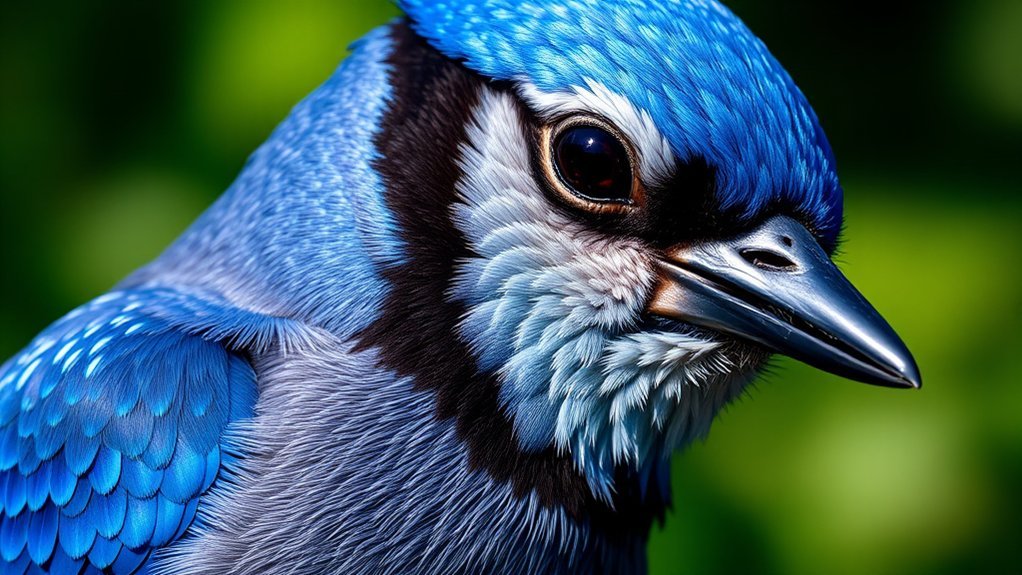
When you see the bright blue feathers of birds like the Eastern Bluebird or the Blue Jay, you're looking at something special.
These birds don't get their blue color from pigments like some other animals. Instead, their feathers have tiny structures that play with light.
The feathers reflect specific wavelengths of light, mainly blue. This happens through a process called light diffraction. Instead of soaking up colors like paints do, these feather structures scatter light. This scattering makes the blue color look even more brilliant.
This cool way of getting color is called plumage coloration. It lets birds display beautiful colors without using pigments. Learning about this makes you appreciate how amazing nature is.
The bright blue you see is a neat trick of light, not just a simple color.
Notable Blue Bird Species

Bright blue feathers catch our eye and help us spot some famous blue birds. Take the Eastern Bluebird, for example. This bird loves to hang out in open fields and orchards. Its bright colors stand out against the green grass.
Then there's the Blue Jay. This bird isn't only pretty but also very smart. You can find Blue Jays mostly in the eastern part of North America, where they like to stay in deciduous and mixed forests.
The Blue Grosbeak enjoys shrubby areas, showing us that different birds like different places to live.
The Indigo Bunting is special because it migrates. This means it travels to find food and suitable habitats throughout North America.
The Role of Blue in Courtship Displays
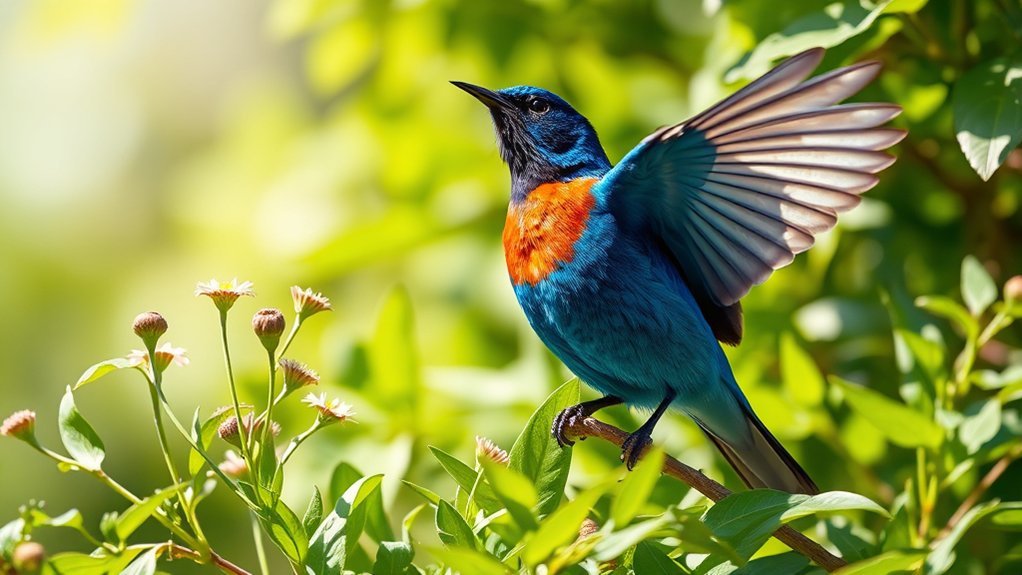
Many bird species use colors to attract mates, and blue is one of the most important. Birds with bright blue feathers often show they're healthy and full of life. This bright color helps them during their courtship rituals.
Research shows that female birds prefer males with vivid blue feathers. These blue colors often mean that the male has good genes, making him a better choice for a mate. Males with brighter blue feathers usually have more success in finding a partner and having babies.
The role of blue in attracting mates goes beyond just being pretty. It helps show the quality of the bird's genes. This is important for the survival of future birds.
Camouflage and Blue Birds
Blue birds are really beautiful, but they've a tricky job. Even though they're bright and colorful, they need to blend in with their surroundings to stay safe from predators. This is where their camouflage comes in handy.
The feathers of blue birds have special pigments that can reflect different colors of light. This helps them mix in with the plants around them. When they hide in thick bushes or trees, they become harder to spot.
The way light and shadows play on the branches also helps them stay hidden. Understanding how blue birds use camouflage shows us that they aren't just pretty creatures, but also smart ones.
They've clever ways to survive in a world where being seen can be dangerous.
The Impact of Geography on Coloration
Birds show different colors based on where they live. The place they call home can make it easier or harder for them to survive. For example, the weather, like heat and rain, affects the color of their feathers.
In warm areas, like tropical places, birds often have bright, beautiful colors. These colors help them attract friends and find mates. In colder areas, birds have duller colors. These colors help them hide from animals that want to eat them.
Where they live makes a big difference too. In places with lots of trees and plants, birds usually have colors that help them blend in with their surroundings. But in open areas, bright colors can help birds stand out.
Learning about how geography, weather, and colors connect helps us appreciate how birds adapt to stay safe and thrive where they live.
Blue Feathers and Their Function
Blue feathers on birds aren't just pretty to look at; they've important jobs in nature. The bright blue color comes from how light hits tiny parts of the feathers. This special way of getting color is called structural coloration.
These blue feathers help birds talk to each other and find mates. Male birds show off their shiny feathers to attract females or to scare off other males.
Sometimes, the blue can even help them hide from predators by blending in with the light in their surroundings.
Cultural Significance of Blue Birds
Blue birds are more than just pretty animals; they mean a lot to many different cultures. Their beautiful blue feathers make them special.
Here are a few things that blue birds often stand for:
- Hope and Spirituality: Many people believe blue birds connect us to something greater than ourselves. They're symbols of hope and can lift our spirits.
- Peace and Harmony: The calm blue color of these birds often makes us feel peaceful and balanced. People see them as signs of harmony in nature and life.
- Freedom and Joy: Blue birds remind us to feel free and happy. Their bright colors bring joy and represent the fun moments in our lives.
Blue birds carry messages that touch our hearts. They're reminders of the beauty and positive feelings in the world around us.
Blue Birds in Ecosystems
Blue birds are important in many ecosystems. They add variety to habitats like forests, grasslands, and wetlands. These colorful birds help control insect populations by eating them, which keeps pest numbers down.
In the food chain, blue birds play a big role. They hunt for food, and at the same time, they become food for larger animals. This movement of energy between species helps keep nature balanced.
Blue birds also help plants grow by spreading seeds. When they eat berries and fruits, they move the seeds to new places. This process supports the health of the ecosystem.
Learning about blue birds helps us see how everything in nature is connected. Each species, even the colorful ones, plays an important part in keeping the environment healthy.
Conservation Efforts for Blue Bird Species
Blue birds are important for keeping nature balanced. Many groups work hard to protect these beautiful birds. Here's how you can help:
- Breeding Programs: Some organizations start breeding programs to help blue bird numbers grow. This helps make sure the birds stay healthy and can fight off diseases.
- Habitat Restoration: It's important to fix their homes. This means planting the right plants and cleaning up pollution. When we restore their habitats, blue birds can live happily where they belong.
- Community Involvement: Teaching and involving local people is key. When communities take part in these efforts, they feel proud and responsible for helping wildlife.
You can join in too! Whether you support these programs or spread the word, every little bit helps!
Fascinating Myths and Legends Surrounding Blue Birds
People have told wonderful stories about blue birds for a long time. Many cultures see blue birds as symbols of freedom, peace, and hope.
For example, Native American tribes believe bluebirds are messengers. They think these birds connect humans with the spirit world during spiritual gatherings. In Chinese culture, bluebirds stand for joy and prosperity. People believe that seeing a bluebird can bring good luck.
These stories show us that blue birds mean more than just their pretty color. They connect us to nature and our history.
Frequently Asked Questions
Do Blue Birds Exist in Every Part of the World?
Blue birds do not live everywhere in the world. They are mostly found in certain areas, like temperate and tropical places. Different types of blue birds enjoy different homes. Some like forests, while others may prefer grasslands or mountains. Each species has special ways to survive in its own environment. If you want to learn more about where blue birds live, just look at which types are found in each habitat. It can be fun to discover more about these colorful birds!
How Do Blue Feathers Affect a Bird's Temperature Regulation?
Blue feathers help birds stay warm. Their special structure traps air, which acts like a blanket to keep the bird's body heat in. This is important for birds so they can stay comfortable in different weather. So, having blue feathers helps birds regulate their temperature better.
What Foods Contribute to the Blue Coloration in Birds?
Birds can have blue feathers for different reasons. One big way is through a special type of color called structural color. But did you know that what birds eat can also help? Certain fruits and plants have blue pigments. These blue pigments can make a bird's feathers look brighter and more colorful. This can help them look more attractive to other birds, especially when they are trying to find a mate. So, a bird's diet can play a big part in how blue they look!
Are Blue Birds More Vulnerable to Predators Than Other Colors?
Blue birds can be easier for predators to spot because their bright color stands out more. This makes it harder for them to hide from animals that want to eat them. In nature, birds with colors that blend in are better at escaping danger. So, blue birds face more challenges when it comes to staying safe.
How Can I Attract Blue Birds to My Backyard?
To attract bluebirds to your backyard, start by putting up bird feeders filled with sunflower seeds. Place these feeders close to where bluebirds like to live. Adding native plants to your yard is also a great idea. These plants give the bluebirds food and shelter. When you have plenty of food and a cozy home, bluebirds will feel welcome and come to visit. Enjoy watching these beautiful birds!

Joyce is the passionate founder of Chirping Hearts, a website dedicated to sharing her love for birds and providing valuable information about avian life. With a background in ornithology and years of experience in birdwatching, Joyce aims to inspire others to appreciate the beauty and diversity of birds. Through her engaging articles and guides, she hopes to foster a community of bird enthusiasts who share her enthusiasm for these incredible creatures. When she’s not writing, Joyce enjoys exploring nature trails and observing birds in their natural habitats.


