
Can Birds Eat Melon? A Guide to This Hydrating Fruit
If you're thinking about mixing up your bird's diet, melon could be a tasty choice. This juicy fruit is full of water and vitamins, making it perfect for hot days. But remember, not all melons are the same. It's important to prepare them safely.
Let's talk about the good things melon can do for your bird. First, it helps keep them hydrated. Second, it's a nice way to add new flavors to their meals. But before you serve it, you need to know how to cut and offer it properly. Taking these steps can make mealtime fun and nutritious for your bird.
In short, melon can be a great addition to your bird's diet, but be careful with how you prepare it. Now, let's dive into the details you should know!
A Quick Overview
Birds can eat melon safely. They can enjoy watermelon, cantaloupe, and honeydew. Just remember to give it to them in moderation.
Melon is great for birds. It helps keep them hydrated and is full of vitamins A and C. These vitamins are good for their health.
Before you serve melon to your bird, always take out the seeds. Seeds can cause tummy problems for birds.
When serving melon, the right amount depends on the size of your bird. For smaller birds, give them 1-2 teaspoons. For larger birds, give them 1-2 tablespoons. You can offer melon 2-3 times a week.
Start giving melon to your bird slowly. It's important to mix it with other foods so they get a balanced diet. Too much sugar can be a problem. Enjoy watching your bird enjoy this yummy fruit!
The Nutritional Benefits of Melon for Birds

When you give melon to your birds, you're helping them stay healthy and happy. Melons are great for hydration, especially on hot days. They've lots of vitamins A and C, which are good for your birds' skin and feathers, making them look and feel better.
The high water content in melons helps with digestion and keeps their kidneys working well. This is very important for their overall health.
Melons also provide minerals like potassium that support heart function and muscle health.
Adding melon to your birds' diet is a fun way to give them a tasty treat while boosting their nutrition. Sharing melon with your birds not only fills their tummies but also helps you bond with them. It's a simple way to show you care!
Types of Melon Safe for Birds
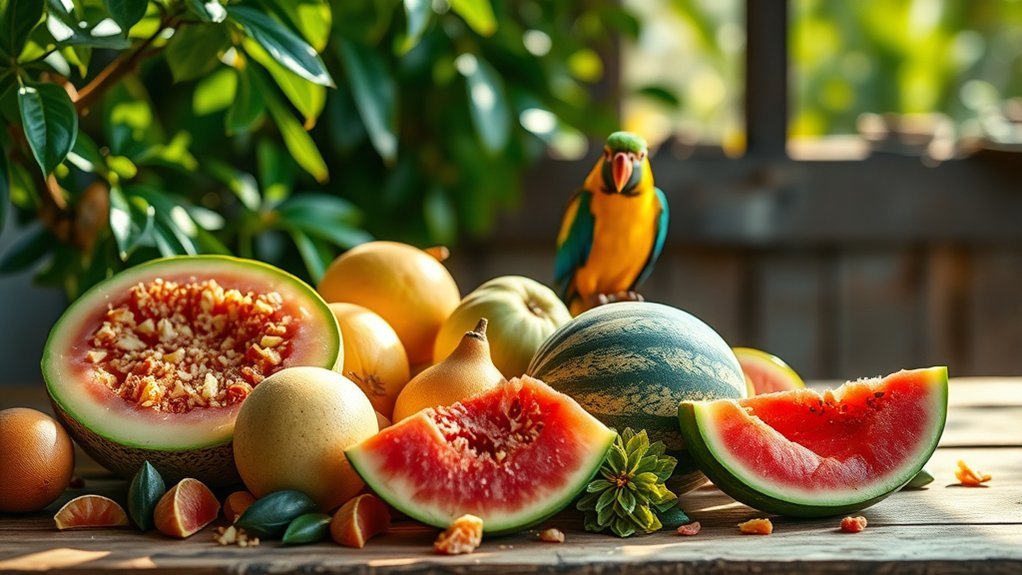
Many types of melon are safe and tasty for birds. The best ones are watermelon, cantaloupe, and honeydew.
Watermelon is great because it helps keep birds hydrated and is easy for them to digest. Cantaloupe is also good since it has a lot of vitamin A and beta-carotene, which are great for their vision and skin.
Be careful with honeydew. It has natural sugars, and eating too much can be harmful. Always cut pieces small to avoid choking.
While most melons are safe for birds, don't give them the seeds. Seeds can upset their stomachs.
Offering these melons can make your bird's diet better and keep them happy.
How Melon Aids in Hydration

Melons, like watermelon, are great for birds. They're mostly water, over 90% in fact! This means they help keep birds hydrated.
When birds eat melon, they get water that helps them stay cool and healthy. This is especially important when it's hot outside or when they're very active.
Melons also have electrolytes, which are good for birds. These can help replace nutrients that birds might lose during the day.
Preparing Melon for Your Bird
Preparing Melon for Your Bird
If you want your bird to enjoy melon safely, you need to get it ready the right way. First, pick a ripe, organic melon. Make sure it's free from pesticides. Then, wash it well to get rid of any dirt.
Next, cut the melon into small pieces that your bird can handle. Remember to take out the seeds and rind because they can be dangerous and hard for your bird to eat.
Start by giving your bird a small amount of melon. This lets your pet get used to the new snack. Watch how your bird reacts. If you see any problems, talk to a vet.
With careful prep, melon can be a tasty treat for your feathered friend!
Serving Suggestions for Melon
Here's how you can serve melon to your bird in fun and interesting ways:
- Diced Melon: Cut small pieces. This way, your bird can easily pick them up and enjoy a little foraging fun.
- Skewered Melon: Put melon pieces on a skewer. This adds some excitement and makes it a playful treat for your feathered friend.
- Melon Mash: Blend melon with other fruits that are safe for birds. This creates a tasty puree that your bird will love.
Trying out these different ways to serve melon will keep mealtime exciting and healthy for your bird.
By finding what your bird likes best, you can help them feel happy and connected during meals.
These ideas are sure to make their day brighter!
Portion Sizes: How Much Melon Is Too Much?
When you give your bird melon, remember to keep it small and balanced. Birds can enjoy fruit, but too much sugar isn't good for them. A good size is about 1 or 2 teaspoons for smaller birds and 1 or 2 tablespoons for larger birds.
Try to serve melon 2 to 3 times a week. This way, your bird will stay healthy and happy.
Watch how your bird reacts to the melon and change the portion if needed. Birds love a mix of foods, so offering different treats will keep them excited.
Signs of Allergies or Discomfort in Birds
Watch your bird closely. Sometimes, they show signs of allergies or discomfort. It's key to notice these signs so you can help your bird feel better.
Here are some things to look for:
- Increased feather-plucking or changes in how they groom themselves.
- Tummy troubles like diarrhea or vomiting.
- Sneezing, coughing, or a runny nose.
If your bird shows any of these signs, think about what they eat. Did you give them new foods, like melon?
Always check with an avian vet for advice. Quick action can really help your bird stay healthy and happy.
Keep an eye on their behavior to make sure they're comfortable.
Introducing Melon to Your Bird's Diet
If you want to add melon to your bird's food, do it slowly. Start with small, bite-sized pieces. Watch your bird to see how they like it. Some birds can be fussy about new foods. It might take time for them to accept melon.
Offer small amounts a few times a week. If your bird enjoys it, you can give it more often. Fresh fruit is a great treat, but remember to give it in moderation.
Keep an eye out for any signs of allergies or tummy issues to make sure they're enjoying melon safely.
Be patient and let your bird get used to this new snack!
Combining Melon With Other Foods
Combining melon with other foods is a great way to make your bird's meals fun and healthy. Here are some easy ideas to try:
- Cottage cheese: Cut melon into small cubes and mix them with cottage cheese. This adds protein to your bird's diet.
- Seed mix: Pair melon slices with a mix of seeds. This gives your bird extra crunch and energy.
- Leafy greens: Serve melon with fresh spinach or kale. This helps keep your bird's digestion healthy.
These food combos give your birds hydration and important nutrients. Mixing different flavors and textures will keep mealtime exciting and help your feathered friends stay healthy.
Enjoy trying out these tasty ideas!
Common Misconceptions About Birds and Melon
Many people think birds should stay away from melon because it's sweet, but that's not quite right. Melons do have some sugar, but they also provide water and important nutrients.
Another common idea is that melons can harm birds. In reality, melons are safe and healthy for birds if given in the right amount.
Some myths about bird diets come from misunderstandings about fruits. In fact, melons can be a great part of a bird's diet when offered moderately.
It's a good idea to introduce fruits slowly. This gives your birds time to get used to them.
Storing Melon for Freshness
To keep melons fresh and tasty for your birds, use these simple storage tips:
- Keep whole melons in a cool, dry spot. Don't put them in direct sunlight. This helps stop them from going bad.
- Put cut melons in an airtight container in the fridge. This keeps them moist and flavorful for about three days.
- Check if melons are ripe often. Look at them and smell them. If you find any that are too ripe, take them out.
This helps keep the other melons fresh.
Other Fruits to Consider for Your Bird's Diet
Melons are nice for your bird, but there are other fruits that are also good! Try adding apples, bananas, and berries to their meals. Apples give your bird fiber and vitamin C. Bananas are full of potassium, which helps muscles work well. Berries, like blueberries and strawberries, have antioxidants that keep your bird healthy.
Using different fruits is key. Each fruit has different vitamins and minerals that help your bird feel good.
Make sure to wash the fruits and cut them into small pieces. This helps keep your bird safe and encourages them to try new flavors.
Frequently Asked Questions
Can All Bird Species Eat Melon Safely?
Not all birds can eat melon safely. Some birds really like different kinds of melon, while others do not. It's important to learn about the specific birds you have or want to feed. This way, you can make sure you give them fruits that are good for them. Always check what fruits are safe for each bird.
Are Melon Seeds Harmful to Birds?
Melon seeds are safe for birds. They don't have harmful effects and are not toxic. You can easily give these seeds as a treat for your feathered friends. Melon seeds provide them with good nutrients and help keep them hydrated. Enjoy watching your birds munch on these tasty snacks!
Should Melon Be Organic for Birds?
Choosing organic melon for your birds is a smart choice. Organic melon helps keep them safe from harmful pesticides. Birds can enjoy this tasty treat without worries about chemicals. You want your feathered friends to be healthy, and organic melon is a great way to do that. It ensures they get a delicious snack while staying safe from toxins. Keep your birds happy and healthy with organic melon!
How Often Can I Offer Melon to My Bird?
You can give your bird melon a few times a week. This can help keep their diet interesting. Pay attention to what your bird likes and how they are feeling. Adjust the amount of melon based on their taste and health. Enjoying melon can make snack time fun for your bird!
Can Melon Replace My Bird's Regular Diet?
No, melon should not replace your bird's regular diet. It has some good nutrients, but it doesn't have everything your bird needs to stay healthy. To keep your bird happy and well, feed it a mix of seeds, pellets, and fresh vegetables. Follow these guidelines for the best diet!

Joyce is the passionate founder of Chirping Hearts, a website dedicated to sharing her love for birds and providing valuable information about avian life. With a background in ornithology and years of experience in birdwatching, Joyce aims to inspire others to appreciate the beauty and diversity of birds. Through her engaging articles and guides, she hopes to foster a community of bird enthusiasts who share her enthusiasm for these incredible creatures. When she’s not writing, Joyce enjoys exploring nature trails and observing birds in their natural habitats.